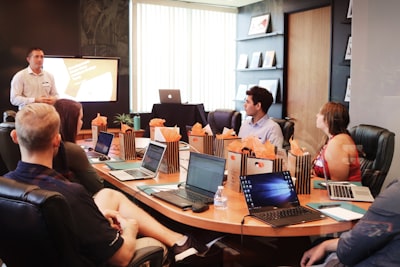
In today's digital ecosystem, where speed of reaction makes the difference between leading or being left behind, event-based automation has become a strategic pillar for organizations seeking operational efficiency and real-time responsiveness. However, implementing this technology is not just a matter of choosing the right tools; The human factor continues to be the main catalyst or brake on change. Preparing a team to adopt event-driven workflows involves much more than technical training: it requires cultural transformation, constant communication, and participatory design that builds trust and engagement.
Event-based automation differs from traditional models because processes are not executed according to a fixed schedule or manual order, but instead react automatically to signals—events—from systems, applications, or users. This allows for a decoupled and scalable architecture, where each component can evolve independently. But for this paradigm to work, teams need to understand not only the technical 'how', but also the strategic 'why'. They should feel part of the design and see how their daily work benefits from smarter orchestration.
One of the most common mistakes in digital transformation projects is overestimating technology and underestimating change management. When a company decides to migrate to event-driven automation, IT, operations, business, and even marketing professionals must align their expectations. For example, a sales team may benefit from automatic alerts when a customer takes a key action, but if the value is not explained to them and they are trained in the new process, they will perceive the tool as a burden rather than an ally. That's why the most successful organizations in this area invest in early communication, interdepartmental workshops, and networks of internal ambassadors to facilitate adoption.
From the experience accumulated in transformation projects, we can affirm that the managerial commitment and the participation of the end users from the design phase are decisive. It is not a question of imposing a change, but of co-creating it. Involving representatives from each department in design sessions allows you to identify real pain points, adjust flows to specific needs, and generate a sense of belonging. In addition, training must be differentiated: training a business analyst is not the same as training a developer or an infrastructure manager. Each profile requires an approach tailored to their role and level of familiarity with concepts such as events, triggers, or message queues.
In this context, having a technology partner that understands both the technical and human side makes a big difference. Q2BSTUDIO is a software and technology development company that has accompanied numerous organizations on their journey to event-driven automation, offering not only robust technical solutions, but also custom-designed change enablement plans. Their approach integrates process automation with an adoption strategy that prepares teams to take on new ways of working without friction. The key is to combine state-of-the-art tools with close support that transforms uncertainty into motivation.
But the preparation doesn't end with the launch. Event-driven automation is dynamic: events change, business rules evolve, and teams rotate. Therefore, it is essential to establish a cycle of continuous improvement. Celebrating the first milestones – no matter how small – builds trust, and collecting feedback systematically allows you to adjust flows before they become bottlenecks. In addition, creating a network of internal champions—power users who support their peers—multiplies knowledge and accelerates adoption. These referrers become partners to the technology team and help maintain momentum even when difficulties arise.
In a scenario where artificial intelligence and AI agents are redefining the possibilities of automation, team preparation takes on a new dimension. Events no longer only come from clicks or sensors, but also from predictive models, real-time analytics or recommendation systems. Integrating business intelligence services such as Power BI or AI solutions for companies allows events to be smarter and more contextual. For example, a monitoring system can trigger an alert when an AI model detects an anomaly in sales data, automatically initiating a review flow. For this to work, teams must understand the language of events and rely on automated logic, which requires training that combines concepts from artificial intelligence, cybersecurity, and data governance.
Cybersecurity, in fact, is an aspect that cannot be overlooked when preparing the team. Event-driven automation exposes new attack surfaces: each malicious event could trigger unwanted actions. Training teams in good security practices, in the use of AWS and Azure cloud services with appropriate access policies, and in the periodic review of flows is essential. A safety culture built in from the start prevents shocks and reinforces confidence in the system. Additionally, aligning automation with regulatory compliance processes (such as GDPR or ISO 27001) requires teams to know the legal implications of each event.
Another crucial point is personalization. There is no one-size-fits-all solution. Therefore, developing custom applications or custom software that adapt to the particularities of each organization is an investment that pays for itself quickly. Instead of forcing standard processes that clash with internal culture, customized solutions allow you to model exactly the event logic that the business needs. Q2BSTUDIO offers bespoke software development services that integrate event-driven automation, business intelligence and AI agents, all on top of robust cloud infrastructures. Its team works closely with customers to design flows that are not only technically efficient, but also understandable and adoptable by all users.
Team readiness, therefore, should be approached as an ongoing, multidimensional process. It includes early communication of the vision and benefits, active participation in the design, role-specific training, creation of an ambassador network, celebration of achievements and systematic collection of feedback. All this is supported by a technological platform that offers visibility, control and flexibility. When teams understand how event-driven automation makes their jobs easier—freeing them from repetitive tasks, reducing errors, and allowing them to focus on what really adds value—they become the best drivers of change.
Ultimately, the transition to event-driven automation is not a technical project, but an organizational transformation journey. Companies that invest in preparing their teams holistically gain sustainable competitive advantages: greater agility, less internal friction, and a culture of continuous innovation. If you're considering taking this step, remember that success depends on both technology and people. And that having an ally like Q2BSTUDIO, which offers everything from custom applications to change strategies, can make the difference between a traumatic implementation and a smooth and successful adoption.