
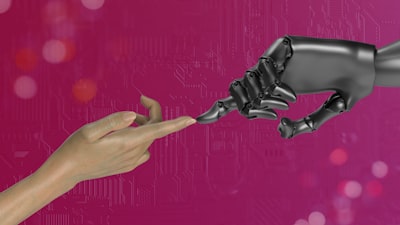
In today's fast-paced digital ecosystem, companies are constantly looking for ways to streamline their operations and respond with agility to market changes. Two concepts that have become central are event-driven automation and artificial intelligence. But are they really compatible? Beyond simple coexistence, both paradigms can enhance each other to create intelligent, reactive, and adaptive systems. This article takes an in-depth look at how event-driven automation and AI converge to transform the way organizations manage their processes, make decisions, and deliver value to their customers.
Event-driven automation, also known as event-driven automation, is based on the ability to trigger automatic actions when certain events occur, such as the arrival of data, a change in the state of a system, or a user interaction. This approach makes it possible to build decoupled architectures, where components communicate through events, which grants high scalability and fault tolerance. Artificial intelligence, on the other hand, adds a layer of cognition: it can predict future events, classify patterns, generate responses in natural language, or make autonomous decisions based on trained models. The question about its compatibility is answered affirmatively when it is understood that AI needs events to operate in real time, and that event-based automation requires intelligence to not be limited to fixed rules.
One of the main points of convergence is the ability to react in real time to unforeseen situations. For example, a cybersecurity system can detect an attack pattern (event) and, using a trained AI model, automatically decide whether to block an IP, isolate a device, or alert the security team. Without event-driven automation, AI would be limited to offline analytics; without AI, automation would only execute predefined rules with no ability to adapt. This synergy is the foundation of autonomous AI agents, which act as orchestrators of event-driven workflows, continuously learning from the results.
From a business perspective, integrating both approaches allows companies to implement smarter process automation . It's no longer just about eliminating repetitive tasks, it's about enabling processes that dynamically adjust to the context. For example, in the AWS and Azure cloud services space, an infrastructure can automatically scale when a high-load event is predicted by a machine learning model, optimizing costs and performance. Q2BSTUDIO, as a software and technology development company, has implemented solutions where event automation and AI work hand in hand, offering its customers a real competitive advantage.
Compatibility is also manifested in data management. AI platforms require data pipelines that feed real-time models, and event-based automation provides the infrastructure to capture, process, and react to those information flows. A typical case is the use of Power BI and business intelligence services: when a significant change in sales (event) metrics is detected, an AI model can automatically generate a predictive report and trigger notifications to sales teams. Q2BSTUDIO has developed bespoke applications that integrate these capabilities, enabling businesses to make informed decisions without delay.
Another key aspect is the orchestration of large language models (LLMs) in automated flows. AI agents can act as virtual assistants that respond to user events, such as a query in a chat or an incident in an ERP system. Event automation is responsible for routing the request to the appropriate model, executing subsequent actions (such as updating a database), and feeding back into the system to improve future responses. This architecture is especially relevant in environments that require regulatory compliance, where it is necessary to maintain an auditable record of every decision made by AI. Q2BSTUDIO incorporates governance and control over the lifecycle of models, ensuring that artificial intelligence for companies is transparent and aligned with business objectives.
However, compatibility poses technical challenges. One of them is latency: events require near-instantaneous responses, while certain AI models, such as LLMs, can have high inference times. To overcome this, asynchronous inference strategies, lighter models or the combination of heuristic rules with AI are used. Another challenge is the management of unstructured or noisy events, where AI must filter and prioritize. In addition, security becomes critical: a manipulated event could trigger malicious AI-guided actions. As such, cybersecurity solutions are essential to protect both event streams and models. Q2BSTUDIO offers pentesting and consulting services to ensure that these architectures are robust against threats.
The vision for the future is promising. More and more companies are adopting event-driven architectures for their applications, from e-commerce to smart manufacturing. AI is becoming the brain that makes sense of events, and automation is the muscles that execute actions. This symbiosis makes it possible to create autonomous systems that not only react, but anticipate and learn. Q2BSTUDIO, with its expertise in custom software development, is at the forefront of this evolution, helping businesses build platforms that integrate AWS and Azure cloud services, artificial intelligence, and process automation cohesively.
In conclusion, event-driven automation and artificial intelligence are not only compatible, but they need each other to reach their full potential. The key is to design an architecture that allows fluid communication between events and models, with the right doses of governance, security and scalability. Companies that achieve this integration will be better prepared to compete in an environment where speed and intelligence are differentiators. Q2BSTUDIO offers the tools and knowledge to make this convergence a reality, transforming data into actions, and events into opportunities.


