In today's fast-paced business environment, the ability to anticipate change and react in real time has become a decisive competitive advantage. Event-based automation, traditionally limited to reactive responses, is evolving into a predictive model that not only executes automatic actions, but also analyzes historical patterns and market signals to forecast trends. This article explores whether this technology can truly predict future business behavior and how companies can leverage it to transform their operations.
What is event-driven automation and how does it relate to prediction?
Event-driven automation refers to systems that trigger automatic workflows when certain events occur: an incoming email, a change in a database, a security alert, and so on. Until recently, its function was mostly reactive: "if A happens, then do B". However, by integrating artificial intelligence engines and advanced analytics, these same systems can now learn from past events and generate predictions. For example, upon detecting a drop in sales of a product, the system not only triggers a replenishment, but also runs models that anticipate future demand and suggest inventory adjustments. This is where artificial intelligence for companies becomes the catalyst that allows us to move from reaction to forecasting.
From Data to Predictions: The Role of Machine Learning and AI Agents
In order for an event-driven system to anticipate trends, it needs to be fed with real-time and historical data. Machine learning techniques, such as time series models or decision trees, analyze these streams of information to identify patterns that the human eye hardly detects. For example, an anomaly detection system can predict potential financial fraud before it occurs, triggering automatic security protocols. AI agents go one step further: they are autonomous entities that, based on events, make complex decisions without human intervention. In an enterprise environment, these agents could manage marketing campaigns based on predictions of customer behavior, or dynamically adjust product prices based on estimated demand. The key is that automation is no longer limited to executing fixed rules, but learns and adapts.
Practical applications in predicting business trends
Let's imagine a global supply chain. Every order, every logistical delay, every climate change on a route is an event. An event-driven automation system equipped with predictive models can process thousands of events per second, identify outage patterns, and predict bottlenecks before they impact production. Companies that use software process automation solutions are starting to incorporate these predictive components to not only react, but anticipate problems. Another use case is customer retention: A system that monitors events such as drops in the frequency of use of an app or complaints on social media can trigger cancellation propensity models and trigger personalized offers or proactive contacts. Customer behavior predictions allow sales teams to focus on the users most likely to churn, optimizing resources and improving loyalty.
Can it really predict strategic trends?
The answer is yes, but with nuances. Event-based automation can predict short- and medium-term trends based on concrete data and trained models. However, long-term predictions (beyond one year) remain less reliable due to market volatility and unpredictable external factors. Therefore, this technology focuses on providing "early signals" that allow managers to adjust their strategy in advance. For example, a system that analyzes online shopping events can anticipate a change in consumer preference towards a new type of product, alerting the R+D department to adapt its portfolio. In this way, automation does not replace human judgment, but rather empowers it with actionable insights.
Necessary technological infrastructure
Implementing such a system requires a solid foundation of cloud infrastructure. AWS and Azure cloud service platforms offer real-time event processing services (such as AWS Lambda, Azure Functions) and managed machine learning capabilities. Combined with data storage and integration tools, they enable the construction of scalable and resilient architectures. In addition, cybersecurity plays a crucial role, as event-based systems handle sensitive information and must ensure that predictive models are not tampered with. Q2BSTUDIO, as a software development company, helps organizations design and implement these bespoke solutions, integrating bespoke applications that fit seamlessly into their existing processes. From capturing events to visualizing predictions, each layer must be carefully orchestrated to prevent latencies or data loss.
The role of business intelligence and Power BI
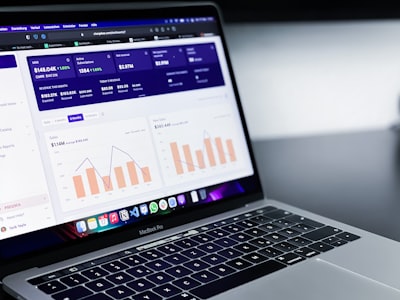
Once predictive models generate their forecasts, it is essential that these results are clearly presented to decision-makers. Business intelligence services tools, such as Power BI, allow you to create dynamic dashboards that show predicted trends along with trigger events. For example, a panel could alert on an expected increase in demand for a product, simultaneously showing the events that support it (peaks in visits to the website, mentions on social networks, etc.). This integration between event-driven automation and data visualization closes the loop: events generate predictions, predictions inform decisions, and decisions, in turn, generate new events. Q2BSTUDIO offers consulting services and implementation of business intelligence services so that companies can take full advantage of this synergy.
Ethical Challenges and Considerations
Not everything is positive. Event-based prediction can face biases if historical data does not adequately represent future reality. In addition, over-reliance on automated models can lead to erroneous decisions if forecasts are not regularly validated for accuracy. Establishing data governance and regular audits is critical. Another aspect is privacy: when capturing user events (such as clicks or registrations), companies must comply with regulations such as the GDPR. A robust cybersecurity strategy and transparent systems design are imperative to maintaining trust.
Success stories with Q2BSTUDIO
Companies from different sectors are already taking advantage of this approach. A logistics company implemented an event-based automation system that predicts delivery delays by analyzing weather data, traffic, and historical events. Thanks to predictive models, it reduced unplanned incidents by 30%. Q2BSTUDIO developed the custom software that integrated IoT sensors, cloud platforms, and a Power BI dashboard to visualize predictions in real-time. Another case is a fintech that uses AI agents to assess credit risks based on financial events in real time, anticipating defaults and automatically adjusting credit conditions. The flexibility of the custom applications allowed the models to be tailored to their specific needs.
Conclusion: The Future of Predictive Automation
Event-driven automation can not only predict business trends, but it's becoming an indispensable tool for strategic agility. By combining real-time events with artificial intelligence, organizations can move from a reactive to a proactive posture, anticipating market changes, customer needs, and operational risks. However, its success depends on careful implementation, with robust cloud infrastructure, validated models and an ethical approach. Q2BSTUDIO, with its expertise in AWS and Azure cloud services, artificial intelligence and custom software development, accompanies companies on this journey towards intelligent automation. The future belongs to those who not only react to events, but anticipate them.