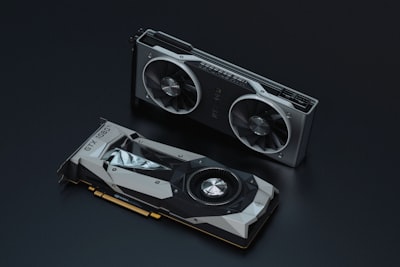
In the cloud-native ecosystem, efficient management of graphics processing units (GPUs) has become one of the most critical challenges for organizations deploying AI workloads. Hardware fragmentation, competition for scarce resources, and heterogeneity among manufacturers are all obstacles that slow down productivity and drive up operating costs. In this context, the decision of the Technical Oversight Committee (TOC) of the Cloud Native Computing Foundation (CNCF) to accept HAMi as an incubation project represents an important milestone. Originally conceived for Kubernetes, this GPU virtualization middleware promises to revolutionize the way enterprises leverage their accelerators, allowing a physical GPU to be fractionated into smaller units, workloads to be isolated, and advanced scheduling policies to be applied without modifying the code of existing applications. Its arrival at CNCF's incubation not only validates its technical maturity, but also opens the door to wider adoption in enterprise environments.
HAMi's adoption has been notable since its entry as a Sandbox project in August 2024. The project has more than 550 contributing organizations, nearly 3,500 stars on GitHub, and more than 2,600 contributors. Its 43% annual growth in contributions reflects genuine community interest. Five CNCF case studies have been published documenting deployments in production, including DaoCloud's use of more than 10,000 GPUs distributed across more than ten data centers, and the management of heterogeneous accelerator resources at China Merchants Bank. These numbers show that HAMi is not a laboratory solution, but a tool proven in real and large-scale environments.
To understand the value of HAMi, it is necessary to analyze the problem it solves. In today's Kubernetes clusters, GPUs are typically fully allocated to each pod, resulting in massive underutilization when workloads require only a fraction of memory or compute cores. In addition, each manufacturer — NVIDIA, AMD, Intel, Huawei, etc. — exposes a different operating model, complicating unified management. HAMi acts as a middleware layer that intercepts resource requests and translates them into instructions that the scheduler can understand, allowing the GPU to be broken down by memory, cores, or number of devices. It enforces policies such as binpack, spread, and topology, and ensures strict isolation at runtime thanks to its HAMi-Core component, which intercepts native calls to the CUDA driver in the case of NVIDIA. All without needing to touch Kubernetes manifests or application code, dramatically reducing friction in adoption.
HAMi's architecture is composed of several modules that work together: a mutant webhook that modifies pods before they are scheduled, a scheduler extender that filters and scores nodes and devices, vendor-specific device plugins, a containerized virtualization layer, a web interface for visual management, and a Prometheus-compatible observability module. This modularity allows HAMi to integrate with other projects in the CNCF ecosystem, such as Volcano for AI-oriented batch planning, Koordinator for shared GPU workflows, and a future collaboration with Kueue, KAI-scheduler, and llm-d is expected. The long-term goal is for HAMi to become a best-practice hub for all types of heterogeneous devices, including NPU, DCU, MLU, and future generations of accelerators.
The incubation milestone is not only a technical recognition, but also implies that the project has met the criteria of neutral governance and sustainability required by the CNCF. Maintainers come from companies such as dynamia.ai and NVIDIA, as well as independent developers, ensuring a diversity of perspectives and avoiding vendor lock-in. This neutrality is key for organizations to rely on HAMi as a strategic infrastructure layer. In addition, the project's roadmap includes improvements in advanced planning such as gang-scheduling, prioritization and auto-scaling, as well as support for new AMD GPU families and PPUs, and more detailed tracking of resource consumption using DRA (Dynamic Resource Allocation).
From a business perspective, GPU efficiency translates directly into cost savings and a greater ability to scale AI projects. Companies that are investing in AI for business need to maximize the return on their hardware investments. HAMi allows you to run more workloads with the same resources, speeding up experimentation and deployment cycles. For example, a data science team can train smaller models in parallel on a single fractional GPU, or run real-time inference with tight latency requirements, all without compromising performance thanks to hardware isolation.
At this point, it is relevant to highlight how a software development company like Q2BSTUDIO can help organizations make the most of technologies like HAMi within their cloud-native strategy. Q2BSTUDIO specializes in building custom applications and custom software that integrate with platforms such as Kubernetes, AWS, and Azure. Implementing HAMi is not a trivial process; It requires adjusting cluster configuration, defining planning policies, and often developing custom components to handle specific devices. The cross-platform application development expertise offered by Q2BSTUDIO allows you to design solutions that connect HAMi with each organization's AI and business intelligence workflows. For example, you can build a custom dashboard that shows virtualized GPU utilization in Power BI, or develop AI agents that automate resource allocation based on demand.
In addition, cybersecurity is a critical aspect when virtualizing shared hardware resources. HAMi provides driver-level isolation, but securing the Kubernetes ecosystem requires a comprehensive strategy. Q2BSTUDIO offers AI services for enterprises including cluster security audits, node hardening, and access monitoring. Deploying HAMi in environments with regulatory compliance needs or sensitive data can benefit from risk analysis and integration with cybersecurity tools such as network policies and role-based access control. In addition, the AWS and Azure cloud services offered by Q2BSTUDIO allow HAMi to be deployed in managed infrastructures, optimizing costs and scalability. Combining HAMi with business intelligence services and AI agents opens up new possibilities: for example, an autonomous agent that decides when to fractionate a GPU based on the job queue, or a dashboard in Power BI that shows the performance of models trained with virtualized resources.
The incubation of HAMi at CNCF is a clear sign that the industry is moving towards smarter and more efficient management of accelerator resources. For organizations that already have investments in Kubernetes and are exploring artificial intelligence, this project represents an immediate optimization opportunity. However, technological adoption does not end with installing middleware; it requires expert accompaniment. Q2BSTUDIO, with its focus on tailored software solutions and the integration of cloud technologies, is ideally positioned to guide companies on this path, from initial assessment to production deployment and continuous monitoring.
In short, HAMi is not just another technical project; It is an enabler to make artificial intelligence more accessible and cost-effective in cloud-native environments. Its arrival at the CNCF incubation is a community endorsement and an indicator of maturity. Businesses that want to stay competitive should consider how GPU virtualization can transform their AI operations. And to do this, having a technology partner like Q2BSTUDIO, who understands both infrastructure and business logic, can make the difference between a pilot project and successful large-scale adoption.