
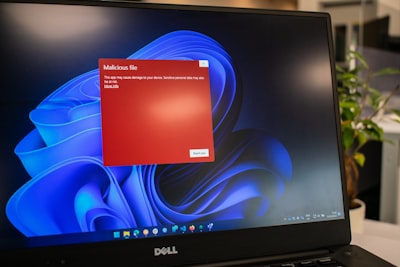
Zoom's recent warning about a critical vulnerability that allows account takeover without authentication has set off alarm bells in the business world. This flaw, present in its desktop client and development kit for Windows, exposes thousands of organizations to an immediate risk: an attacker could take control of an account without the need for credentials, taking advantage of a weakness in the session validation logic. Beyond the one-off news, this incident underscores the importance of having solid cybersecurity strategies in place, especially when remote collaboration tools have become the core of daily operations.
To understand the true extent of this vulnerability, it is necessary to analyze how modern authentication systems handle sessions. In the case of Zoom, the flaw lies in the way the desktop client verifies the user's identity when resuming a session. By not requiring additional authentication on certain flows, an attacker with access to the machine or able to intercept the communication could impersonate the legitimate user. Not only does this compromise the privacy of conversations, but it opens the door to social engineering attacks, data breaches, and lateral movement within the corporate network. The gravity is such that Zoom has urged an immediate update, but the lesson goes beyond patching: it's a reminder that security can't be an add-on, but a pillar by design.
In this context, many companies are reconsidering their investments in cybersecurity. It is no longer enough to rely on generic solutions; A customized approach that assesses the specific risks of each organization is required. This is where companies like Q2BSTUDIO offer differential value. With extensive experience in the development of custom applications and custom software, they understand that each system has its own vulnerabilities and that prevention must be integrated from the design phase. That's why its cybersecurity and pentesting services are designed to identify weaknesses before they are exploited, providing customers with a proactive defense against threats like the one affecting Zoom today.
But cybersecurity is not the only front where companies must act. Exposing this vulnerability also highlights the need for robust and well-configured infrastructures. Many organizations rely on AWS and Azure cloud services to host their applications and data, and cloud security is a field that demands constant attention. From Q2BSTUDIO, a work model is promoted in which security is integrated with the cloud architecture itself, through planned migrations, continuous monitoring and granular access policies. Likewise, the adoption of artificial intelligence and AI for businesses is transforming the way incidents are detected and responded to. AI-based systems can analyze behavior patterns in real-time, identify anomalies, and trigger automatic responses, reducing the time spent exposing themselves to an attack.
It is interesting to observe how this Zoom vulnerability can also be seen from the perspective of business intelligence. Tools such as Power BI and other business intelligence services allow companies to visualize and analyze security metrics, such as failed login attempts or access from unusual locations. Integrating this data into dashboards helps IT teams make informed decisions and prioritize critical patches or configurations. In Q2BSTUDIO, the development of business intelligence solutions goes hand in hand with security, offering dashboards that centralize alerts and facilitate continuous auditing.
On the other hand, the rise of AI agents promises to revolutionize incident response automation. An intelligent agent could, for example, autonomously isolate a compromised system while notifying the security team, all in a matter of seconds. Combined with services such as those offered by Q2BSTUDIO, these capabilities not only improve resilience, but also free up human resources for more strategic tasks.
The Zoom vulnerability is ultimately a case study in the interdependence between security, software development, and technology infrastructure. For companies looking to protect themselves, the answer can't be a simple band-aid; It requires a comprehensive strategy that includes everything from choosing reliable technology partners to implementing continuous evaluation processes. In this sense, Q2BSTUDIO is positioned as an ally capable of addressing all these fronts: from the creation of custom applications with security by design, to the management of AWS and Azure cloud services, to the implementation of artificial intelligence for the early detection of threats. It is not a matter of reacting to a specific vulnerability, but of building systems that are resilient by nature.
The lesson of this incident is clear: no platform, no matter how popular, is without critical flaws. The responsibility for security lies with each organization, and the best investment is one that combines technology, processes, and specialized knowledge. With the right support, such as that provided by Q2BSTUDIO, companies can transform these risks into opportunities to strengthen their cybersecurity posture and ensure business continuity in an increasingly hostile digital environment.
In short, Zoom's alert about account takeover should be a catalyst for companies to review their security policies, update their systems, and consider adopting advanced solutions such as those offered by Q2BSTUDIO. Prevention, monitoring and rapid response are the keys to preventing a vulnerability from becoming a crisis. And on that path, having experts who understand both cybersecurity and custom software and cloud services makes the difference between a simple warning and a real transformation of business security.

