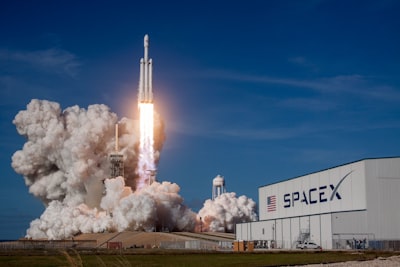
The financial market has set its eyes on SpaceX this week, after its shares fell to the IPO price of $135, just in the run-up to the launch of the Starship rocket, one of the company's most ambitious projects. This move not only reflects the typical volatility of tech stocks, but also invites reflection on the relationship between market expectations and the maturity of the digital infrastructures that underpin these companies.
When a company like SpaceX goes public, the initial enthusiasm often inflates its valuation well above the actual fundamentals. The promise of revolutionizing space transportation, colonizing Mars, and deploying constellations of satellites generates a wave of optimism that, over time, clashes with the reality of technical timelines, cost overruns, and regulatory risks. In this case, the correction towards $135 suggests that investors are reassessing the risk associated with the Starship program, whose long-term success depends on multiple technological and commercial factors.
From a business perspective, managing highly engineered projects like Starship requires a digital architecture capable of processing huge volumes of data in real time. Flight simulations, telemetry analysis, engine monitoring, and distributed team coordination demand scalable platforms that many companies find in the cloud ecosystem. For example, companies like Q2BSTUDIO offer AWS and Azure cloud services that enable organizations of any size to deploy elastic and secure infrastructures, just what any initiative that handles terabytes of information every hour needs.
But the cloud alone is not enough; Intelligence is required to extract value from that data. This is where AI for business becomes a critical enabler. AI agents can automate the analysis of failure patterns, anticipate maintenance needs, and optimize release routes. In fact, machine learning models are increasingly being used in the aerospace industry to predict the behavior of materials under extreme conditions. All of this is part of a bespoke software ecosystem that adapts to unique processes, something that is only possible through bespoke applications developed by teams with industry expertise.
At the same time, cybersecurity becomes a fundamental pillar. Spatial data is a strategic asset, and any breach could compromise entire missions. That's why companies must integrate cybersecurity protocols into all layers of their infrastructure. Q2BSTUDIO also addresses this aspect, helping its customers implement penetration testing and robust access controls.
Another factor that influences market perception is the ability of companies to measure and communicate their progress. Business intelligence services, such as Power BI, allow you to create dashboards that reflect in real time the status of projects, from the evolution of costs to the fulfillment of technical milestones. A company that demonstrates transparency and data-driven control usually generates greater confidence among investors, which could cushion speculative declines such as the one experienced by SpaceX.
The IPO price drop is not necessarily a sign of failure, but an opportunity for the company to demonstrate technical solvency. The Starship, if it manages to complete its launch successfully, could reignite enthusiasm. But beyond the outcome, the lesson for any technology organization is clear: operational robustness increasingly depends on a well-built digital foundation. From developing AI agents to implementing hybrid cloud architectures, every technology decision impacts your ability to innovate and scale.
In this context, companies such as Q2BSTUDIO are positioning themselves as strategic allies. Not only do they offer custom applications and custom software, but they integrate artificial intelligence, cybersecurity, and AWS and Azure cloud services under one umbrella. Its approach allows startups and corporations to streamline their internal processes, reduce risks, and focus on their core business, whether it's launching rockets or any other engineering challenge.
The case of SpaceX also illustrates how market perception can be divorced from technical advances. As stocks fall, engineers are racing against the clock to fine-tune the last details of the Starship. The gap between the financial short-term and the technological long-term is a challenge that many innovative companies face. To get around this, it is vital to have information systems that align strategic objectives with daily execution.
In short, SpaceX's drop to $135 before the Starship launch is a reminder that a company's value is not measured by its promises alone, but by the strength of its processes and the maturity of its underlying technology. Investing in digital infrastructure, from Power BI to AI for business, isn't a luxury—it's a competitive necessity. And on that path, having a technology partner like Q2BSTUDIO can make the difference between a company that is only in the news because of its share price and another that really transforms its industry.