
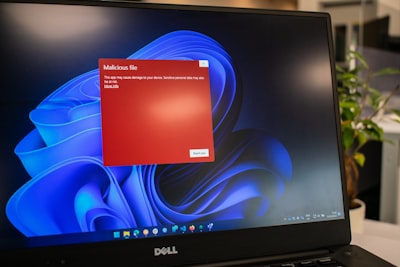
The announcement by the Nightmare Eclipse group about the publication of a zero-day called 'LegacyHive' for Windows has shaken up the cybersecurity landscape. While the researchers removed the proof-of-concept (PoC) code to prevent immediate exploitation, the mere existence of this flaw reveals an uncomfortable reality: legacy systems are still the Achilles' heel of many organizations. These types of vulnerabilities, which affect older components of the operating system, allow attackers to execute arbitrary code without the need for authentication, becoming an ideal gateway for ransomware, data exfiltration or lateral movements within the network.
For businesses, managing these risks goes beyond patching. It requires a comprehensive approach that combines continuous monitoring, network segmentation and, above all, a software development strategy that considers security by design. This is where the ability to build custom applications that not only fit the needs of the business, but include layers of protection against threats like LegacyHive comes into play. At Q2BSTUDIO we understand that every line of code is a potential attack vector, which is why we integrate vulnerability scanning and penetration testing into our custom software development processes.
The publication of this zero-day also underlines the importance of artificial intelligence in the early detection of anomalies. Traditional signature-based antivirus systems are insufficient in the face of unknown exploits. In contrast, enterprise AI solutions that employ machine learning models can identify suspicious behavior even before an attack materializes. AI agents, for example, are able to correlate security events in real-time, isolate compromised endpoints, and trigger automated responses, dramatically reducing exposure time to zero days like LegacyHive.
Another fundamental pillar in the defense against zero-days is cloud infrastructure. Many organizations migrate their workloads to platforms like AWS or Azure looking for scalability, but neglect security settings. The AWS and Azure cloud services we offer at Q2BSTUDIO include hardening audits, least-privilege access policy implementation, and SIEM monitoring. In this way, even if an attacker exploits a vulnerability such as LegacyHive on a legacy server, the impact is contained thanks to a well-segmented cloud architecture.
We cannot forget the role of business intelligence in cybersecurity. Tools such as Power BI allow you to visualize risk metrics, incident trends, and control effectiveness, transforming safety data into strategic decisions. At Q2BSTUDIO, we integrate business intelligence services that help CISOs present clear executive reports and justify investments in protection against emerging threats. Combining Power BI with data sources from firewalls, EDR, and application logs creates a comprehensive dashboard that anticipates the adversary's next move.
The case of LegacyHive also reminds us that legacy software doesn't disappear overnight. Many companies rely on critical applications running on Windows Server 2008 or even earlier, for which there are no official patches. In these situations, the only viable solution is to develop custom applications that replace outdated functionalities with a modern, secure design, or to implement compensatory controls such as virtualization with isolation, network segmentation, and continuous process monitoring. At Q2BSTUDIO we have helped several organizations migrate their legacy systems to robust cloud platforms, reducing the attack surface and ensuring business continuity.
From a technical perspective, zero-days like LegacyHive often exploit memory management failures, buffer overflows, or race conditions. The security research community spends weeks analyzing the patch released by Microsoft to understand the vulnerability and create detection signatures. However, the real challenge lies in the responsiveness of organizations. A well-defined incident response plan, complemented by automation and orchestration tools, can make the difference between a controlled scare and a massive breach.
Generative artificial intelligence is also emerging as an ally in the fight against zero-days. AI agents trained on large volumes of network traffic data can simulate attacks and generate hypotheses about potential exploitation vectors. This anticipation capability allows security teams to bolster defenses before the PoC is released. At Q2BSTUDIO we are exploring the use of language models to automate incident report writing and log correlation, thus accelerating decision-making.
In conclusion, the release of the zero-day LegacyHive by Nightmare Eclipse is not just another piece of news in the vulnerability calendar; It's a reminder that cybersecurity should be a strategic priority, not an add-on. Companies that take a proactive approach, based on custom software, artificial intelligence, secure cloud and business intelligence, are better prepared to face unknown threats. At Q2BSTUDIO we deliver all of these capabilities in an integrated way, helping organizations transform security into a business enabler, not a hindrance. If your company is looking to protect its critical assets from zero-days like LegacyHive, our team of cybersecurity, development, and cloud experts is ready to design a strategy tailored to you.

