
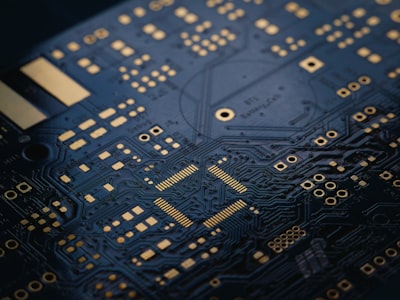
The rise of artificial intelligence and the need to process data in real-time are pushing computing infrastructure beyond Earth. Companies and governments invest billions in orbital stations, satellites and future lunar data centers. However, the design of GPUs for space remains anchored in terrestrial paradigms that assume benign atmosphere, convective cooling, and radiation environments. The reality of space demands a comprehensive rethink, where radiation hardening is just the tip of the iceberg. Phenomena such as electromigration, extreme thermal cycling, cold welding, and cumulative degradation of materials threaten the reliability of processors during missions that can last decades.
In the face of these challenges, the traditional approach of protecting silicon with shielding and redundancy is no longer sufficient. The next generation of spatial computing requires architectures that integrate intelligence and adaptability. It's not just about surviving, it's about actively managing aging hardware. For example, electromigration—the displacement of atoms by high current density—can be mitigated with custom applications that dynamically balance the workload between different compute units. Similarly, multilayer shielding can no longer be an isolated subsystem; It must merge with the structure of the ship, cooling systems, and water supply to be efficient in mass and function. This is where companies like Q2BSTUDIO add value: they develop custom software that allows real-time monitoring of wear indicators, distribution of processes according to thermal history and reconfiguration of the cluster in the event of solar radiation events.
Cybersecurity also becomes critical when autonomous systems make decisions without human intervention. A bit corrupted by cosmic lightning can trigger catastrophic failures if left undetected. That's why future space GPUs will incorporate layers of redundant verification, while ground-based control centers need robust AWS and Azure cloud services to handle telemetry and firmware updates. Q2BSTUDIO offers AWS and Azure cloud services that allow these data flows to be orchestrated with high availability, also integrating business intelligence services such as Power BI to visualize the health status of each processor. The combination of enterprise AI and autonomous AI agents makes it easier to predict failures before they occur, optimizing long-term performance.
One of the lesser-known obstacles is cold welding: in a vacuum, two clean metal surfaces can be fused without heat. This affects interchangeable connectors and modules. The solution involves specialized coatings, dry lubricants and mechanical designs that avoid direct contact. But beyond materials engineering, true innovation lies in treating reliability as a software goal. Scheduling algorithms must learn to rotate loads to match thermal and electrical wear, something that Business Intelligence Services with Power BI can model and visualize for engineering teams. So, instead of replacing hardware every few years, orbital clusters remain operational for full missions.
Designing GPUs for space is, at its core, a systems problem. It requires collaboration between physicists, materials engineers, hardware architects, and software developers. Q2BSTUDIO brings its expertise in artificial intelligence applied to the monitoring of critical infrastructures, creating tailor-made applications that integrate everything from sensor telemetry to autonomous decision-making. In addition, its cybersecurity solutions protect communication links and remote update processes, ensuring that no external agent can compromise data integrity.
Looking to the future, spatial data centers will not only run AI workloads, but will be self-aware: able to measure their own aging, relocate processes, and extend their lifespan. This paradigm shift—from passive hardware to adaptive infrastructure—defines the next frontier of computing. And along the way, having technology partners like Q2BSTUDIO, who understand both custom software and cloud integration, makes the difference between a mission that fails and one that transforms our understanding of the cosmos.

