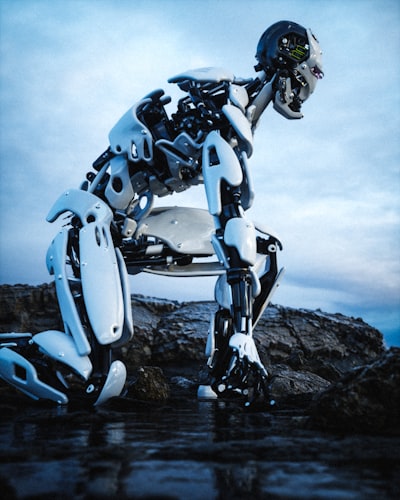
Autonomous navigation in changing fluid environments represents one of the most complex challenges for modern robotics. Ocean currents, dynamic rivers or non-stationary atmospheric flows challenge any classical control system, which needs to know the full range of speeds to plan optimal trajectories. However, nature proves that it is possible to move precisely using only local information: fish detect pressure variations, birds orient themselves with the wind, and insects take advantage of eddies. This bio-inspired approach is driving a new generation of reinforcement learning (RL) algorithms capable of training artificial agents to navigate under conditions of partial observability and uncertainty.
Recent research in simulation of chaotic flows, such as the well-known parametric double-twist model, has evaluated different sensory strategies for an agent to learn to achieve arbitrary goals. The results reveal fascinating findings: agents equipped with local velocity sensors and short-term memory of a few samples achieve the best overall performance. In contrast, vorticity sensors, although less energy-efficient, provide structural flow mapping that allows greater proximity to the target. Most surprisingly, providing the agent with the overall parameters of the flow—something that would seem advantageous—impairs its ability to navigate, suggesting that the most robust and generalizable policies emerge when the system is limited to implicit representations of the environment.
This finding has profound implications for the design of real robotic systems. Instead of relying on complex and expensive current prediction models, engineers can opt for inexpensive local sensors and RL algorithms that learn to exploit recurring patterns. The key is in the choice of observation space: combining speed, vorticity and temporal memory allows the agent to build a kind of cognitive map of the flow without the need for a global model. This philosophy aligns with the principles of artificial intelligence for enterprises, where adaptability and efficiency are critical.
In the business context, these techniques open up opportunities in multiple sectors. For example, in autonomous underwater exploration for the oil industry or monitoring marine ecosystems, robots can optimize their data collection routes without human intervention, saving time and fuel. In precision agriculture, drones equipped with local wind sensors can spread fertilizer or pollinate crops by following air currents. Even in logistics, autonomous vehicles navigating warehouses with variable drafts can benefit from policies learned using RL.
Implementing these solutions in real-world environments requires a robust technology platform. Companies like Q2BSTUDIO offer artificial intelligence solutions for companies that integrate everything from flow simulation to deployment on embedded hardware. In addition, custom application development allows algorithms to be tailored to specific sensors and operational constraints. The scalability of these systems is supported by AWS and Azure cloud services, which provide the necessary computing capacity to train complex models and execute inferences in real time. Cybersecurity also plays a crucial role in protecting communications between autonomous agents and control stations, preventing cyberattacks that could deviate trajectories or steal sensitive data.
Another emerging dimension is the creation of specialized AI agents that not only navigate, but also make contextual decisions based on historical data. These agents can be trained with deep reinforcement learning techniques such as TD3, SAC or PPO, and then deployed in fleets of collaborative robots. The management of the information generated by these systems requires business intelligence tools such as Power BI, capable of visualizing routes, efficiencies and anomalies in interactive panels. Thus, a company can monitor an entire ocean operation from one office, with dashboards that show the performance of each agent and alert to deviations.
The study of navigation in non-stationary flows also yields lessons on the design of robust policies. The observation that global parameters impair learning suggests that, in many robotics problems, less information can be more. This is reminiscent of the principle of parsimony in artificial intelligence: simpler models with lower dimensionality tend to generalize better. For companies developing autonomous systems, this implies that investing in expensive sensors or complex predictive models is not always the best strategy. A minimalist approach, based on reinforcement learning and local observations, can deliver superior results with a lower cost of implementation.
Looking ahead, the combination of bio-inspired techniques with low-cost hardware and efficient algorithms paves the way for autonomous robots operating in dynamic environments without human supervision. Research in chaotic flows is not just a theoretical laboratory, but a testbed for validating principles that are then transferred to real applications. Q2BSTUDIO, with its expertise in custom software and process automation, accompanies companies in this transition, offering solutions that integrate from initial simulation to field deployment. Optimal navigation in non-stationary flows is not a distant dream: it is already a reality in the prototyping phase, and organizations that adopt these technologies will be better positioned to take advantage of the next wave of intelligent robotics.