
In today's world, where data grows exponentially, the ability to organize and segment information efficiently has become a strategic pillar for companies. One of the most powerful techniques for achieving this segmentation is graph partitioning, a field that has evolved from simple cutting algorithms to sophisticated models that incorporate demands and capabilities. In this article we explore the concept of generalized conductance, a metric that balances the cost of separating groups with the importance of internal and external connections, and how this idea applies in business and technological contexts.
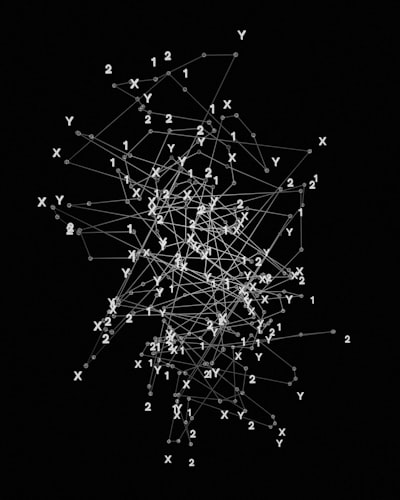
Let's imagine a network of customers where each node represents a user and the edges, their interactions. If we also assign a weight to each possible pair of customers – for example, the value of the transactions between them – we are looking at a graph with demands. The classic partitioning problem seeks to divide the graph into two parts minimizing the cost of the cut edges, but with demands, the metric must also reflect the amount of demand that remains within each part. Generalized conductance does just that: it measures the ratio of the cost of the cut to the product of each side's total demands. The lower that value, the more balanced and meaningful the partition.
From a practical point of view, this formulation has direct applications in market segmentation, the detection of communities on social networks, the organization of product catalogs or even in the optimization of supply chains. For example, an e-commerce company can use generalized conductance to group products that are frequently purchased together, maximizing internal demand from each group and minimizing connections between groups. This allows you to create more accurate recommendations and optimize inventory.
Solving these types of problems is not trivial. In fact, it belongs to the NP-hard class of problems, so approximation algorithms are required. Recent research has shown that a logarithmic approximation can be achieved by reducing it in two steps: first to the generalized multislice problem and then to a restricted variant of the more dispersed cut-off problem. These techniques make it possible to handle graphs with millions of nodes and arbitrary demands, which makes them viable for implementation in real environments.
A particularly interesting extension is the hierarchical partition, where the aim is to build a tree of cuts that refines the partitions from the most general to the most specific. This is essential for hierarchical clustering algorithms with demands, which are widely used in document categorization, biological network analysis, or in the organization of customer data. The ability to obtain a logarithmic approach to this problem opens the door to scalable solutions that can be integrated into business intelligence and data visualization platforms.
In the business context, implementing these algorithms requires robust and customized technological solutions. It is not enough to have the theory; Tailor-made software is needed that adapts the models to the specific data of each organization. This is where companies like Q2BSTUDIO play a key role. Its team of experts develops bespoke applications that integrate advanced optimization techniques, artificial intelligence and graph processing, enabling companies to extract real value from their data. In addition, they offer AWS and Azure cloud services to deploy these systems in a scalable manner, ensuring that the heaviest workloads are handled efficiently.
Cybersecurity also benefits from these techniques. For example, graph partitioning with demands can be used to segment computer networks so that critical assets are isolated, minimizing the risk of attack propagation. Security teams can define demands based on data criticality and apply outages that limit traffic between zones, all automated by AI agents that monitor and adjust partitions in real-time. This convergence between graph optimization and cybersecurity is one of the most promising areas for the coming years.
Likewise, artificial intelligence for companies is increasingly relying on these representations. Machine learning models that work with relational data, such as social media or recommendation systems, often need to preprocess the graphs to extract meaningful features. Generalized conductance provides a natural way to identify substructures that can then feed into neural networks or classical clustering algorithms. Even tools like Power BI can connect to these results to offer interactive dashboards where analysts explore the obtained partitions.
When the demands are multiplicative, the approximation results improve to logarithmic square root, and for trees constant approximations are reached. This indicates that the structure of the graph directly influences the difficulty of the problem, and that ad hoc solutions can be very efficient in particular cases. Companies that need to segment organizational hierarchies, product structures, or process flows can benefit from these advancements without having to invest in generic models.
In summary, the partitioning of graphs with demands and generalized conductance represent an exciting area of research with enormous practical potential. From customer segmentation to cybersecurity, process optimization and network analysis, the applications are endless. To put these ideas into practice, having a technology partner like Q2BSTUDIO, which offers business intelligence services, custom software development and cloud solutions, makes the difference between a theoretical concept and a tool that generates real value. The next time your business needs to organize complex data, remember that behind good clustering is a well-partitioned graph.

