
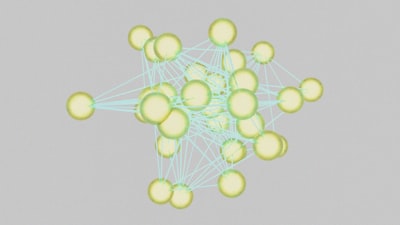
Hierarchical grouping is one of the most widely used techniques in data analysis, especially when seeking to understand the nested structure of a set of elements. Traditionally, the recursive process continues until each cluster becomes a singleton, i.e., a single element. However, a recent variant of great practical interest relaxes this condition: recursion stops when each cluster belongs to a predefined class of graphs, such as trees or graphs with a limited diameter. This approach, known as hierarchical grouping into structural classes, allows for more complex and realistic relationships to be modeled, reducing excessive fragmentation and improving the interpretability of the results.
The scientific community has approached this problem from the perspective of combinatorial optimization, adapting the well-known Dasgupta objective to measure the quality of clustering. The most recent results present approximation algorithms with theoretical guarantees: an O(log n · log n) factor for the case of trees and an O(log n) factor for dimensioned diameter graphs, both executable in polynomial time. The technical key lies in the use of integer linear programming (ILP) combined with a rounding scheme, an approach that proves to be generalizable to other graph families as long as the underlying plane clustering problem has an ILP formulation and a rounding method with demonstrable approximation guarantees.
From a practical perspective, these techniques have direct applications in multiple sectors. In business, for example, customer segmentation often requires groups to form natural hierarchies, such as a tree of product or service categories. A clustering model that stops recursion when the cluster is a tree allows you to capture that structure without forcing partitioning down to the individual level. Similarly, in sensor networks or IoT systems, clusters with a limited diameter ensure that all nodes within a group are at a maximum known distance, making it easier to communicate and allocate resources.
For these abstract solutions to become operational tools, a robust technology ecosystem is needed. This is where companies like Q2BSTUDIO play a critical role, offering bespoke applications that integrate advanced clustering algorithms into enterprise platforms. Custom software development allows theoretical models to be adapted to the real data of the organization, considering restrictions of scale, real time and data quality. In addition, the implementation of these algorithms often requires a powerful and flexible cloud infrastructure; AWS and Azure cloud services offered by Q2BSTUDIO ensure the scalable deployment of clustering processes, even when handling millions of data points.
Artificial intelligence also finds fertile ground here. Hierarchical clustering algorithms with structural constraints can serve as the basis for recommender systems, anomaly detection, or unsupervised classification. Q2BSTUDIO develops AI for enterprises that incorporates these models into automated workflows, allowing organizations to make decisions based on patterns hidden in their data. AI agents can, for example, run real-time clustering on financial time series to identify market regimes, or on system logs to detect anomalous behavior before it becomes cybersecurity incidents.
Precisely, cybersecurity benefits greatly from these techniques. By analyzing network traffic or access patterns, clusters with a limited diameter allow you to identify groups of hosts that interact intensively with each other, thus delimiting possible attack perimeters. Q2BSTUDIO offers cybersecurity and pentesting integrated with advanced clustering models, detecting intrusions from the structure of communications.
On the other hand, visualizing results is crucial for decision-making. Business intelligence services with Power BI make it possible to transform dendrograms and clustering quality metrics into interactive dashboards, making it easier for managers and analysts to understand hierarchies and take informed actions. The combination of hierarchical clustering with Business Intelligence is a growing trend, and its implementation Q2BSTUDIO led in companies of various sizes.
From a technical point of view, the challenge of approaching these clustering problems with constant guarantees remains open. In fact, under the Small Set Expansion hypothesis, it has been shown that it is not possible to achieve constant factors either for trees or for graphs with a limited diameter. This drives the search for heuristic and metaheuristic algorithms that, although without theoretical guarantees, offer good results in practice. In this sense, the flexibility of the tailor-made software allows experimenting with different variants of the target function and stop criteria, adapting the solution to the specific domain.
Another interesting line of work is the extension of the linear programming framework to other kinds of graphs. The characterization of the families for which it is possible to construct an ILP with effective rounding opens the door to applications in computational biology, social network analysis, and recommendation systems. For example, if class F is defined as complete bipartite graphs, hierarchical clustering could model purchasing relationships between customers and products in a natural way. Companies like Q2BSTUDIO, with their expertise in process automation, can implement these models so that the system automatically updates as new data arrives, generating dynamic and adaptive clusters.
On a more prospective level, the convergence of hierarchical clustering with structural constraints and AI agents could give rise to autonomous systems capable of organizing information without human intervention. Imagine a virtual assistant that, from a set of documents, builds a thematic tree that stops when each branch is a fundamental concept, and then uses that tree to answer questions or generate summaries. This is no longer science fiction; The mathematical foundations are in place and the development of custom applications is the key to bringing it to production.
Of course, we must not forget the computational challenges. The approximation algorithms presented in the recent literature have polynomial complexities, but in practice, with massive datasets, it is necessary to optimize each step. Here, Q2BSTUDIO's cloud services (AWS and Azure) provide the necessary elasticity, allowing you to run the ILP on instances with many cores and memory, and then scale to distributed solutions if needed. Integration with Big Data tools such as Spark or Flink accelerates the preprocessing and construction of the distance matrix.
In summary, hierarchical grouping into trees and graphs with a limited diameter represents a natural evolution of a classical technique, adapting it to modern needs where the structure of the clusters matters as much as their content. The scientific community has made steady strides with approximation algorithms based on linear programming, but true innovation occurs when those concepts are materialized in software solutions that solve real problems. Q2BSTUDIO, with its portfolio of bespoke applications, artificial intelligence, cybersecurity, cloud services and business intelligence, is uniquely positioned to help companies take advantage of these advances and turn them into competitive advantages. The key is to understand that each clustering problem is unique and that custom software, together with the ability to integrate cutting-edge mathematical models, is the tool that transforms data into knowledge.
