
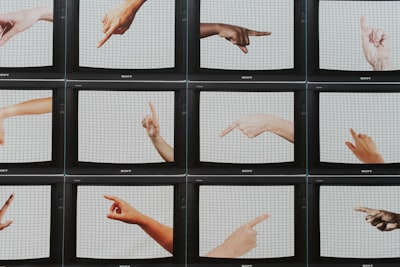
Artificial intelligence is transforming the way people communicate, and one of the most promising fields is the generation of video from text, especially for sign language. Projects such as Text2Sign represent an important step towards creating accessible tools that allow the deaf community to receive automatically generated visual information. This approach, although still in the research phase, lays the foundation for practical applications that can be integrated into business and social environments. In this article we explore the technical underpinnings of these models, their current limitations, and how companies like Q2BSTUDIO can help transform these ideas into real solutions, combining AI for business with custom software development.
The Text2Sign model uses a text-conditioned diffuser to generate short video sign clips. Unlike large-scale video production systems, which require GPU clusters and huge training budgets, this model runs on a single NVIDIA L4 GPU, making it a viable option for small teams or labs with limited resources. Its architecture combines a pre-trained text encoder (vision-language) with a 3D encoder-decoder and factored spatio-temporal attention, drastically reducing computational cost. This design allows you to process 32-frame sequences in resolutions of 64x64 pixels, generating a clip in just over 12 seconds. The in-memory efficiency, with a peak of 3.12 GB, makes it attractive for environments where hardware is a scarce resource, but it also reveals one of its biggest limitations: the low resolution and short duration of the sequences.
The quantitative results of the study show a loss of validation that reaches 0.00999 in long workouts, and metrics such as SSIM of 0.24 and PSNR of 15.11 dB, which although modest, are acceptable for a baseline. Most telling, however, is the prompt audit: by removing the input text, the loss hardly increases, and with messy prompts no significant separation is observed. This indicates that text conditioning, although useful for improving loss in short budgets, does not achieve high semantic specificity. That is, the model tends to generate generic sign movements without a precise correspondence with the textual meaning. For practical applications, such as automatic translation of content into sign language in real time, much higher quality and exact synchronization between text and gestures are needed.
Despite these limitations, Text2Sign represents a step forward in democratizing access to video generation technologies. Its open source allows the research community and development companies to experiment and improve the model. In this context, Q2BSTUDIO has integrated similar concepts into its process automation projects, where the generation of personalized visual content can be applied to accessibility, training, and internal communication. For example, a system that converts emails or internal documents into sign language videos could be implemented by combining a lightweight model like Text2Sign with AI agents that manage workflow and output quality. Not only would this improve inclusion, but it would also reduce reliance on human interpreters for routine tasks.
From a business perspective, the key is to understand that these models are not end products, but components within a larger solution. To scale the technology to productive environments, it is necessary to integrate cloud services such as AWS and Azure cloud services for scalable deployment, and business intelligence tools such as Power BI to measure the effectiveness of implementations. In addition, cybersecurity plays a crucial role: the video data generated contains sensitive personal information, so it is necessary to implement robust cybersecurity protocols. Q2BSTUDIO offers precisely that layer of integration, developing custom applications that connect AI models with enterprise infrastructures, ensuring performance, security, and scalability.
The future of sign video generation lies in overcoming the barriers of resolution and semantic specificity. Researchers are already working on more efficient global attention diffusion architectures, and on using larger language models as text encoders. Training on multilingual datasets to cover different sign languages is also explored. In the meantime, the industry can begin to adopt these technologies in controlled environments, such as the generation of educational content for the deaf or digital signage in public spaces. On this path, having a technology partner that understands both the technical and business side is essential. Q2BSTUDIO, with its expertise in enterprise AI and AI agent development, can help design functional prototypes and validate their impact before a larger investment.
In conclusion, Text2Sign is a clear example of how frontier research can be translated into accessible tools, albeit with limitations. The scientific and business community must work together to bridge the gap between the baseline and a complete sign video production system. With the right strategy, combining lightweight broadcast models, cloud infrastructure, and tailored applications, it is possible to deliver inclusive and cost-effective solutions. At Q2BSTUDIO we are committed to that goal, helping companies integrate cutting-edge technology into their daily processes to improve communication and accessibility.
