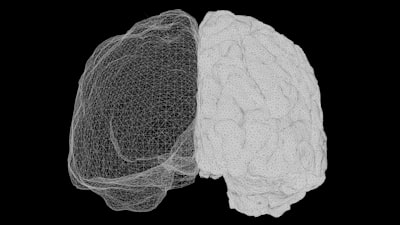
Personalized medicine is undergoing a radical transformation thanks to the convergence of artificial intelligence, numerical simulation, and the ability to process data in real time. In the field of oncology, one of the most promising developments is the concept of adaptive digital twin for brain tumors. A digital twin is a virtual replica of an organ or tissue that is continuously updated with information from the real patient, making it possible to predict the evolution of the disease and optimize treatments. Until recently, these models relied exclusively on differential equations describing cell diffusion and proliferation, but their long-term accuracy suffered from the spatial heterogeneity of the tumor and the variable response to therapy. Now, the integration of deep learning and predictive control modules is taking these systems to a new level of fidelity and clinical applicability.
The traditional reaction-diffusion (DR) approach captured the global location and temporal behavior of the tumor, but underestimated the tumor burden over long prediction horizons. The incorporation of three-dimensional residual neural networks as a corrector module of the physical model allows to reduce the mean square error by 84% and improve the Dice overlap by more than 40% compared to the base RD model. This shows that a hybrid architecture, which combines interpretable physical laws with machine learning, overcomes the limitations of both approaches separately. But the real quantum leap comes when that digital twin is adaptively updated as new patient observations come in, either through MRI scans or biomarkers. In simulations with realistic synthetic data, the online update further reduced error by 46% and improved overlap by nearly 10%.
From a biomedical engineering perspective, this framework represents a paradigm shift: it is no longer a fixed model that is calibrated once, but a living system that learns and adjusts to the particular evolution of each patient. Model-based predictive control (MPC) also allows the dosing of chemotherapy and radiotherapy to be planned under real clinical constraints, such as maximum toxicity in healthy tissue. Preliminary results show that an updated digital twin-assisted treatment scheduler reduces the final tumor burden by 22% compared to a fixed regimen. Although these experiments have been conducted with synthetic trajectories generated from real patient data, they lay the groundwork for implementation in clinical settings, where integration with electronic health record systems and AWS and Azure cloud service platforms would be essential to handle the massive volume of images and compute-intensive computing.
In this context, companies such as Q2BSTUDIO are trained to develop the technological infrastructures that allow these research prototypes to be brought to the hospital. For example, the creation of custom applications for the visualization and annotation of 3D medical images, or the implementation of
custom software for integrating AI models into oncology workflows. Artificial intelligence applied to medicine requires not only powerful algorithms, but also secure and scalable environments. For this reason, at Q2BSTUDIO we offer business intelligence services with tools such as power bi to monitor tumor evolution indicators in real time, as well as AI for companies with AI agents that assist oncologists in decision-making. Cybersecurity is another fundamental pillar, since patient data is extremely sensitive; our cybersecurity services ensure that all information is compliant with regulations such as HIPAA or GDPR.
The adaptive digital twin is not a distant technology. Advances in cloud computing allow residual networks to be trained on GPU instances hosted on AWS and Azure cloud services, while predictive control models can run in real time at the edge, close to the MRI equipment. Automating clinical processes using digital twins would reduce the manual workload of radiologists and allow radiation doses to be dynamically customized, adapting to tumor morphological changes between sessions. All of this is possible today if you have the right technology partner.
At Q2BSTUDIO, we understand that digital transformation in healthcare is not just about implementing software, but about co-creating solutions that integrate clinical knowledge with the power of AI. That's why our offering ranges from initial consulting to production deployment, through the development of artificial intelligence for companies and integration with legacy systems. When we talk about custom applications, we are referring to tools that adapt exactly to the specialist's workflow: interactive Power BI dashboards to visualize the forecasted evolution, automatic update modules of the digital twin through secure APIs, and early warning systems based on AI agents that detect deviations between prediction and reality.
The future of brain cancer treatment lies in the ability to anticipate drug resistance and invasion of healthy tissue. Adaptive digital twins are the tool that will allow oncologists to simulate hundreds of therapeutic scenarios before applying them to the patient, minimizing side effects and maximizing efficacy. Combining mechanistic models with real data, continuous updating and predictive control is the way forward. And on that path, having a company that offers customized software with solid capabilities in AWS and Azure cloud services, cybersecurity and business intelligence services makes the difference between a laboratory project and an implantable solution in the hospital.
To learn more about how to develop these architectures, we invite you to learn about our custom application and AI solutions for enterprises. At Q2BSTUDIO, we work every day to make artificial intelligence not just a promise, but a life-saving clinical reality.