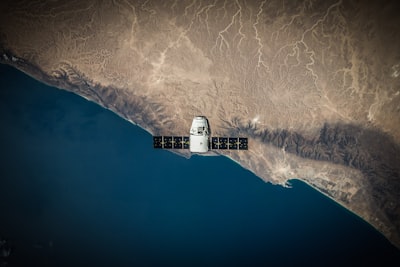
In the ecosystem of embedded software for critical systems, few environments are as demanding as that of space missions. NASA has been developing robust flight platforms for decades, and one of its key components is the Core Flight System (cFS), a reusable framework that manages telemetry, commands, and applications aboard satellites and spacecraft. Within this ecosystem, the Health & Safety (HS) application is responsible for monitoring the status of the system and taking corrective actions in the event of failures. A recent vulnerability, identified as CVE-2026-15352, has put the fragility of these environments in the spotlight when apparently basic programming errors appear, such as the dereference of a null pointer.
The flaw lies in the way the HS application processes a routine request for housekeeping telemetry. Under certain conditions, the software attempts to access a memory address that has not been initialized correctly, causing a segmentation fault that brings the application to a complete halt. This turns the incident into a denial-of-service (DoS) which, in a flight environment, could result in loss of supervisory capability and potentially loss of mission. The severity of the matter is reflected in the CVSS scores: 7.5 in version 3.1 and 8.2 in version 4.0, both of which are considered high.
What's interesting about this vulnerability is not only its immediate impact, but what it reveals about security in legacy embedded systems. The cFS has been developed over the years, with multiple contributions and patches. The presence of an error as elementary as a null pointer in a telemetry routine suggests that, even in high-level projects, code reviews and security testing can have loopholes. For companies developing custom software for critical industries – such as aerospace, rail or energy infrastructure – this case is a wake-up call on the need to integrate static and dynamic code analysis from the earliest stages of the lifecycle.
The fix, according to NASA, consists of updating to version 7.0.1 of the HS application, available in its official repository. However, the patch does not solve the underlying problem: how to prevent similar errors from appearing in other cFS modules or in related systems? This is where cybersecurity ceases to be a complement and becomes a pillar of development. Pentesting and code audits focused on memory vulnerabilities—such as buffer overflows, usage-after-free, or null pointers—are essential to ensure the robustness of any application operating in environments where downtime is not an option.
From a business perspective, this incident underscores the importance of having technology partners who understand both infrastructure and software. At Q2BSTUDIO, we offer cybersecurity services that include vulnerability analysis and security testing for embedded applications and IoT systems, helping organizations identify flaws before they are exploited. But protection doesn't end at code: modern systems are increasingly relying on the cloud for telemetry and data storage. That's why combining application-level security with well-configured AWS and Azure cloud services is a smart strategy. A poorly segmented cloud deployment can expose command interfaces to remote attacks, such as the one this vulnerability enables.
Beyond the immediate patch, organizations using cFS or derivatives should consider a defense-in-depth strategy. Continuous monitoring using artificial intelligence can detect anomalous patterns in telemetry requests that indicate an exploitation attempt. AI agents specialized in security can analyze logs in real time and generate alerts for suspicious behavior, reducing the window of exposure. In addition, the implementation of dashboards with Power BI allows you to visualize the health of the system and correlate security events with performance metrics, facilitating decision-making for operations teams.
The context of this vulnerability is also relevant for the transport sector. NASA classifies the affected critical infrastructure sectors as 'Transportation Systems', and the cFS has been used in demonstration missions of autonomous vehicles and air navigation systems. A bug in the health and safety application could disable failover mechanisms, leaving a vehicle unresponsive to hardware failures. Companies developing custom applications for the logistics or mobility sector must consider these risks and incorporate stress testing and fuzzing into their CI/CD pipelines.
Artificial intelligence for business plays a dual role here: not only does it help detect intrusions, but it can also be used to generate test cases that explore unusual execution paths, precisely where null pointers are often hidden. Machine learning models trained with execution traces can identify insecure memory patterns and suggest corrections in an automated manner. At Q2BSTUDIO, we work with clients to integrate these capabilities into their development processes, combining static analysis with business intelligence services solutions that translate technical findings into actionable reports for management.
The fact that the vulnerability was reported by an external researcher (Grady DeRosa) through CISA should not be underestimated. This demonstrates the importance of maintaining open channels with the security community and engaging in responsible outreach programs. For any company that develops custom software, having a policy for receiving vulnerability reports is as vital as updating dependencies. Transparency and speed in the release of patches are signs of technical maturity and trust towards customers.
Finally, it is necessary to reflect on the future of flight systems and their dependence on generalist software components. The cFS is an open source project that has democratized access to space technology, but its success also means that bugs spread to multiple implementations. The lesson of CVE-2026-15352 is that security should be proactive, not reactive. Integrating safe programming principles from the design, conducting peer code reviews, and employing formal verification tools are investments that amortize the cost of a catastrophic failure. In a world where satellites manage communications, earth observation and navigation, the denial of service of a health and safety module can have consequences that go beyond the technical, affecting the economy and national security.
For organizations looking to strengthen their critical systems, Q2BSTUDIO offers specialized consulting in security, custom software development and deployment in cloud environments. Whether they need to implement AI for companies that monitors their infrastructures in real time, or design a resilient architecture in AWS and Azure cloud services, our team is ready to accompany them at every stage. Prevention is the best tool against attacks that have not yet occurred, and this NASA case is a reminder that no system, no matter how well designed, is immune to a simple null pointer.