
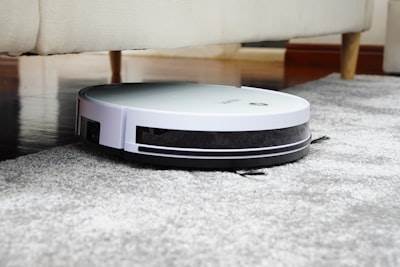
In the hyper-connected world of smart devices, security has become a double-edged sword: the same cloud that enables remote control and automation can also expose users to unforeseen risks. A recent finding in a Shark smart vacuum cleaner, which uses Amazon Web Services (AWS) cloud services, has brought to the table a critical vulnerability that allows an attacker to access root drives over thousands of drives in the same AWS region. Exploitation only requires extracting a digital certificate from the device itself using a flash memory, and with this it is possible to view the camera, move the robot, consult the map of the house and, most alarmingly, obtain the WiFi password in plain text. This incident is not isolated; represents a crack in the Internet of Things (IoT) ecosystem that urgently needs to be analyzed from cybersecurity, software development, and cloud architecture.
The case, published by a researcher under the pseudonym tokay0, demonstrates how a failure in credential management and a poorly segmented architecture can turn an appliance into a backdoor to privacy for hundreds of homes. The root of the problem is that all devices of the same model share an identical digital certificate stored in flash memory. By extracting it, the attacker can authenticate to the AWS infrastructure as if they were any other robot in the same region, thus gaining administrative privileges to send arbitrary commands. Not only does this compromise home security, but it reveals weaknesses in the software supply chain and cloud identity policies.
From a technical perspective, the vulnerability combines two classic elements: a shared secret (a single certificate for all devices) and an absence of authentication per device or user. In cloud environments such as AWS, best practices require the use of differentiated IAM (Identity and Access Management) roles and policies for each unit, accompanied by rotation of individual credentials and certificates. However, in many IoT products, the business priority lies in ease of manufacturing and updating, leaving cybersecurity aside. This is where custom application development and consulting in AWS and Azure cloud services become indispensable allies for companies looking to launch connected products without putting their customers at risk.
The researcher's publication not only affects the owners of the Shark RV2320EDUS, but opens a broader discussion about zero trust design in the IoT. Rather than assuming that hardware is secure on its own, organizations should implement continuous verification systems, network segmentation, and encrypted communication protocols for each device. In addition, the remote firmware update should include robust cryptographic mechanisms that prevent easy key extraction. Companies that offer custom software for IoT must internalize these principles from the design phase, integrating artificial intelligence to detect anomalous behaviors in communication between the robot and the cloud, or using AI agents to autonomously manage the assignment of dynamic certificates.
Beyond the home, this vulnerability has business consequences. A fleet of smart vacuum cleaners in a corporate building could be exploited to access internal networks, spy on meetings, or steal corporate WiFi credentials. Companies that use business intelligence services such as Power BI to monitor the efficiency of their connected devices should also consider that data flowing to the cloud can be intercepted if the security layer is poor. At Q2BSTUDIO, we understand that technological innovation must be accompanied by a secure architecture; For this reason, we offer cybersecurity and pentesting services that identify these attack vectors before they are exploited. Our team helps organizations audit their cloud deployments, perform penetration testing in IoT scenarios, and design custom applications with a secure-by-default approach.
The incident also underscores the importance of identity management in the cloud. On AWS, services such as AWS IoT Core, Cognito, and Secrets Manager are designed to manage credentials in a granular way. However, its implementation requires expertise in AWS and Azure cloud services to avoid insecure configurations. tokay0's research is a wake-up call for manufacturers to adopt a 'security by design' approach, where each device receives a unique certificate during manufacturing, and where any remote commands are authenticated at the end-user level, not just hardware. In addition, firmware updates must be digitally signed and verified before installation.
For consumers, the lesson is clear: smart devices should not be blindly trusted. Changing the default WiFi password, updating firmware regularly, and reviewing mobile app permissions are basic practices. But the greater responsibility lies with the developers and manufacturers. Here, artificial intelligence for business can play a preventive role: machine learning algorithms trained to detect anomalous communication patterns in IoT traffic can alert about certificate exploitation attempts before massive damage occurs. AI agents specialized in security monitoring can automate key rotation and revocation of compromised credentials.
At Q2BSTUDIO, we are experts in secure digital transformation. Our services range from the development of custom applications to the implementation of robust cloud infrastructures. We integrate business intelligence solutions such as Power BI to visualize security in real time, and we apply cybersecurity methodologies at every stage of the software lifecycle. If your company manufactures IoT devices, or if you use connected equipment in your operation, we invite you to review our cybersecurity and pentesting landing page to learn how we can help you protect your systems against threats such as the one discovered in Shark.
The future of IoT depends on the industry understanding that security is not an add-on, but a fundamental pillar. Cases such as that of the Shark vacuum cleaner show that a single poorly managed certificate can compromise the privacy of thousands of users. The window of opportunity to correct these failures is narrow, but with the adoption of good practices in cybersecurity and pentesting, and the incorporation of correctly configured AWS and Azure cloud services , it is possible to build a connected ecosystem that is intelligent and, above all, reliable.

