When NASA sent Apollo 9 in 1969, a single Saturn V was enough to put the lunar module and command module into Earth orbit, proving that lunar docking and maneuvering worked. More than half a century later, the Artemis program faces a challenge of far greater complexity: To achieve something conceptually similar — verifying lunar landing systems in orbit — the agency will need to launch three different rockets from separate platforms, with synchronized launch windows and spacecraft that have not yet completed development. The comparison is not whimsical: Artemis III, the mission that should take humans to the surface of the Moon for the first time since 1972, has become an exercise in multifactorial logistics that tests both the technological maturity of contractors and NASA's coordination capacity. But beyond the space spectacle, this complexity offers valuable lessons for any industry that relies on heterogeneous systems integration, risk management, and long-term planning.
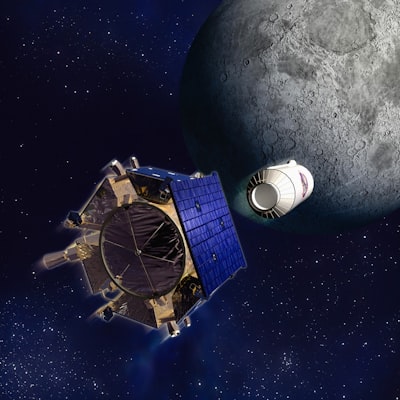
The current Artemis III plan calls for three launches: first, Blue Origin's lander — based on its Mark 2 architecture — must be placed in Earth orbit and remain there for up to 30 days, verifying its autonomy. The crew will then take off aboard the Orion spacecraft powered by the SLS rocket, docking with the Blue Origin module. Finally, SpaceX will launch a test Starship – still without confirmed orbital capability – that will rendezvous with the space station formed by Orion and the blue module, although the crew will not board the Starship; only communications and interoperability will be tested. This triple launch has been compared to a demanding choreography, and no wonder: each vehicle uses different flight software, docking systems and navigation protocols, and the window of opportunity to synchronize the three spacecraft requires millimetric precision. While Apollo needed a single rocket and two modules tested from the start, Artemis is faced with the reality that neither Blue Origin nor SpaceX yet have their vehicles operational at full capacity. The Starship, for example, has yet to reach orbit in its suborbital tests, and Blue Origin rebuilds its launch pad after an explosion in May. The analogy is obvious: complexity does not scale linearly, and each additional node multiplies potential failure points.
From a business perspective, this situation reminds us of the importance of having tailor-made applications that allow interdependent processes to be simulated and coordinated. In the space industry, as in enterprise software development, success depends on the ability to integrate disparate workflows, anticipate bottlenecks, and manage concurrent releases. NASA uses advanced digital models (digital twins) to test missions before launch, a practice that any company can replicate using custom software designed for its specific industry. Just as Artemis engineers need to validate the docking between Orion and Starship without the two spacecraft having flown together, modern organizations require platforms that integrate data from multiple sources, from IoT sensors to ERP systems, and allow what-if scenarios to be visualized before investing resources. Artificial intelligence, applied to predictive analytics, can help identify scheduling conflicts or compatibility risks, something that Q2BSTUDIO implemented through AI for companies and AI agents that automate the detection of anomalies in real time. Complexity management, both in space and in the office, benefits greatly from tools that not only collect data, but interpret it and suggest courses of action.
Another remarkable aspect of Artemis III is the technological diversity of its components. Blue Origin is betting on a pressurized docking system and a capsule with full life support, while SpaceX is focused on a simpler docking, mounted on the bow of the Starship. This divergence forces NASA to manage two radically different software architectures: Orion uses legacy systems from the space shuttle era, while Starship relies on near-autonomous control software trained on neural networks. Interoperability becomes the central challenge, and here cybersecurity plays a critical role. Each communication interface between ships is a potential attack or error vector, so robust validation protocols are required to ensure the integrity of navigation and telemetry data. In the business world, integrating AWS and Azure cloud services with on-premises systems poses similar challenges: cross-platform authentication, encryption of data in transit, and continuous access monitoring are critical to avoiding breaches. Q2BSTUDIO applies these same methodologies in its cybersecurity and pentesting solutions, helping companies protect their hybrid ecosystems before an incident occurs. In addition, the use of business intelligence services such as Power BI allows the status of each component to be visualized in real time, similar to how NASA controllers follow the telemetry of the spacecraft from Houston. A well-designed dashboard can make the difference between identifying an incipient fault or facing a system collapse.
Perhaps the most profound lesson of Artemis III is the need for contingent planning and accepting uncertainty as part of the process. NASA has set an optimistic goal for 2028 on Artemis IV, but acknowledges that the times may get longer. Companies developing custom applications or migrating to the cloud face a parallel reality: timelines are stretched when dependencies between teams are unclear or when integration testing reveals silent incompatibilities. That's why methodologies such as DevOps and continuous integration (CI/CD) are so relevant: they allow conflicts to be identified early and corrected without paralyzing the entire project. NASA, in a way, is applying a similar approach with Artemis III: instead of waiting to have all the vehicles ready, it launches test modules that generate real data and feed back into the design. Companies can adopt this same philosophy through iterative prototyping and testing in controlled environments, relying on AI agents that automatically analyze integration logs and suggest improvements.
In short, Artemis III is not just a space mission; it is a reflection of the complexity that defines our technological age. What Apollo achieved with a single spacecraft and a single rocket, today requires three vehicles, two contracting companies, multiple control centers and a choreography of launches that barely touches on the feasible. But that same complexity holds opportunities: every interoperability challenge, every synchronization problem, every cybersecurity risk can be addressed with the right tools. Q2BSTUDIO, which specializes in custom applications, artificial intelligence, and AWS and Azure cloud services, offers organizations the ability to tackle their own "triple launches"—projects that require integrating multiple platforms, managing risk, and maintaining security—with flexible and scalable solutions. Whether it's through Power BI dashboards that unify scattered data, AI agents that automate monitoring tasks, or bespoke software developments that connect legacy systems to the cloud, the company helps transform complexity into competitive advantage. Like NASA, any organization can learn to choreograph its own multi-stakeholder dance, as long as it has the right technology, planning, and vision.
The final question, for both the space agency and business leaders, is whether humanity — and businesses — are willing to accept that progress is no longer measured by simplicity, but by the ability to manage complexity in an orderly fashion. Artemis III will be a milestone if it manages to synchronize three rockets, three spacecraft and hundreds of people on the ground. But its true legacy may be the model of collaboration, simulation, and risk management that inspires other industries to think bigger, even when it all seems to require three times as much effort as before.