
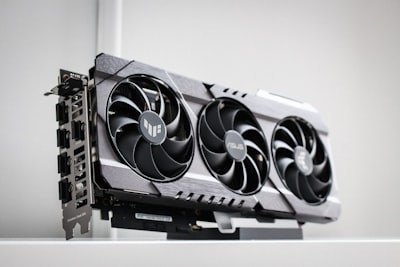
In the fast-paced ecosystem of enterprise artificial intelligence, a silent but profound phenomenon is redefining investment priorities: the compute gap. As organizations accelerate the procurement of AI infrastructure, most lack visibility into the actual costs of operation. This mismatch between ambition and control is not just a technical problem, but a strategic trap that can erode return on investment even before models go into production. Understanding these dynamics is crucial for any company looking to scale its AI capabilities without compromising its financial stability.
The current reality shows a contradictory panorama. On the one hand, spending on AI infrastructure is growing at a rate that exceeds the operational maturity of the companies themselves. On the other hand, the ability to measure, optimize and govern that spending is still anchored in practices typical of the pre-AI era. This gap, which we could call the 'computing gap', manifests itself in multiple dimensions: from the low utilization of GPUs – which in most cases does not exceed 50% – to the absence of clear metrics on the cost per inference or training. In this context, companies are not only investing blindly, but also preparing to migrate to specialized providers without having fully understood the economics of their current infrastructure.
The temptation to look only at the price per token or the cost of the GPU is understandable, but misleading. Purchasing decisions are shifting to more complex criteria such as integration with the existing stack and total cost of ownership (TCO). Paradoxically, less than half of companies can calculate that TCO rigorously. This means that multibillion-dollar decisions are being made based on partial estimates or, worse, assumptions. At this point, technology is not the problem; it is the lack of measurement and financial governance tools adapted to the dynamics of AI.
But the story does not end here. The next frontier—the memory bottleneck in large-scale inference—is coming without many companies being prepared. The paradigm shift from pure compute capacity to memory bandwidth (especially KV cache) will transform the architecture of AI systems. And those who today do not have visibility over their current costs will hardly be able to anticipate the impact of this transition. The question is not whether the gap will close, but whether companies will manage to build the necessary visibility before the next wave of investment catches up with them.
In this scenario, the companies that manage to differentiate themselves will not necessarily be the ones that spend the most, but the ones that best understand what they are buying and operating. The key is to adopt an approach that combines artificial intelligence, business intelligence and technological modernization strategies. This is where it is essential to have a technology partner that not only provides infrastructure, but also accompanies in the measurement, optimization and alignment of investment with business objectives.
Q2BSTUDIO, as a software and technology development company, understands this reality. Our expertise in enterprise AI allows us to help organizations design AI architectures that are not only powerful, but also measurable and controllable. We work with AWS and Azure cloud services to ensure infrastructure scales efficiently, and we apply cybersecurity methodologies to protect the sensitive data that powers the models. In addition, we integrate business intelligence services such as power bi so that every decision is backed by real data, not assumptions.
One of the most common mistakes in AI adoption is thinking that hardware solves everything. The reality is that the computing gap is not closed with more GPUs, but with better planning. Companies need bespoke applications that are tailored to their specific processes, not generic solutions that later prove difficult to integrate. Similarly, custom software allows you to build orchestration layers that monitor actual resource usage, identify inefficiencies, and automate adjustments in real time. AI agent-based architectures, for example, can dynamically manage the allocation of workloads between different vendors, optimizing both performance and cost.
Another critical dimension is data governance. Artificial intelligence does not operate in a vacuum; You need clean, secure, and well-structured data. Cybersecurity is not an optional add-on, but a fundamental pillar for any AI initiative. Security breaches can compromise not only models, but the reputation of the company. That's why at Q2BSTUDIO we integrate security practices by design, ensuring that every layer of the infrastructure is protected.
The path to closing the computing gap goes through three stages: measuring, optimizing and anticipating. First, it is necessary to implement dashboards that visualize the real cost per inference, the use of GPUs and the profitability of each model. Second, resource allocation must be optimized, migrating workloads to specialized platforms only when the analysis warrants it. Third, you have to anticipate trends, such as the shift towards memory as a bottleneck, so as not to be surprised. Companies that master these three stages will not only reduce costs, but also gain competitive agility.
In short, the AI computing gap is not an insoluble technical problem, but a management challenge that requires strategic vision and appropriate tools. Uncontrolled investment is not sustainable. Organizations that decide to build visibility into their infrastructure today will be better positioned to take advantage of the next wave of innovation. And for that, having technological allies who understand both the technology and the business makes the difference. At Q2BSTUDIO, we are committed to helping companies transform artificial intelligence into a measurable and secure growth engine.

