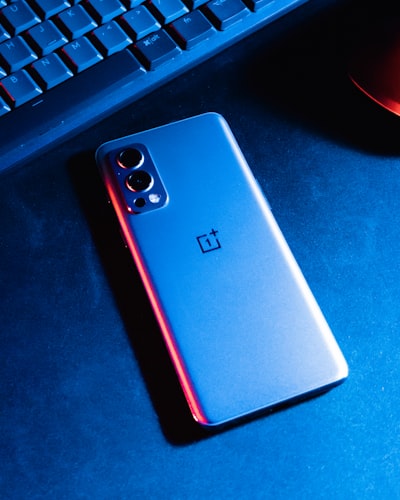
Thirteen years ago, OnePlus burst into the mobile phone market with a proposal as simple as it was powerful: to offer flagship specifications at a radically lower price. The Chinese brand earned the nickname 'flagship killer' and built a loyal community of enthusiasts. However, times change. Recently, the company has announced its withdrawal from North America and Europe to concentrate exclusively on the Chinese market. This movement, which many consider the beginning of the end of an era, forces us to reflect on the dynamics of innovation, business sustainability and the role of technology in the evolution of business.
OnePlus' rise and fall aren't just a story of tight margins and fierce competition. It's a case study in how companies must adapt to an environment where differentiation is becoming increasingly complex. In its early days, OnePlus broke the duopoly of Samsung and Apple with a direct-to-consumer approach and impeccable hardware. But over the years, Chinese manufacturers such as Xiaomi, OPPO and vivo copied the formula, saturated the market and compressed margins. To survive, OnePlus tried to scale towards more premium segments, but lost its essence. Today, the company is opting for a strategic retreat, recognizing that it cannot compete globally without a strong local sales, after-sales, and marketing structure.
This situation reminds us that no product strategy is enough if it is not supported by a robust technological and operational base. Companies that want to endure must invest in solutions that optimize their processes, from supply chain management to customer experience. This is where the development of custom applications becomes a differentiating factor. Having software that is exactly tailored to the needs of the business – rather than relying on generic tools – allows for greater agility, data integration and responsiveness to market changes.
OnePlus, by focusing only on China, recognizes that its original business model was not scalable in Western markets without a local infrastructure. Many tech companies face the same dilemma: how to grow without losing control of quality and profitability. One of the keys is in smart digitalisation. For example, deploying AWS and Azure cloud service systems enables the deployment of global applications with high availability and low cost, while a strong cybersecurity strategy protects digital assets in an environment of growing threats. At Q2BSTUDIO we help organizations navigate this transition, offering artificial intelligence for businesses that automates repetitive tasks and extracts patterns from large volumes of data.
Artificial intelligence, and in particular AI agents, are transforming the way companies interact with their users and manage their operations. An AI agent can handle customer support, reporting, or even production monitoring. For a company like OnePlus, if it had taken a mass personalization approach using AI, it might have been able to retain its global community by offering unique experiences. But the moment has passed. The lesson for other companies is clear: technology is not a luxury, but a strategic necessity.
The role of data analytics is also relevant. Business intelligence and tools like Power BI enable managers to make informed decisions in real time. If OnePlus had combined its market knowledge with a business intelligence system, it might have detected patterns of falling sales or changes in consumer preferences sooner. Instead, the brand reacted late. At Q2BSTUDIO we offer business intelligence services that transform scattered data into actionable dashboards, helping to avoid costly strategic mistakes.
OnePlus' abandonment of Western markets doesn't mean the company will disappear overnight. In China it is still a relevant brand, and its parent company, BBK Electronics, has other successful sub-brands. But the symbolism of his retirement penetrates deeply. It represents the end of an era when a smartphone with good specifications was enough to conquer the world. Today, success requires a complete orchestration of technology, processes, and talent. Businesses need bespoke software that integrates their CRM, ERP, logistics, and marketing systems into a unified platform. At Q2BSTUDIO we work with organizations of all sizes to design those solutions, whether through cross-platform applications or cloud migrations.
OnePlus' withdrawal also opens a reflection on the importance of cultural and legal adaptation. It is not enough to have a good product; You need to understand local regulations, service expectations, and distribution chains. Many Latin American and Spanish tech startups that aspire to expand to Europe or North America can learn from this case. Having a technology partner that offers AWS and Azure cloud services with compliance with regulations such as GDPR is essential. Likewise, cybersecurity must be a pillar by design, not a subsequent addition.
On the horizon, generative artificial intelligence and AI agents promise a new revolution. Companies that invest in these capabilities today will be better positioned to compete in an environment where personalization, speed, and efficiency are critical. But it's not just about technology: you also need a team that understands how to integrate it and take advantage of it. At Q2BSTUDIO we combine technical knowledge with business vision to implement AI for companies that really adds value.
OnePlus, the former 'flagship killer', is all but dead in global markets. Its history leaves us with a legacy of disruptive innovation, but also a warning: no competitive advantage is permanent. To survive and thrive, organizations must embrace continuous digital transformation, relying on partners that offer everything from tailored applications to complete business intelligence strategies. Only then will they be able to write their own chapter of success, without having to retire forever.