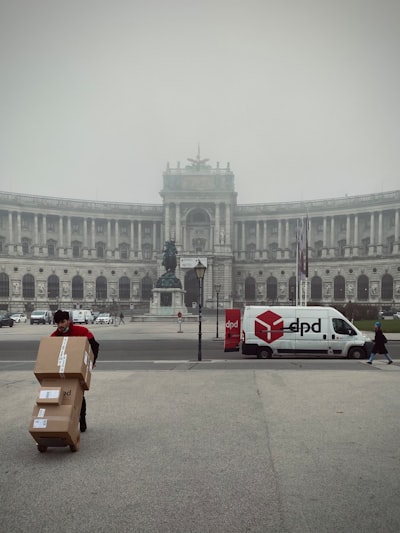
Logistics is one of the fundamental pillars for any business that operates in e-commerce or in the distribution of products. In a market as competitive as Germany's, shipping efficiency can make the difference between retaining customers or losing them. DPD Germany is one of the most important logistics operators in the country, and its integration with ERP systems such as Odoo has become a strategic necessity. This article takes an in-depth look at how to connect your Odoo instance with DPD Germany, the operational benefits you get, and the customization possibilities offered by companies like Q2BSTUDIO to take this integration to the next level.
Many companies start by managing their shipments manually: entering data on the DPD website, downloading labels and then uploading them to Odoo. Not only is this process time-consuming, but it's also open to human error, duplication, and delays. The native integration solves these problems by syncing orders, addresses, weights, and prices automatically. With Odoo, you can set up your DPO account details, set pricing rules based on conditions such as weight, destination or order value, and generate PDF labels directly from the delivery note. All this without leaving Odoo's environment, which speeds up the day-to-day work of the logistics team.
The typical workflow starts with setting up the carrier in the sales module. There you enter DPD credentials, define units of measure, default package type, and other parameters. Then, in the pricing tab, you can create pricing rules with multiple conditions. For example, a regular customer may have reduced rates, or an express shipment may include a surcharge. These rules are automatically applied when you generate a sales quote. When the order is confirmed and the packing slip is created, the integrator prepares the shipment. After validating the delivery, the system communicates with DPD to register the shipment and download the label, which is stored on the delivery note itself. In addition, you can check the status of the shipment in real time with the tracking button.
A standard integration covers basic operations, but every business has specific needs. This is where custom app development becomes essential. Companies such as Q2BSTUDIO, which specialise in bespoke software, can extend Odoo to add functionalities such as returns management, label printing in different formats, synchronisation with automated warehouses or integration with more complex transport management systems. In addition, the platform can be adapted to work with multiple carriers simultaneously, consolidating all logistics into a single dashboard.
Scalability is another critical factor. As the volume of shipments grows, the technology infrastructure must bear the load without slowdowns. Using AWS and Azure cloud services , Odoo can be deployed in elastic and secure environments, with high availability and automated backups. This is especially relevant for companies that handle seasonal peaks, such as Black Friday or Christmas. A well-designed cloud architecture, accompanied by cybersecurity practices, ensures that shipment and customer data is protected from unauthorized access.
Beyond operational integration, the information generated by shipments can be exploited for decision-making. Business intelligence services and tools such as Power BI allow you to cross-reference data on shipping costs, delivery times, incidents and geographical areas. Thus, a logistics manager can identify which carrier is more efficient for each type of order or negotiate better rates with DPD based on real data. Artificial intelligence and, specifically, AI for business also brings advantages: AI agents can predict delays based on historical patterns, recommend the best shipping method for each customer, or automate responses to recurring incidents.
Another aspect to consider is the personalization of the end customer experience. With Odoo and DPD integrated, you can send push notifications with the tracking link, and if AI agents are added, you can even offer a real-time estimated delivery window. This improves buyer satisfaction and reduces customer service inquiries. To achieve these levels of customization, having a technology partner like Q2BSTUDIO is key, as they provide experience in custom software development, system integration and cloud deployment.
In short, integrating DPD Germany with Odoo not only simplifies daily shipping tasks, but also opens the door to intelligent supply chain management. The combination of automated pricing rules, tag generation, and real-time tracking reduces manual loading and errors. But the real added value comes when you customize the solution to fit unique business processes, leverage the cloud to scale, and apply business intelligence and artificial intelligence techniques to optimize costs and improve the customer experience. Companies such as Q2BSTUDIO offer just this support: from the initial implementation to the continuous evolution of the system, ensuring that logistics integration becomes a real competitive advantage.