
Today, artificial intelligence has ceased to be a futuristic promise and has become a key operational tool in companies in all sectors. However, measuring the return on investment (ROI) of these technologies remains a complex challenge. How do you know if an AI solution really brings value beyond operational efficiency? Recently, Sarah Friar, OpenAI's chief financial officer, raised the need for a practical scorecard to evaluate AI through metrics such as useful work generated, cost per successful task, reliability, and return on computation. This proposal invites us to reflect on how companies can build solid indicators that transcend simple technological adoption. In this article, we explore this concept in depth, offer an original business perspective, and show how at Q2BSTUDIO we help organizations implement and measure AI solutions effectively.
The first element of the scorecard is 'useful work', which quantifies the tasks that AI effectively completes and that have a direct impact on business objectives. It is not enough to count how many queries a chatbot answers or how many predictions a model generates; the quality and relevance of these outputs must be evaluated. For example, in an AI-based customer service system, useful work could be measured by the number of incidents resolved without human intervention and subsequent user satisfaction. To achieve this, it is essential to have a tailored application architecture that allows you to customize workflows and align results with business metrics. At Q2BSTUDIO, we develop custom software that integrates dashboards to monitor the performance of each agent in real time, facilitating data-driven decision-making.
The second indicator, the 'cost per successful task', forces companies to break down the expenses associated with each operation completed by AI. This includes infrastructure, licensing, maintenance, and personnel costs. The cloud plays a crucial role here: AWS and Azure cloud services allow you to scale resources on demand and optimize spend. For example, an enterprise that deploys large language models can reduce costs by using reserved instances or serverless functions. In addition, cybersecurity is a factor that should not be overlooked, as any breach can trigger indirect costs. At Q2BSTUDIO we offer consulting to select the right cloud provider and set up secure environments, ensuring that every successful task is cost-predictable and competitive.
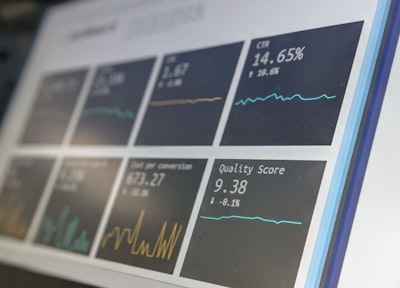
'Dependability' refers to the consistency and reliability of the AI system over time. A model that performs well one day may fail the next if data drifts or changes in the environment are not monitored. This is where business intelligence comes into play to set up alerts and dashboards that detect anomalies. With tools like Power BI, you can visualize the evolution of model accuracy, response time, and error rate. At Q2BSTUDIO we integrate these capabilities into AI solutions for enterprises, creating custom dashboards that enable managers to make informed decisions about when to retrain a model or adjust parameters.
Finally, 'return on compute' provides a direct financial view of the investment in hardware and processing resources. Instead of seeing computing power as a fixed expense, this indicator relates it to the income or savings generated. For example, a product recommendation platform that uses deep learning can calculate that every dollar invested in GPUs generates X dollars in additional sales. To maximize this return, it is essential to have a model optimization strategy, such as quantization or pruning, and the right infrastructure in place. At Q2BSTUDIO we support companies in the design of efficient architectures, combining AWS and Azure cloud services with MLOps techniques to reduce computational consumption without sacrificing quality.
Beyond these four pillars, the success of an AI scorecard depends on the organization's ability to integrate these indicators into its management processes. It's not just about implementing a measurement tool, it's about creating a data-driven culture where every department understands how AI contributes to their goals. For example, in the marketing area, a company can use AI agents to segment audiences and personalize campaigns; The scorecard would help measure the increase in conversion rates against the cost of automated interactions. In the field of logistics, artificial intelligence applied to route optimization can reduce fuel costs and delivery times; The return on the calculation would be reflected in the monthly savings.
At Q2BSTUDIO, we understand that every business has unique needs, so we offer bespoke application development that incorporates these measurement principles from the design phase. Our team of engineers and consultants work closely with customers to define the right KPIs, select the most cost-effective cloud platforms, and ensure data cybersecurity. In addition, we integrate business intelligence services such as Power BI so that dashboards are accessible to the entire organization. If you want to learn more about how to implement an AI scorecard in your company, we invite you to learn about our AI solutions for companies, where we address everything from conceptualization to implementation.
Sarah Friar's proposal reminds us that AI should not be a black box; it needs to be evaluated with the same rigor as any other business investment. A well-designed scorecard not only justifies technology spending, but guides continuous improvement decisions. For example, if the cost per successful task is high, the company can explore lighter models or adjust confidence thresholds. If dependability is low, it may be necessary to increase the frequency of retraining or improve the quality of the input data. These iterations require a flexible platform, and that's where bespoke software makes a difference. At Q2BSTUDIO we develop solutions that enable companies to quickly adapt their AI systems to market changes.
Another relevant aspect is the alignment of the scorecard with the strategic objectives. Not all companies pursue the same return: some seek to reduce costs, others increase revenue, others improve the customer experience. That's why we recommend customizing the indicators within a framework that includes both financial and operational metrics. For example, a financial services company may prioritize the accuracy of fraud detection models (measured as useful work) and response time (dependability), while an ecommerce startup may focus on return over compute and cost per transaction. In both cases, the right cloud infrastructure is essential; That's why we offer AWS and Azure cloud services optimized for AI workloads.
Finally, it is important to note that the implementation of an AI scorecard is not a one-off project, but an ongoing process. As technology evolves and data volumes grow, indicators need to be reviewed and updated. Business intelligence and tools such as Power BI allow you to automate data collection and generate alerts when an indicator deviates. At Q2BSTUDIO, we combine these capabilities with our expertise in custom applications to offer our customers a complete measurement and optimization ecosystem. If you are considering adopting or improving your AI strategy, we invite you to contact us and find out how we can help you build your own scorecard, aligned with the real needs of your business and supported by robust metrics such as useful work, cost per successful task, dependability, and return on compute.


