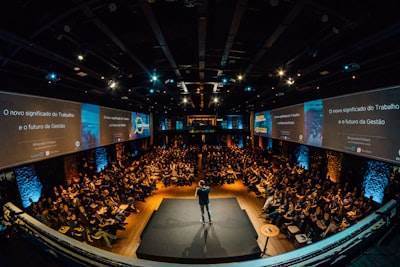
The PHP ecosystem has undergone an unprecedented transformation in the last year, and the PHPverse 2026 event became the perfect setting to analyze where the language that sustains much of the web is headed. Beyond the technical talks, the meeting left three fundamental pillars that will mark the immediate future: the definitive irruption of artificial intelligence in development, the need to strengthen cybersecurity in the parcel supply chain and the urgency of strengthening the community as a driver of innovation. In this article we explore each of these axes with a practical look, thinking about how companies and developers can adapt to this new reality.
Artificial intelligence has gone from being a promise to an everyday tool. PHPverse 2026 shared experiences of teams that already integrate AI agents capable of writing up to 99% of production code. This doesn't mean that the developer loses their place, but that their role is reconfigured: they must now ensure that environments are 'agent-ready', with fast feedback loops, automated quality rules, and clear guidance that guides AI. At Q2BSTUDIO, as a custom software development company, we understand that the key is to build solid foundations—reproducible infrastructures, continuous integration pipelines, and living documentation—so that AI can unleash its full potential without compromising security or stability. Our team integrates AI agents into real workflows, helping to automate tests, generate code and optimize repetitive processes, always under expert supervision.
Security was another of the big issues. Recent attacks on PHP libraries such as the Intercom SDK or the Laravel-Lang project show that open-source packages are now a direct target. A compromised repository or misconfigured GitHub action can spread malware to thousands of projects. The ecosystem has reacted with measures such as provenance verification, static analysis of actions, and stricter dependency policies. For any company developing custom applications, cybersecurity is no longer optional – it's a design requirement. At Q2BSTUDIO we offer cybersecurity and pentesting services that help identify vulnerabilities before they are exploited, and we work with tools such as Composer and Packagist securely, applying dependency policies and continuous audits. In addition, our expertise in AWS and Azure cloud services allows us to deploy environments with the highest security standards, from container isolation to identity management.
The community, on the other hand, continues to be the soul of PHP. Both WordPress and Drupal have shown that the perception of outdated code is a thing of the past. The new versions adopt modern PHP, strong typing, dependency injection, and object-oriented patterns, with performance improvements that double the speed of previous versions. The PHP RFC process has been opened so that anyone – without the need to be a C expert – can participate in the discussion and voting of new features. This democratizes the evolution of the language and ensures that it responds to the real needs of developers. From a business perspective, having a technology partner that closely follows these trends is key. At Q2BSTUDIO we not only implement the latest PHP functionalities, but also advise our clients on when and how to adopt them, balancing innovation with stability.
One of the concepts that resonated the most in PHPverse 2026 is the idea that a good issue on GitHub equals a good prompt for artificial intelligence. If an issue is well described, with steps to reproduce it, and clear context, an AI agent can automatically generate the fix. This changes the way you contribute to open source: the submission of a patch is no longer valued as much as the narrative quality of the description. For companies that outsource development, this presents an opportunity: they can focus on defining precise requirements and let the AI propose solutions, always validated by senior developers. Our business intelligence and Power BI services, for example, benefit from this same logic: by having well-structured data and clear questions, AI agents can generate reports and dashboards more efficiently. At Q2BSTUDIO we integrate these capabilities into artificial intelligence projects for companies, combining human analysis with intelligent automation.
Project management is also being rethought. Six-week cycles, traditional commits, and human-designed best practices need to adapt to an environment where AI agents collaborate in real time. Tools like Terraform are now used not only for classic infrastructure, but to maintain consistency across hundreds of repositories, applying tags, permissions, and descriptions declaratively. This 'infrastructure as code' philosophy extends to the governance of the projects themselves. At Q2BSTUDIO, we take a similar approach: we define everything as code—from deployment on AWS and Azure cloud services to access policies and CI/CD pipelines—ensuring repeatability and auditing. Process automation is one of our specialties, and we combine it with AI agents to streamline repetitive tasks, freeing up teams for creative and strategic work.
Finally, the event made it clear that the perception of PHP as an outdated language is a myth that needs to be debunked. With versions like PHP 8.3 recommended for new installations, performance that improves with each release, and an agent-ready architecture and modern APIs, PHP remains a robust choice for web projects of any scale. The key is to surround yourself with professionals who know the ecosystem and know how to apply it judiciously. At Q2BSTUDIO we offer bespoke applications that harness the full potential of modern PHP, from Laravel and Symfony to WordPress and Drupal, always with a focus on quality, security, and scalability. In addition, we integrate artificial intelligence for companies into workflows, helping to transform data into decisions and processes into competitive advantages. If your company is looking to evolve its tech stack or needs a partner who understands both code and business strategy, we're here to help you.