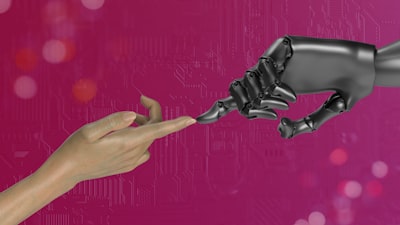
Internal communication is the lifeblood of any organization. However, in increasingly digitized business environments, traditional channels for exchanging information often lead to noise, delays, and fragmentation. This is where hybrid process automation, which combines robotic process automation (RPA) with artificial intelligence, emerges as a transformative solution. It's not just about speeding up workflows, it's about orchestrating a new way to intelligently connect teams, decisions, and data.
Hybrid automation RPA and AI is not an abstract concept. In practice, it merges the ability of software robots to execute repetitive and structured tasks—such as extracting data from forms or updating records—with the ability of artificial intelligence to interpret contexts, analyze sentiments, prioritize messages, and generate adaptive responses. This binomial allows internal communication to stop being a passive process (receiving emails or generic notifications) and become a dynamic ecosystem where relevant information reaches the right person, at the right time and with the right level of detail.
Let's imagine a supply chain where orders, approvals, and stock alerts are managed through process automation. Thanks to RPA, whenever an inventory level falls below a threshold, a purchase requisition is automatically generated. But AI adds a layer of intelligence: it analyzes historical trends, demand forecasts, and supplier timelines to prioritize urgency and notify managers with a message tailored to the context. The procurement team no longer has to sift through dozens of alerts; Receive an intelligent summary with actionable recommendations. Vertical communication between warehouse, purchasing and management is unified in a collaborative dashboard that everyone consults in real time.
This hybrid approach solves one of the most common problems in companies: information overload. When RPA systems take care of mechanical updates—such as syncing databases or updating statuses in CRM—and AI filters, sorts, and writes key messages, human teams can focus on what really matters: analyzing exceptions, making strategic decisions, and collaborating creatively. In addition, generative AI can turn raw data into narrative reports, executive summaries, or even answers to frequently asked questions from other departments, all within the same internal communication platform.
The implementation of this type of solution requires a comprehensive approach. It is not enough to install a robot or train a language model. It requires careful design of information flows, integration with tools already used by the organization (such as ERPs, CRMs, Slack, Teams or email) and clear data governance. This is where companies like Q2BSTUDIO bring their experience as software developers to the table. Her team analyzes current communication processes, identifies bottlenecks, and designs a hybrid architecture that combines custom applications with AI and automation capabilities. In this way, each company receives a solution adapted to its culture and needs, not a generic product.
One area where hybrid automation makes a tangible difference is in cross-departmental communication. For example, in a custom software development project, the product, development, quality, and support teams need to be constantly in sync. Using AI agents integrated into the work platform, daily summaries of progress can be sent, automatically detect risks in deadlines and escalate incidents to the right person in charge. These AI agents don't replace human supervision, but act as proactive assistants that keep everyone in the loop without anyone having to spend hours in meetings or cross-mailings.
Information security and privacy are fundamental pillars in any business communication system. When integrating artificial intelligence to process sensitive data, it is crucial to have robust cybersecurity measures in place. Hybrid automation solutions must ensure that data is only accessible by authorized roles, that activity logs are plotted, and that AI models are trained with governance. That's why many organizations choose to deploy their workloads on secure cloud infrastructures, such as AWS and Azure cloud services, which offer certified and flexible environments to scale on demand. Q2BSTUDIO advises on the selection and configuration of these clouds, ensuring that the automated communication complies with regulations such as GDPR or ISO 27001.
Another key aspect is impact measurement. Effective internal communication is not just about sending messages; it must generate understanding and action. Artificial intelligence for companies allows you to analyze metrics such as open rates, response times, employee satisfaction levels, and correlation with productivity indicators. With business intelligence services tools like Power BI, you can build dashboards that show in real-time how information flows within your organization. For example, a dashboard may reveal that the sales team receives notifications of new opportunities on average 2 hours after they are generated, delaying management. By applying hybrid automation, that time is reduced to seconds, and the AI adds a classification of leads by probability of closure, facilitating prioritization.
Gradual implementation is recommended. Many companies start with a pilot in a specific department – such as human resources or customer service – where internal communication is intensive and processes are defined. For example, in the HR area, automation can take care of sending reminders of pending vacations, updating the status of leave requests, and notifying the employee and their supervisor in a personalized way. AI, on the other hand, can analyze the language of requests to detect possible conflicts or absenteeism patterns, generating early alerts to the workplace well-being team. Once the pilot is validated, it expands to other areas with the flexibility offered by the custom applications developed by Q2BSTUDIO.
We must not forget the human factor. Hybrid automation does not dehumanize communication; on the contrary, it frees it from noise and allows personal interactions to be more meaningful. When robots manage routine notifications and AI organizes information, employees have more time for deep conversations, effective meetings, and creative collaboration. Companies that adopt this approach report an improvement in the work environment, a reduction in stress due to excess information and greater strategic alignment.
In short, hybrid automation RPA and AI represents a quantum leap in the way organizations communicate internally. It is not a simple technical tool, but an enabler of agility, transparency and efficiency. For those companies looking to take this step, having a technology partner that understands both the complexity of processes and the possibilities of artificial intelligence is essential. Q2BSTUDIO, with its experience in the development of custom software and artificial intelligence solutions, offers complete support to design and implement intelligent communication systems that transform information into action. The future of internal communication is already here, and it is built with algorithms, robots and, above all, with people connected in a smarter way.
To dive deeper into how artificial intelligence can empower communication in your organization, you can explore the AI solutions for businesses offered by Q2BSTUDIO. From conversational agents to predictive analytics, the range of possibilities is wide and perfectly integrable with process automation platforms.