
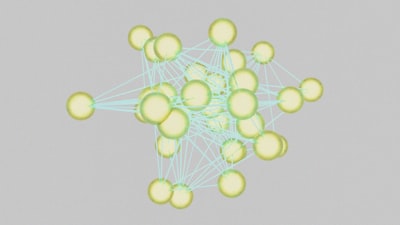
In the world of data analytics and artificial intelligence, one of the most critical questions facing businesses is, "What would change to make this outcome different?" This question, essential in decision-making, is at the core of counterfactuals. Traditionally applied in supervised learning, counterfactuals explain why a model classified a case in one way and what minimal modifications would lead to another classification. However, when it comes to clustering—unsupervised clustering—the challenge is greater: there are no labels, only partition geometry. This is where approaches such as VoICE (Voronoi-Induced Counterfactual Explainability) emerge, a framework that introduces feature weighting in k-means clustering to generate robust and actionable counterfactual explanations.
To understand its value, let's first remember that traditional clustering groups data according to Euclidean distances, assuming that all characteristics contribute equally. In practice, that rarely happens: in a customer segmentation analysis, revenue may be more relevant than age, or buying behavior more than location. Feature weighting allows the algorithm to reflect those priorities, but complicates interpretation. How can you explain why a client belongs to one cluster and not another if the boundaries are deformed by weights? VoICE responds by generating counterfactuals that project the original point onto the weighted Voronoi region of the target cluster, minimizing the cost of switching under feasibility constraints. It is not just a matter of crossing a border between two centroids, but of reaching an entire region defined by weights and limits derived from the data.
This approach has enormous practical implications. For example, in the financial sector, an entity that groups credit applications into risk profiles (low, medium, high) may use weighted counterfactuals to tell a rejected applicant: "If you increased your income by 15% and reduced your current debt by 10%, you would enter the medium risk group." The action is specific, measurable, and respects real-world constraints. In addition, by homothetically contracting regions towards centroids, VoICE reduces sensitivity to boundary points, offering more stable explanations than those based on simple cluster pair boundaries.
For companies looking to implement explainable AI solutions tailored to their needs, this type of technique represents a natural evolution. At Q2BSTUDIO we understand that interpretability is not a luxury, but a requirement for trust and regulatory compliance. That's why we develop custom applications that integrate advanced clustering algorithms with counterfactual generation, allowing our clients not only to segment their data, but also to explain each assignment in a way that is understandable to auditors and business users. One of our specialties is the creation of AI agents that, combined with Power BI dashboards, offer interactive visualizations of these explanations, facilitating strategic decision-making.
Beyond theory, deploying VoICE in production environments requires a robust infrastructure. Projection calculations on weighted Voronoi regions can be intensive, especially with large volumes of data. This is where AWS and Azure cloud services play a key role: they allow clustering and counterfactual processes to scale horizontally, as well as store and serve the explanations generated in real time. At Q2BSTUDIO we offer consulting and development to deploy these systems in the cloud, guaranteeing performance and security. In addition, as part of our commitment to cybersecurity, we ensure that sensitive data used in clustering models is protected through encryption and access control, a critical aspect when handling customer profiles or financial information.
Another relevant point is the connection with business intelligence. Counterfactuals are not just technical explanations; they are inputs for the strategy. By integrating these results into Power BI dashboards, business leaders can understand which levers to pull to reclassify customers, optimize campaigns, or adjust risk profiles. At Q2BSTUDIO we have developed solutions that directly link VoICE results with automated reports, allowing each explanation to be accompanied by cost and feasibility indicators.
For those organizations looking to make the leap towards more transparent AI, we recommend exploring our capabilities in AI for enterprises, where we address everything from selecting the right clustering algorithm to generating interpretable counterfactuals. And if your business needs a platform that unifies weighted clustering, explanations, and visualization into a single ecosystem, our custom app development service can build exactly what you need. Technology advances, but the real value is in how we apply it to solve specific problems. Counterfactuals in weighted clustering are a powerful tool; At Q2BSTUDIO we help you master it.

