
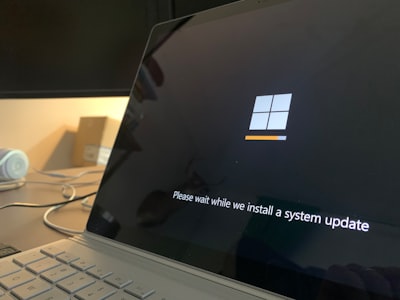
Windows Server 2022 will reach the end of its mainstream support in approximately 90 days, a milestone that marks a before and after for businesses that still rely on this platform for their critical operations. While extended support will continue to provide security updates for five more years, the October 2026 date means that the operating system will no longer receive functional improvements, non-critical patches, and basic technical support. For many organizations, now is the time to reevaluate their infrastructure strategy and consider a migration to more modern, efficient, and secure environments.
The end of mainstream support doesn't mean the server will immediately stop working, but it does pose a growing risk: unpatched vulnerabilities outside of the security patch cycle can expose businesses to increasingly sophisticated cyberattacks. In a context where cybersecurity has become a strategic priority, maintaining outdated systems is an open door to incidents that can paralyze operations. For this reason, many companies are taking advantage of this transition to make the leap to cloud solutions such as AWS and Azure cloud services, which not only offer a pay-as-you-go model, but also automatic patch and update management. A well-planned migration can reduce the attack surface and improve business continuity.
Beyond security, the end of mainstream support opens the door to rethinking the company's digital architecture. Windows Server 2022 was designed at a time when the on-premises data center dominated, but today the trend is towards hybrid and multicloud environments. Integrating custom applications and custom software into these ecosystems allows workflows to be customized and technology to be adapted to the organization's actual processes, not the other way around. In fact, custom software development is becoming the ideal vehicle for modernizing legacy applications that still run on top of Windows Server, transforming them into cloud-native services with superior scalability and resiliency.
In this transformation process, technologies such as artificial intelligence and AI agents are playing a leading role. Enterprises migrating from Windows Server 2022 to cloud platforms can incorporate enterprise AI capabilities that automate repetitive tasks, predict infrastructure failures, and optimize resource consumption. For example, an AI agent can monitor the performance of virtualized servers in AWS or Azure in real-time, recommending capacity adjustments before bottlenecks occur. These advances not only improve operational efficiency, but also generate a tangible competitive advantage in markets where speed of response is key.
Likewise, the information generated by these systems must be analyzed to make informed decisions. This is where business intelligence services and tools such as Power BI come into play, which allow you to visualize infrastructure metrics, application usage and security trends. A well-designed dashboard on Power BI can alert IT teams to anomalous behavior on migrated servers, facilitating a proactive response to potential threats. The combination of AWS and Azure cloud services with business intelligence provides unprecedented visibility into the true state of enterprise technology.
At Q2BSTUDIO, we understand that every business has a unique pace and needs. That's why we offer comprehensive support throughout the modernization cycle: from the initial audit of Windows Server 2022-based environments to the design and implementation of cloud solutions. Our development teams build bespoke applications that natively integrate with AWS and Azure cloud services, ensuring that migration is not just a replatform, but a true digital evolution. In addition, we strengthen the cybersecurity of each project through penetration testing and secure architectures, as described on our cybersecurity and pentesting page.
The transition from Windows Server 2022 is also an opportunity to review your data strategy. Many organizations accumulate information in local silos that could be released and exploited in the cloud. Through business intelligence services and Power BI, we help turn that data into strategic assets. For example, a company that migrates its financial applications to Azure can connect its databases to a dashboard in Power BI that shows in real time the profitability by product, the evolution of cloud costs or even fraud alerts based on artificial intelligence. All this without losing the governance and regulatory compliance required by sectors such as banking or health.
Another key aspect is automation. With the end of mainstream support, system administrators should stop spending hours manually patching outdated computers. Migrating to cloud environments allows you to implement automatic update policies, but it also opens the door to more advanced processes such as container orchestration or the use of AI agents to manage the lifecycle of applications. At Q2BSTUDIO, we design bespoke software solutions that integrate AI agents capable of executing predictive maintenance, auto-scaling, and incident response tasks without human intervention, freeing up the IT team to focus on innovation.
We cannot forget the economic impact. Keeping Windows Server 2022 beyond mainstream support may seem like a cheaper option in the short term, but the hidden costs in the form of security risks, operational inefficiencies, and lack of support for new cloud services often far outweigh the investment in a migration. Most of our customers report a return on investment in less than 18 months after migrating to AWS or Azure, thanks to reduced infrastructure costs, increased productivity, and eliminated on-premise licensing costs. And by integrating business intelligence services and Power BI, they can measure that return accurately and adjust their strategies in real-time.
The decision to leave Windows Server 2022 is not only technical, but strategic. Companies that act early are better positioned to embrace innovations such as edge computing, generative AI, or flexible subscription models. At Q2BSTUDIO, we have accompanied dozens of organizations on this journey, combining expertise in AWS and Azure cloud services with a deep knowledge in custom application development and custom software. Our agile, business-focused methodology ensures that every project delivers tangible value from the first sprint.
If your business is still running Windows Server 2022 and hasn't planned for the transition, the next 90 days are the ideal time to start. It's not just about avoiding a risk, it's about taking advantage of a window of opportunity to modernize your infrastructure, strengthen cybersecurity, and unlock the potential of artificial intelligence and business intelligence. The Q2BSTUDIO team is ready to help you design the roadmap that best suits your business, just as we have done with clients in industries such as logistics, retail, healthcare, and finance. Visit our process automation software page to find out how we can transform your operations.
In short, the end of mainstream support for Windows Server 2022 is much more than a date on the calendar: it is a turning point that invites companies to rethink their relationship with technology. Those that bet on the cloud, artificial intelligence and tailor-made software will not only avoid the risks of obsolescence, but will build a solid foundation to compete in the digital economy. At Q2BSTUDIO, we are committed to being that technology partner that turns challenges into opportunities, integrating innovation and security into every solution.

