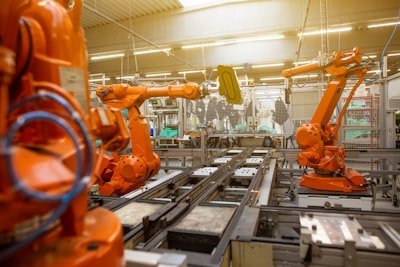
Hybrid automation that combines Robotic Process Automation (RPA) with artificial intelligence represents a qualitative leap in the digital transformation of companies. However, the success of this technology does not depend only on the platform chosen, but also on the internal preparation that the organization carries out before the implementation. Many companies invest in advanced tools without first adjusting their processes, data governance, and the competencies of their teams, leading to mediocre results or project abandonment. To avoid this, it is essential to develop a preparedness plan that addresses cultural, technical, and strategic aspects.
The first step is to define a clear operating model that establishes who owns each process, the data, and the governance of the platform. Without this assignment, efforts are diluted and conflicts of responsibility arise. Top management must align on goals, scope, and success metrics from the start. It is not only about reducing costs, but also about freeing up human talent for higher-value tasks, such as strategic analysis or innovation. In this context, having technological allies such as Q2BSTUDIO, which offers process automation adapted to each business, helps to translate the objectives into a realistic roadmap.
Data cleanliness and standardization is another critical pillar. Artificial intelligence needs reliable sources to generate accurate insights. If data is duplicated, incomplete, or siloed, any hybrid automation will falter. That's why, before implementing AI agents or RPA flows, it's a good idea to perform a data quality audit. In addition, it is advisable to integrate AI tools for companies that allow information to be cleaned and enriched continuously. AI solutions, such as AI agents that learn and make contextual decisions, require a robust data floor to operate with confidence.
Another key aspect is the formation of cross-functional teams. Hybrid automation is not an IT or business project alone; it needs the collaboration of experts in processes, technology, cybersecurity and human resources. These teams must design workflows, identify points where artificial intelligence can provide semantic or predictive understanding, and establish the necessary security controls. Cybersecurity is especially relevant because automation exposes organizations to new attack vectors. Therefore, it is advisable to integrate pentesting practices and access policies from the design phase, something that Q2BSTUDIO reinforced through its cybersecurity and pentesting services, ensuring that automation is resilient.
Change management and internal communication cannot be relegated. Employees often fear that automation will eliminate their positions. However, if you explain that technology will take care of repetitive tasks while they focus on creative or customer relationship activities, resistance decreases. This is where the need to prepare strategies for cultural change comes into play where visible leadership of management motivates adoption. Companies that also use custom applications to customize their workflows gain greater acceptance, as custom software is tailored to the needs of the team exactly.
On the technological level, the infrastructure must be flexible and scalable. Many organizations opt for AWS and Azure cloud services, which provide the compute capacity needed to train AI models and run RPA bots without bottlenecks. The cloud also facilitates integration with business intelligence services such as Power BI, which allows real-time visualization of the performance of automated processes and detects deviations. Q2BSTUDIO offers Azure and AWS cloud services that ensure secure and efficient deployment, as well as Business Intelligence services with Power BI to give visibility to key indicators.
Finally, internal preparedness involves establishing an ongoing governance framework. It's not enough to launch hybrid automation; its evolution must be monitored, AI models must be updated with new data and automated processes must be regularly reviewed. The culture of continuous improvement is what differentiates companies that simply adopt technology from those that actually transform. On this journey, the support of a partner like Q2BSTUDIO, with expertise in artificial intelligence, custom applications and automation, is essential to anticipate obstacles and make the most of the potential of RPA and AI hybrid automation.
In short, internal readiness to implement RPA and AI hybrid automation is a process that encompasses governance, data, equipment, cultural change, and infrastructure. Each of these pillars must be approached with a strategic vision, involving all areas of the organization and relying on complementary technologies such as cloud services, business intelligence and personalized applications. Only then will successful adoption be achieved that maximizes process coverage and operational resilience, unlocking the true value of artificial intelligence combined with robotic automation.