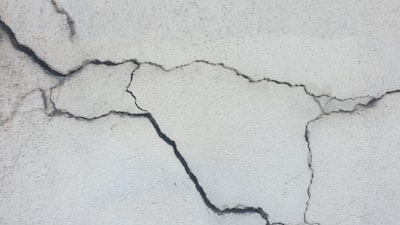
The conservation of artistic heritage is a challenge that combines aesthetic sensitivity with technical precision. Among the most complex problems faced by restorers is the early detection of cracks in paints, a phenomenon known as craquelure. These cracks, caused by aging materials, changes in humidity or defects in the preparation of the canvas, not only affect the appearance of the work but can compromise its structural integrity. For decades, identifying these cracks has relied on expert visual inspection, a slow, subjective, and error-prone process, especially when textures are mistaken for brushstrokes or hair. However, advances in artificial intelligence and generative models are revolutionizing this field, allowing non-invasive, automated, and highly accurate analysis.
The variational-generative approach proposes to model crack detection as an inverse problem: from the digitized image of a painting, the aim is to separate the original work without damage from the crack component. To do this, a deep generative model is used as a statistical prior of the underlying work—that is, the network "learns" what a seamless painting should look like—while cracks are captured by a Mumford-Shah-type variational functional, which penalizes discontinuities and favors fine linear structures. The joint optimization of both terms produces a pixel-by-pixel map where the cracks are located with high resolution. This hybrid method overcomes the limitations of purely computer vision or supervised learning approaches, as it does not require large labeled datasets and is robust in the face of complex scenes.
The practical application of this technology goes beyond the restoration laboratory. Museums, galleries and auction houses can integrate automated analysis systems to assess the state of their collections on a regular basis, reducing costs and increasing objectivity. In addition, by working with high-resolution images obtained with multispectral scanners, it is possible to detect cracks invisible to the naked eye, allowing preventive interventions before the damage is irreversible. In this context, artificial intelligence for companies becomes a strategic ally: customized AI solutions can be adapted to the specific needs of each institution, processing large volumes of visual data and learning from the criteria of restaurateurs.
From a technical perspective, the implementation of these models requires a robust infrastructure. Training generative deep networks and optimizing variational functionalities demand considerable computing power, which can be efficiently managed using AWS and Azure cloud services. This cloud allows you to scale resources on demand, store massive digital catalogs, and deploy applications for conservation teams to access results from anywhere. Cybersecurity also plays a key role, as digitized works are assets of great cultural and economic value; Protecting them against unauthorized access or cyberattacks is critical to maintaining the trust of owners and the public.
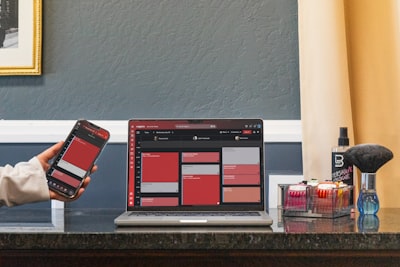
The development of custom applications for this area involves not only the creation of specialized algorithms, but also the interface with the workflows of the restorers. A custom software can integrate crack map visualization modules, collaborative annotation tools, and automatic reports. In addition, business intelligence, through power bi or similar platforms, allows data from multiple works to be consolidated over time, generating dashboards that help prioritize interventions and manage resources. For example, a museum could monitor the evolution of cracks in hundreds of paintings and receive early warnings when certain thresholds are exceeded.
Beyond art, the variational-generative methodology has applications in other sectors where the detection of surface defects is critical, such as the inspection of materials in the automotive industry, aerospace or in the manufacture of solar panels. The same principles of image decomposition into clean component and damage component can be adapted to detect microcracks in turbines, cracks in concrete, or imperfections in fabrics. This opens up a range of possibilities for technology companies looking to offer advanced machine vision solutions.
At Q2BSTUDIO, as a software and technology development company, we understand that innovation in this type of process requires combining expert domain knowledge with the most advanced tools. Our teams work on building systems that integrate AI agents capable of learning complex patterns, along with scalable cloud platforms and state-of-the-art cybersecurity measures. From initial consulting to deployment and maintenance, we accompany cultural and industrial organizations in the digital transformation of their inspection and conservation processes. If your institution is looking to implement automated crack detection or any other image-based analysis, we can develop a bespoke application that fits your requirements, either using public or private cloud infrastructure.
The detection of cracks in paintings with a variational-generative approach represents a significant step towards a more scientific, efficient and accessible conservation. By uniting the power of generative models with the mathematical elegance of variational functionals, a tool is achieved that respects the complexity of the artistic work while providing objective information to restorers. The future of cultural heritage undoubtedly lies in the collaboration between tradition and technology, and software companies have a responsibility to facilitate that bridge.