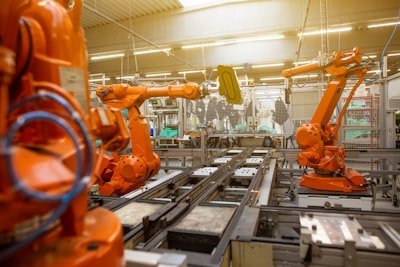
Digital transformation has led companies to look for solutions that not only optimize processes, but also reduce their environmental footprint. In this context, hybrid automation that combines RPA (robotic process automation) with artificial intelligence emerges as a strategic lever. This integration makes it possible to tackle repetitive tasks and complex decisions at the same time, maximizing both operational efficiency and commitment to sustainability. Far from being a mere technological trend, it is a paradigm shift where each resource is used to the maximum, avoiding waste and promoting a circular economy.
To understand its true scope, it is useful to break down what each component contributes. RPA is responsible for executing predefined workflows, such as validating invoices or updating databases, freeing staff from mechanical tasks. Artificial intelligence, including natural language processing and machine learning, provides the ability to analyze, interpret, and adapt. When the two work together, processes can handle unstructured documents, predict bottlenecks, or recommend corrective actions in real time. That synergy is the foundation of hybrid automation and the engine that drives both productivity and ecological responsibility.
How does this translate into sustainability? First, reducing manual intervention minimizes errors and rework, saving energy and materials. For example, a system that automatically corrects misbooked orders avoids returns and associated transportation. In addition, the constant monitoring of consumption – electricity, water, raw materials – makes it possible to identify inefficiencies and adjust processes. ESG (environmental, social, and governance) metrics can be fed directly from automated systems, making it easier to report carbon and comply with increasingly stringent regulations. Hybrid automation also makes it possible to collaborate with suppliers under ethical criteria, verifying the origin of materials or the footprint of each product.
From an efficiency standpoint, the benefits are even more tangible. Companies that adopt this technology are able to shorten cycle times, reduce operating costs and improve service quality. But it's not just about speed: artificial intelligence allows flows to dynamically readjust according to demand, avoiding load peaks and capacity waste. A typical case is inventory management, where AI agents can predict stockouts and launch orders just in time, reducing unnecessary storage. In finance, automated account reconciliation saves hours of work and paper, while integrated business intelligence services such as Power BI visualize these savings for decision-making.
Implementation, however, requires a strategic approach. It's not enough to overlay RPA and AI; Architectures must be designed that adapt to existing systems. This is where a company like Q2BSTUDIO brings its expertise in custom software development. With a team specialized in custom applications, they integrate hybrid automation into the corporate ecosystem, whether on premises or in the cloud. For example, by combining this solution with AWS and Azure cloud services, elasticity and scalability are achieved without compromising security. In addition, Q2BSTUDIO offers process automation that includes cybersecurity modules to protect sensitive data transiting through bots and AI models.
Sustainability, in this framework, ceases to be an add-on and becomes a design criterion. Q2BSTUDIO helps its customers define key environmental performance indicators linked to each automated process. From tracking server energy consumption to reducing travel thanks to digital workflows, every operational improvement is measured in ecological terms. Alerts can even be programmed to stop a process if it exceeds certain emission thresholds, thus integrating responsibility into the algorithm itself. This holistic view is what differentiates a generic implementation from a truly transformative one.
A relevant aspect is the role of AI agents in hybrid automation. These agents not only execute tasks, but also learn from the patterns and propose improvements. For example, an agent can detect that a manual step in a supply chain generates delays and suggest an automated alternative. In doing so, it contributes to efficiency while reducing the resource consumption associated with waiting. Artificial intelligence for companies thus becomes an invisible but constant ally, capable of adapting to regulatory or market changes without the need to reprogram the entire system.
The adoption of these technologies is not without its challenges. Integration with legacy systems, data quality, and resistance to change are common barriers. However, with the right accompaniment, organizations can overcome them. Q2BSTUDIO, for example, carries out a prior analysis of technical feasibility and environmental impact, designing roadmaps that align business objectives with sustainability objectives. In addition, its modular approach allows it to start with a pilot in a specific area – such as waste management or e-invoicing – and scale progressively.
The future of hybrid automation points to greater system autonomy. Robots will not only execute, but make decisions within predefined ethical boundaries, and human oversight will focus on strategy and exception. In this scenario, sustainability will be one more parameter of optimization, at the same level as cost or time. Companies that are already investing in this direction gain a dual competitive advantage: lighter operations and a reputation aligned with consumer and investor expectations.
In short, hybrid automation RPA and AI is not a fad, but a fundamental tool to reconcile two imperatives that are often considered opposites: productivity and care for the planet. By integrating artificial intelligence and process robotics, companies can transform their operations into engines of efficiency and sustainability. With the support of firms such as Q2BSTUDIO, which provide technical knowledge and strategic vision, this transformation becomes accessible and measurable. The key is to understand that each digitized process is an opportunity to reduce environmental impact and, at the same time, improve results. The technology is ready; now it is time to apply it judiciously.