
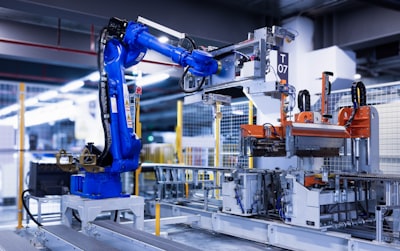
Business process automation has evolved rapidly in recent years. What was once a set of repetitive tasks executed by simple scripts, today has been transformed into an ecosystem where the precision of software robots is combined with the cognitive capacity of intelligent systems. This convergence — known as hybrid automation RPA and AI — represents a quantum leap for any organization looking to optimize its operations without sacrificing quality or adaptability. But how do you select the right setup for your business? The answer is not unique, but depends on multiple strategic, technical and sectoral context factors. In this article, we'll explore the key criteria for making that decision in depth, providing a practical and professional vision that will allow you to move forward with confidence.
Before we get into the selection criteria, it's helpful to understand what exactly hybrid automation is. Robotic process automation (RPA) is responsible for executing structured and repetitive actions: extracting data from a form, transferring it to a system, generating reports, etc. Artificial intelligence, on the other hand, provides natural language understanding, pattern recognition, data-driven decision-making, and learning capacity. By joining the two, a flow is achieved that handles from fully mechanized steps to those that require interpretation, such as classifying ambiguous emails or validating non-standardized documents. The result is much broader coverage of business processes and operational resilience that is difficult to achieve with siloed tools.
The first big factor to consider is strategic alignment. Not all processes deserve to be automated in a hybrid way, nor do all companies have the same digital maturity. Before embarking on an implementation, it's critical to identify the priority use cases that actually drive value. For example, in the financial sector, transaction reconciliation and fraud detection benefit greatly from combining RPA with machine learning algorithms. In the field of logistics, supply chain incident management can be solved with AI agents that analyze patterns and trigger automated actions. Every industry has its regulatory requirements and user expectations, and hybrid automation must be designed to meet them natively.
Technical compatibility is another pillar. The company's current and future technology architecture must be able to integrate RPA and AI solutions without creating silos or conflicts. This is where aspects such as connectivity with legacy systems, the ability to scale in cloud environments and data security come into play. Many organizations choose to deploy their automated processes on public cloud platforms, such as AWS and Azure cloud services, which offer elasticity and native AI tools. A correct compatibility assessment will avoid costly rethinking in the medium term and will allow the solution to evolve along with the business.
Scalability and flexibility are critical components. A hybrid automation system must be able to grow in process volume, in a variety of tasks and in users without losing performance. This means choosing platforms that allow new bots to be added easily, as well as incorporating AI models trained for new domains. Flexibility is also reflected in the ability to adapt to regulatory or market changes. For example, if a company needs to incorporate stricter cybersecurity requirements, the solution must allow its flows to be updated without interrupting the operation. Q2BSTUDIO, as a software and technology development company, understands this need and offers modular architectures that fit the particularities of each client.
Another fundamental aspect is the analysis of total cost of ownership (TCO) and return on investment (ROI). It's not just about the price of licenses or initial development, but about the costs of maintenance, training, infrastructure, and upgrading. Well-designed hybrid automation can dramatically reduce human error and free up talent for higher-value tasks, but if TCO isn't properly calculated, the project can become unsustainable. It is advisable to make realistic projections, considering both the tangible benefits (saving hours, reducing complaints) and the intangible benefits (improvement in the customer experience, regulatory compliance). To do this, companies can rely on artificial intelligence tools that simulate different scenarios and optimize the allocation of resources.
The experience and support of the supplier also make a difference. It is not enough to acquire a platform; Strategic support is needed to help define the roadmap, train the internal team and resolve incidents. A technology partner like Q2BSTUDIO not only implements the solution, but facilitates screening workshops, compares market options, and designs a hybrid automation stack that maximizes value. In addition, the supplier's vision for the future must align with industry trends, such as the emergence of AI agents, which promise a new generation of autonomous systems capable of managing complex processes without constant supervision.
In practice, many companies make the mistake of focusing only on the technical part and neglect the human factor. Hybrid automation doesn't replace people, it transforms their roles. That's why training and change management are just as important as technology selection. Employees need to understand how to interact with bots and AI systems, and feel part of the continuous improvement process. Deploying dashboards with Power BI or Business Intelligence services allows you to visualize the performance of automated flows and make informed decisions. These tools, along with a focus on enterprise AI, make it easy to adopt and scale automation.
Likewise, cybersecurity must be present by design. Bots that access sensitive data must have authentication, encryption, and auditing protocols in place. Cybersecurity is not an optional add-on, but a cross-cutting requirement. A security breach in an automated process can have serious legal and reputational consequences. That's why, when selecting a hybrid solution, it's vital to evaluate the vendor's security credentials and the possibility of integrating pentesting and continuous monitoring tools. Q2BSTUDIO, with its expertise in custom application development and custom software, incorporates security practices into every layer of the project, ensuring that automation is both efficient and secure.
Finally, it is worth looking to the future. Hybrid automation is not a destination, but a path. Technologies evolve, AI models are refined, and business processes change. Therefore, the chosen solution must allow for simple upgrades and the incorporation of new modules without major disruptions. Companies that adopt a mindset of continuous improvement, supported by technology partners offering consulting and development services, will be better prepared to take advantage of the next waves of innovation, such as AI agents or hyperautomation.
In conclusion, choosing the right RPA and AI hybrid automation for your business is a process that combines strategic analysis, technical evaluation, financial projection, and forward-thinking. It's not about copying what others do, but about designing a tailor-made solution that meets your specific needs. Q2BSTUDIO, with its focus on custom applications and its mastery of artificial intelligence, cybersecurity, and AWS and Azure cloud services, can accompany you at every step, from defining use cases to going live and constantly evolving. If you're ready to take the leap to intelligent automation, the time is now.
