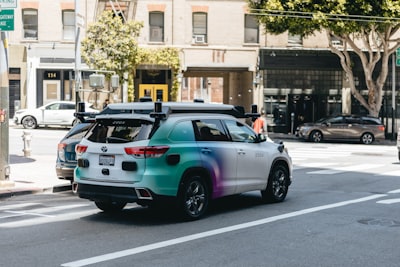
The evolution of autonomous vehicles has placed machine learning at the center of their development, allowing these systems to perceive the environment, make decisions and execute maneuvers in real time. However, the complexity of urban scenarios, conflicting intersections or adverse weather conditions remains a challenge that not even the most advanced models completely solve. It is here that the human-in-the-loop (HITL) concept emerges, a philosophy that integrates human intervention as an active part of the learning and operation process. This approach not only increases safety, but also reinforces ethics and transparency, critical aspects in autonomous mobility.
Traditional supervised learning faces significant limitations, such as the need for large volumes of labeled data and the difficulty of anticipating all possible situations on the road. The human-in-the-loop proposes a paradigm shift: instead of training models fully automatically, human feedback is incorporated at key points in the process. This can manifest itself through the validation of notes, the correction of actions during reinforcement learning, the definition of rewards, or even direct supervision at critical moments. In this way, a balance is achieved between computational efficiency and human judgment, reducing biases and catastrophic errors.
One of the most promising strategies within this framework is curriculum learning, where models are progressively trained from simple to complex tasks. For an autonomous vehicle, this involves first learning to navigate on straight, low-traffic roads, then facing roundabouts, traffic light intersections or evasive maneuvers. Human intervention can guide the selection of these learning sequences, ensuring that the model does not skip fundamental stages. In addition, human feedback in each phase allows the level of difficulty to be adjusted dynamically, improving the robustness of the system.
Another pillar is reinforcement learning with human supervision (HITL-RL). In this approach, an AI agent learns through trial and error, but a human can step in to correct dangerous actions, provide demonstrations, or design reward features more aligned with safety. For example, if an autonomous vehicle attempts a risky turn at an intersection, a remote supervisor can override the maneuver and show a safer alternative. This interaction accelerates learning and prevents the agent from exploring undesirable behaviors. In practice, combining this type of training with artificial intelligence solutions for companies such as those we offer at Q2BSTUDIO allows these methodologies to be scaled to real fleets, also integrating cloud services such as AWS and Azure for real-time processing of data and models.
Large-scale language models (LLMs) also find a place in this ecosystem, acting as intermediaries between the human and the vehicle. An LLM can interpret natural language instructions, such as 'slow down when approaching the crosswalk', and translate them into control parameters. However, their use requires human supervision to avoid misinterpretations or linguistic biases. Human-in-the-loop applied to LLMs involves reviewing model responses, correcting hallucinations, and refining knowledge bases. This feedback loop is especially relevant when implementing bespoke applications for autonomous vehicles, where every detail needs to be adjusted to the specific operational context.
Active learning is another technique that optimizes human effort. Instead of labeling millions of images without criteria, the system identifies the most uncertain or conflicting samples and asks the human to tag them. This is especially useful in visual perception, object detection, pedestrian recognition or traffic sign classification. By targeting annotation where the model has the most doubts, the cost of tagging is drastically reduced and accuracy at the edges of knowledge is improved. For companies developing AI for enterprises, this efficiency is key to launching viable products in competitive timelines.
From an ethical perspective, human intervention brings transparency and accountability. Autonomous vehicles must make decisions that can have serious consequences, and having a human on the circuit allows those decisions to be audited, understand why an action was taken, and correct discriminatory or unsafe behavior. Ethical principles such as equity, non-maleficence, and autonomy translate into technical requirements: explainable systems, continuous monitoring mechanisms, and regulatory compliance. Cybersecurity also plays a critical role, as any human-machine communication channel can be vulnerable to attack. Protecting those data streams is part of the end-to-end solution we offer at Q2BSTUDIO, where we combine custom software with robust security protocols.
On a practical level, the implementation of human-in-the-loop systems requires a solid technological infrastructure. AWS and Azure cloud services provide the scalability needed to store large volumes of sensory data, run models in real time, and manage human interactions remotely. In addition, business intelligence and Power BI tools allow you to visualize system performance metrics, identify patterns of human intervention, and optimize training processes. On the other hand, AI agents can act as virtual assistants that pre-process data before presenting it to the human, streamlining decision-making.
The future of autonomous vehicles lies in a symbiotic collaboration between machines and people. Far from being a transition to full automation, the human-in-the-loop recognizes that human intelligence remains irreplaceable in complex, ambiguous, or ethically sensitive contexts. Companies that adopt this approach will not only develop more secure systems, but also build public trust, an invaluable asset in tomorrow's mobility.
At Q2BSTUDIO, we understand that every autonomous vehicle project is unique, with unique integration, security, and scalability requirements. That's why we offer bespoke software development that incorporates human-in-the-loop strategies, whether through collaborative annotation platforms, remote monitoring systems, or adaptive human-machine interfaces. We combine artificial intelligence, cloud services and cybersecurity to create robust solutions that respect ethical principles. If your organization is looking to implement or improve autonomous driving systems with a human-centric approach, our team is ready to accompany you at every stage of the process.