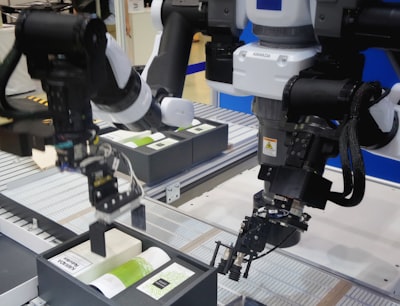
The circular economy represents a paradigm shift from the traditional linear model of 'take, make, dispose'. In a context where sustainability and efficiency are business imperatives, hybrid automation that combines Robotic Process Automation (RPA) with Artificial Intelligence (AI) emerges as a key lever to operationalize circular principles. This article discusses the role of this technology in lifecycle management, reverse logistics, and value recovery, offering practical insight for companies looking to implement circular models.
Hybrid automation RPA and AI is not simply a sum of capabilities; It is an integration that allows us to address both structured and repetitive processes and those that require judgment, understanding of context and dynamic decision-making. While RPA takes care of tasks such as data extraction, updating records, or generating reports in legacy systems, AI brings pattern recognition, natural language processing, and predictive analytics. Together, these technologies can track a product's traceability from manufacturing to end-of-life, identify opportunities for reuse, and coordinate recovery flows with external partners.
In practice, circularity requires companies to maintain precise control over materials, components, and assets throughout their entire lifecycle. This is where hybrid automation makes a difference. For example, an RPA-based system can automatically pull data from industrial machinery IoT sensors, while an AI model analyzes that data to predict the optimal time for refurbishment. This information feeds into workflows that integrate maintenance service providers, recycling centers, and secondary markets. Q2BSTUDIO, as a software and technology development company, has designed solutions that connect these elements through modular and scalable platforms.
One of the most complex challenges in the circular economy is reverse logistics: the process of returning products from the end consumer to the point of recovery. Hybrid automation allows these operations to be orchestrated dynamically. For example, an AI agent can automatically sort returned items according to their condition (reusable, repairable, recyclable) and direct each flow to the appropriate process. RPA, on the other hand, is responsible for updating inventories, generating shipping documents, and notifying logistics partners. All of this reduces cycle time and minimizes manual errors. Companies that adopt this approach can achieve a higher rate of value recovery and a lower environmental footprint.
Traceability is another fundamental pillar. For a circular model to work, you need to know exactly where each product is, what components it contains, and what condition it is in. Here, artificial intelligence for business offers advanced computer vision and document processing capabilities. An AI system can inspect returned parts using images, detect defects, and assess their potential for reuse. RPA then records that information in ERP and CRM systems, updating the asset's history. In addition, the custom applications developed by Q2BSTUDIO integrate these functionalities into Power BI dashboards, allowing managers to visualize in real time the performance of their circular strategies.
Data analytics is the fuel of the circular economy. Without reliable information, it is impossible to identify waste patterns or discover new business opportunities. Business intelligence services, combined with AI models, transform scattered data into actionable insights. For example, a company that manufactures electronic devices can use Power BI to monitor the return rate of components, while a machine learning model predicts which models will be most in demand in the second-hand market. These capabilities, offered by Q2BSTUDIO as part of its consulting services, allow organizations to adjust their circular operations in an agile way.
Cybersecurity is a growing concern in environments where multiple actors share sensitive data about assets and processes. Hybrid automation must be implemented with robust protocols that protect information during collection, processing, and sharing. The cybersecurity solutions offered by Q2BSTUDIO ensure that data flows between companies, logistics partners, and secondary markets are encrypted and audited. In addition, AI agents involved in product classification must be trained with secure datasets and comply with regulations such as GDPR. Integrating safety practices by design is essential to building trust in circular ecosystems.
Cloud infrastructure is the ideal support for deploying these hybrid solutions. Both AWS and Azure provide elastic compute capacity, pre-built AI services, and secure storage. Q2BSTUDIO offers AWS and Azure cloud services that allow you to scale automation operations on demand. For example, a marketplace for circular assets can be hosted in the cloud, processing transactions in real time and analyzing user behavior using AI. Combining cloud with RPA and AI reduces upfront infrastructure investment and accelerates the adoption of circular models.
AI agents are a natural evolution of hybrid automation. These autonomous systems can make complex decisions without human intervention, such as negotiating prices in a market for recycled materials or coordinating waste collection with fleets of vehicles. Q2BSTUDIO develops custom AI agents that integrate with existing business processes, continuously learning from the results to improve efficiency. For example, an agent could be responsible for optimizing reverse logistics routes based on the demand for refurbished products, reducing costs and emissions.
The implementation of these technologies is not without its challenges. Companies must reevaluate their internal processes, train their staff and establish alliances with technology partners. However, those who invest in hybrid automation for the circular economy gain significant competitive advantages: reduced waste, regulatory compliance, improved brand reputation, and access to new revenue streams through value recovery. Q2BSTUDIO accompanies organizations throughout the transformation cycle, from feasibility analysis to production and evolutionary maintenance.
In conclusion, the role of RPA and AI hybrid automation in the circular economy is critical to making a more sustainable economic model a reality. By combining the efficiency of RPA with the intelligence of AI, companies can manage assets throughout their entire lifecycle, integrate reverse supply chains, and make data-driven decisions. The tailored software solutions and artificial intelligence capabilities offered by Q2BSTUDIO enable organizations to build robust, secure, and scalable systems that drive circularity. In a world where resources are depleted and regulations are tightening, hybrid automation is not an option, but a strategic necessity.