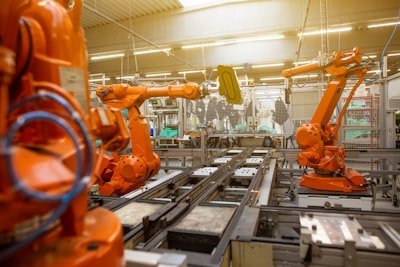
In a context where energy efficiency has become a strategic pillar for sustainability and business competitiveness, the adoption of advanced technologies is no longer an option, but a necessity. Organizations are looking to reduce operating costs, minimize their carbon footprint, and comply with increasingly stringent regulations. In this scenario, hybrid automation that combines Robotic Process Automation (RPA) with artificial intelligence emerges as a transformative solution, capable of managing both repetitive tasks and complex processes that require contextual analysis. Unlike purely automated or exclusively AI-based approaches, this fusion makes it possible to address energy management holistically, from capturing real-time data to executing predictive corrective actions.
The concept of hybrid automation is not new in the industrial field, but its specific application to energy efficiency represents a qualitative leap. Traditional monitoring tools, such as SCADA systems or dashboards, offer visibility, but lack the ability to dynamically adapt to changing patterns. By integrating RPA, which executes predefined workflows—for example, regular meter reading or reporting—with AI models that learn from real-time and historical data, an autonomous ecosystem is achieved that optimizes consumption without constant human intervention. This synergy is especially valuable in environments with high variability, such as manufacturing plants, data centers, or corporate buildings.
One of the most immediate applications of RPA and AI hybrid automation in energy efficiency is integration with IoT sensor and metering systems. Data from thousands of devices—smart meters, thermostats, brightness sensors, flow meters—is processed by RPA agents that consolidate it into centralized platforms. On that basis, AI algorithms identify deviations, correlate variables, and generate early warnings. For example, if an HVAC equipment shows abnormal consumption, the system can notify the maintenance team or even automatically adjust the operating parameters. This level of response is only possible when artificial intelligence not only detects the anomaly, but also understands the operational context – such as building occupancy or weather conditions – and recommends the most efficient action.
Another area where this technology demonstrates its potential is in the preparation of dashboards and advanced reports. Business intelligence service tools, such as Power BI, are fed by the data processed by hybrid automation to offer dynamic visualizations of consumption by facility, product line or work shift. In this way, sustainability managers can quickly identify areas with the greatest savings potential and prioritize investments. The combination with artificial intelligence also makes it possible to generate energy demand predictions in the short and medium term, facilitating the negotiation of tariffs or the planning of technical stoppages. In this sense, having robust process automation is the first step in building an intelligent energy management system.
Companies that have adopted this approach report significant reductions in their energy bills, often between 15% and 30%, depending on the sector. But the benefits go beyond economic savings. Hybrid automation also contributes to extending the useful life of assets, by anticipating failures through predictive models that analyze the historical behavior of equipment. For example, an industrial compressor can be constantly monitored; if the AI detects a vibration pattern that precedes a breakdown, it triggers an RPA flow that schedules a preemptive review without human intervention. This prevents unplanned downtime and reduces unnecessary consumption associated with inefficient equipment.
To successfully implement this technology, it is crucial to have a solid technological foundation. Many organizations choose to migrate their systems to cloud environments, taking advantage of the scalability and flexibility offered by AWS and Azure cloud services. The cloud allows large volumes of sensor data to be stored and processed without investing in on-premises infrastructure, while also facilitating integration with AI and RPA platforms. In addition, cybersecurity becomes a critical aspect, as energy control systems are sensitive targets. As such, hybrid automation solutions must include robust layers of protection, such as regular audits and penetration testing, that ensure data integrity and operational continuity. In this sense, ia for trusted companies such as those we develop at Q2BSTUDIO integrate these requirements from the design.
Another differentiator is the ability to create specialized AI agents that act as virtual assistants for energy managers. These agents can answer natural language questions about current consumption, suggest adjustments in real time, or even execute control orders. For example, an agent might warn: "The consumption of production line A is 12% higher than the expected threshold for this hour; it is recommended to reduce the speed of the conveyor by 10%." Behind this interaction is a language model trained on facility-specific data, combined with RPA rules that execute the action if the user commits. This blend of conversational AI and transactional automation redefines the relationship between people and energy management systems.
Implementing hybrid automation solutions doesn't necessarily require a massive upfront investment. Companies can start with pilot projects in critical areas—for example, the HVAC of a corporate building or the consumption of a data center—and then scale gradually. To do this, it is advisable to have a technology partner that offers both custom software development and integration with existing systems. At Q2BSTUDIO, for example, we design tailor-made applications that are tailored to the particularities of each process, whether in industrial, commercial or service environments. We combine our expertise in artificial intelligence, RPA, and cloud services to build platforms that not only monitor, but also act autonomously.
Energy efficiency also benefits from the ability to benchmark across different locations or business units. Hybrid automation makes it possible to collect homogeneous data from multiple locations, apply AI models that normalize variables such as weather or occupancy, and present comparative rankings. This makes it easier to identify best practices and transfer knowledge between teams. For example, if a plant in the south consumes less energy per unit produced than another in the north, operational differences can be analyzed and successful processes can be replicated. This global vision is indispensable for companies with decentralized operations that seek to meet corporate sustainability goals.
In addition, RPA and AI hybrid automation aligns perfectly with Industry 4.0 trends and process digitalization. Organizations that have already invested in smart sensors, digital twins, or MES (Manufacturing Execution Systems) can boost those investments by adding an intelligent orchestration layer. Instead of just collecting data, they can now turn it into automatic decisions. For example, a digital twin of a refrigeration system can simulate the impact of different control strategies; AI selects the most efficient and RPA implements it in the physical system. This cycle of simulation, decision and execution is repeated continuously, dynamically improving energy performance.
However, the adoption of this technology is not without its challenges. Data quality is critical; if the sensors are not calibrated or the readings are inconsistent, the AI models will lose accuracy. Therefore, it is advisable to include automated cleaning and validation processes within RPA flows. Cultural change also needs to be managed: operational teams need to trust automated decisions and understand that AI doesn't replace their judgment, but rather complements it. Training and communication are key to overcoming initial resistance. In our experience, the best results are obtained when employees participate in the design of AI agents and define the business rules that guide automation.
From a strategic perspective, hybrid automation for energy efficiency offers a tangible return on investment in relatively short timeframes. Many companies recover the cost of the project in less than a year thanks to savings in electricity, gas or fuels. In addition, environmental certifications and sustainability reports improve significantly, which can translate into competitive advantages vis-à-vis customers and regulators. In industries such as logistics, hospitality or the food industry, where margins are tight, every kilowatt saved has a direct impact on profitability.
In short, the convergence between RPA and artificial intelligence is redefining the way companies manage their energy consumption. It is no longer just about measuring, but about acting in an anticipatory, intelligent and automated way. The solutions we offer at Q2BSTUDIO integrate these capabilities into modular platforms that adapt to the size and digital maturity of each organization. Whether it's through the development of custom applications, the implementation of AWS and Azure cloud services, or the creation of specialized AI agents, our goal is to transform energy efficiency from a declarative goal into an autonomously and continuously managed process. Energy is too valuable to be left in the hands of manual or disconnected processes; hybrid automation RPA and AI is the key to unlocking its full potential.