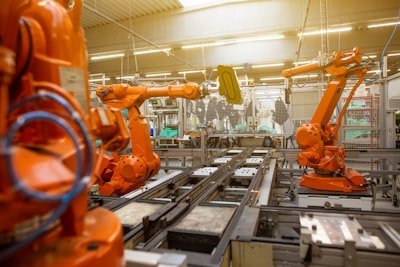
In a business context where sustainability is no longer an option but a requirement, technology becomes the strategic ally to align profitability with environmental responsibility. Hybrid automation, which combines robotic process automation (RPA) with artificial intelligence, is emerging as a key lever to drive green transformation. But does this type of automation really support organizations' green goals? The answer is yes, as long as it is applied with a conscious approach and appropriate tools.
To understand their impact, we must first distinguish the roles of each technology. RPA takes care of repetitive, rule-based tasks, such as extracting data from invoices or generating standardized reports. Artificial intelligence, on the other hand, provides the ability to analyse, learn and make decisions in complex or unstructured situations. By merging them, you get a system capable of managing everything from simple processes to flows that require contextual judgment, maximizing coverage and operational resilience. And this resilience is precisely the basis for a solid ecological transformation, because it allows the consumption of resources to be monitored, measured and optimised in real time.
Hybrid RPA and AI automation not only accelerates processes, but can also be designed to reduce the environmental footprint. For example, it can automate energy audits in production plants, detecting consumption peaks and suggesting adjustments autonomously. It is also capable of managing business recycling programs, coordinating waste collection with logistics providers and generating digital recycling certificates. In this sense, technology acts as a digital twin of sustainability: it offers full visibility on environmental indicators, such as CO₂ emissions, water use or waste generation, and correlates them with financial metrics so that decisions are holistic.
A crucial aspect is the integration of sustainability indicators into regular dashboards. This is where business intelligence tools such as Power BI come into play, which allow these environmental KPIs to be visualized alongside traditional sales or productivity KPIs. Q2BSTUDIO's business intelligence services facilitate just that convergence, creating custom dashboards that connect data from IoT sensors, ERP systems, and automation platforms. In this way, an operations manager can see, on a single screen, how the efficiency of an automated process impacts energy savings and, in turn, profitability.
The green transformation supported by hybrid automation also extends to the supply chain. Integrating suppliers and partners into a shared sustainability dashboard is made possible by AI's ability to process disparate data and generate standardized reports. For example, a manufacturer may require its suppliers to submit carbon footprint data for their products, and automation is responsible for validating, consolidating, and alerting on deviations. This not only facilitates compliance with regulations such as the CSRD (Corporate Reporting Directive on Sustainability), but also fosters a culture of transparency and continuous improvement.
Another area where hybrid automation makes a difference is in the development of new products. Assessing the environmental impact of a design before manufacturing it requires simulating multiple scenarios: materials, processes, transportation, end-of-life. AI can model these variables and propose greener alternatives, while RPA collects the necessary data from material and supplier databases. This approach allows sustainability not to be a later add-on, but a design criterion from the start. Companies that adopt this philosophy often turn to software process automation solutions that integrate these simulation and validation flows, accelerating the time-to-market of responsible products.
However, implementing hybrid automation with an ecological approach is not without its challenges. The bulk collection of environmental data poses cybersecurity risks, especially when shared with third parties. That's why any automation architecture must include robust security layers. In Q2BSTUDIO, cybersecurity services are naturally integrated into automation projects, ensuring that sustainability-sensitive data is protected from unauthorized access or tampering. Cloud infrastructure also plays a key role: hosting automated processes on platforms such as AWS or Azure not only offers scalability, but also allows you to choose data centers that operate with renewable energy, thus reducing the digital footprint of the automation itself. The AWS and Azure cloud services offered by Q2BSTUDIO align with this vision, facilitating the migration and optimization of sustainable workloads.
Artificial intelligence, for its part, can also contribute directly to reducing emissions. For example, AI agents designed to manage building air conditioning can learn usage patterns and adjust the temperature in real time, achieving energy savings of up to 30%. These agents act autonomously, but supervised by humans, and are part of the AI solutions for companies that we develop at Q2BSTUDIO. By combining these agents with RPA processes, a complete orchestration is achieved: the AI agent detects an anomaly in consumption, the RPA generates a maintenance order and the business intelligence system updates the sustainability dashboard in real time.
Strategically, companies that want to embark on a green transformation supported by hybrid automation must carefully plan their roadmap. It is not a matter of implementing technology for fashion's sake, but of identifying those processes with the greatest environmental impact and the greatest potential for improvement. Q2BSTUDIO accompanies its clients on this journey, designing roadmaps that incorporate sustainability checkpoints at every stage. For example, before automating an invoicing process, it is assessed whether digitization effectively reduces paper consumption and emissions associated with physical transportation. This methodical approach ensures that technological innovation goes hand in hand with environmental responsibility.
In addition, personalization is key. Not all companies have the same processes or resources. That's why custom applications are critical to tailoring automation to each organization's specific sustainability needs. A tailor-made software can include carbon footprint calculation modules, overconsumption alerts or integration with renewable energy systems, all orchestrated by hybrid automation. At Q2BSTUDIO, custom software development is one of our specialties, allowing companies not only to automate, but to do so in a way that is aligned with their ecological values.
Speaking of specific tools, AI agents are revolutionizing environmental monitoring. These agents can be deployed in factories, offices, or warehouses to collect sensor data, analyze it, and execute corrective actions without human intervention. For example, an AI agent can detect that a machine is consuming more power than expected and, after confirming that there is no operational cause, send an alert to the maintenance system. RPA is then responsible for creating an incident and scheduling a review. This closed loop not only saves energy, but also extends the life of the equipment, reducing electronic waste.
Another practical example: e-waste management. Many companies generate large volumes of obsolete devices, and recycling them is often a manual and inefficient process. With hybrid automation, a flow can be created that automatically identifies devices that have reached their end-of-life (using AI that analyzes logs and usage times), generates a collection label, notifies the recycling provider, and updates inventory. All of this is integrated with business intelligence systems to report the percentage of waste recycled, a KPI that is increasingly in demand by investors and regulators.
Green transformation driven by hybrid automation is not just a trend, but a competitive necessity. Companies that adopt this technological combination are able to not only reduce their environmental impact, but also improve their operational efficiency, comply with increasingly stringent regulations and strengthen their reputation. However, success depends on careful implementation, where technology adapts to processes and not the other way around. Q2BSTUDIO, with its experience in custom application development, artificial intelligence, cybersecurity and cloud services, is positioned as an ideal partner to accompany organizations on this journey. Because the automation of the future must not only be intelligent, but also aware of the planet it inhabits.