
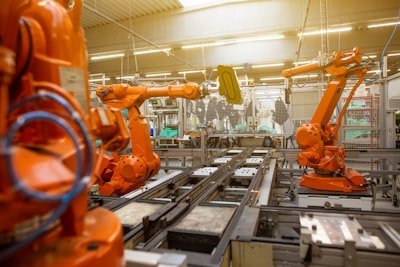
Hybrid automation that combines RPA (Robotic Process Automation) and artificial intelligence has become a key catalyst for sustainable innovation. By integrating the ability of software robots to execute repetitive, rule-based tasks with the analytical and adaptive power of AI, organizations can address both structured processes and those that require contextual understanding. This synergy not only maximises operational efficiency, but also drives transparency, traceability and impact measurement in sectors such as renewable energy, regenerative agriculture, circular economy and waste management.
In an environment where sustainability is no longer an option but a regulatory and market requirement, hybrid automation allows companies to connect research with daily operations and with external ecosystems such as universities, startups and government agencies. For example, through collaborative portals that integrate R+D data with production systems, companies can accelerate the transfer of clean technologies from the laboratory to the industrial scale. Artificial intelligence applied to the analysis of patents, scientific publications and market trends makes it possible to identify opportunities for innovation that were previously hidden in large volumes of unstructured information.
Another key area is data management along the value chain. Hybrid automation facilitates the secure and transparent exchange of information on emissions, resource use and social conditions, a prerequisite for sustainability certifications and reporting. Here, business intelligence tools like Power BI integrate with automated processes to generate real-time dashboards that show progress toward environmental and social goals. In addition, AWS and Azure cloud services provide the scalable infrastructure needed to handle large volumes of data efficiently and securely.
Entities leading sustainable innovation also use hybrid automation to manage calls for funding and grants. Automated workflows, powered by AI agents, can evaluate requests, verify eligibility criteria, and track projects, freeing up human teams for tasks of greater strategic value. Likewise, the incubation of pilot projects is accelerated by systems that integrate RPA and AI for the collection of impact metrics, hypothesis validation, and reporting to scale successful solutions.
For this transformation to be truly effective, companies need a customized approach that fits into their existing processes and tools. This is where Q2BSTUDIO brings its expertise as a software and technology development company. We design custom hybrid automation solutions, using custom applications and custom software that integrate seamlessly with legacy systems and modern platforms. Our services include the implementation of AWS and Azure cloud services to ensure availability and performance, as well as the incorporation of cybersecurity at every layer of the process to protect sensitive sustainability-related data.
In addition, we offer business intelligence services with Power BI for organizations to visualize and analyze key environmental and social impact indicators. The artificial intelligence for companies that we develop allows cognitive tasks to be automated, such as the classification of supplier documents, the analysis of sentiment in stakeholder surveys or the detection of anomalies in energy consumption. The AI agents we implement are able to interact with external systems, make decisions based on learned rules, and evolve over time through continuous learning.
A case study would be a renewable energy company that needs to manage thousands of land leases for wind farms. A hybrid system automates contract data extraction and validation (RPA), while an AI agent analyzes ambiguous clauses and recommends actions. The results are integrated into a Power BI dashboard that shows the status of each agreement, legal risks, and production projections. All of this is deployed on an AWS or Azure cloud infrastructure with advanced cybersecurity controls. Not only does this approach save time and reduce errors, but it allows teams to focus on negotiating better terms and expanding renewable capacity.
To learn more about how to structure these types of solutions, we recommend checking out our specialized guide on process automation, which details the best practices for combining RPA and artificial intelligence. Likewise, for those organizations looking to integrate advanced AI capabilities, we offer artificial intelligence solutions for companies that are tailored to their specific needs for sustainable innovation.
In short, RPA and AI hybrid automation is not only an efficiency tool, but a driver of sustainable innovation. It enables organizations to intelligently connect data, processes, and people, accelerating the transition to more responsible and resilient business models. With the right technology partner, such as Q2BSTUDIO, companies can set these systems as the core of their collaboration, innovation and impact measurement, generating economic, environmental and social value.

