
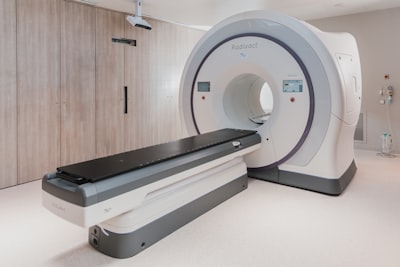
In the competitive world of additive manufacturing, the detection of internal defects using X-ray computed tomography (XCT) has become a critical challenge to ensure the quality and safety of the components produced. However, XCT images exhibit an extreme imbalance of classes and distributions that vary dramatically depending on scanning conditions, causing traditional segmentation models to fail frequently. This is where foundational models such as SAM (Segment Anything Model) come into play, whose generalist potential is diluted when applied directly to such specific industrial domains. To bridge this gap, XCT-SAM emerges, a sequential adaptation approach that leverages efficient parameter tuning techniques to transfer SAM knowledge to the world of defects in additive manufacturing.
The XCT-SAM proposal is based on a two-stage process: first, Conv-LoRA adapters are fine-tuned on a dataset of alloy microstructures, and then the adapted model is transferred to the actual XCT images. This strategy progressively bypasses the domain, avoiding costly complete retraining of the model. With only 4.15 million trainable parameters and more than 99% of the model frozen, amazing efficiency is achieved without sacrificing accuracy. Results from benchmarks such as CycleGAN-XCT and real NIST scans show that XCT-SAM consistently outperforms zero-shot mode SAM and other adaptations, achieving the best IoU and Dice values. This advancement not only represents a technical achievement, but opens the door to more robust and automated quality inspection in the industry.
Behind this innovation is a key principle: transfer learning with parametric adapters allows models pre-trained in natural images to specialize in domains with scarce data. For companies looking to implement similar solutions, having a technology partner that understands both the complexity of computer vision models and the specific production needs is critical. At Q2BSTUDIO we offer artificial intelligence for companies that integrates these cutting-edge approaches, adapting them to real use cases such as defect detection, visual inspection or automated quality control.
The adaptation of foundational models such as SAM is not trivial. The gap between natural imaging and industrial micrographs is enormous, and traditional full-fine-tuning techniques consume excessive computational resources and require large volumes of labeled data. XCT-SAM demonstrates that it is possible to achieve competitive results with a fraction of the parameters, using convolutional adapters that inject a natural inductive spatial bias into the model architecture. This is especially relevant when working with custom applications where data is limited and performance needs are critical. At Q2BSTUDIO we design custom applications that incorporate these advancements, ensuring that each solution fits seamlessly into the customer's workflow.
Beyond the technical aspect, XCT-SAM's approach has profound business implications. The ability to accurately and quickly detect defects in additive manufacturing reduces waste, improves traceability, and accelerates the certification of critical parts, especially in industries such as aerospace, medical, or automotive. Integrating these models into production platforms requires not only robust algorithms, but also an infrastructure that supports the processing of large volumes of data and integration with existing information systems. The AWS and Azure cloud services we offer at Q2BSTUDIO allow these models to be deployed in a scalable way, with elastic compute capabilities and secure storage. In addition, cybersecurity becomes an indispensable factor when handling sensitive design or production data; That's why we include protection measures at every layer of the system.
Another aspect that deserves attention is the synergy between defect segmentation and business intelligence. Inspection results can feed into interactive dashboards built with Power BI, allowing engineers and managers to visualize quality trends, identify problematic batches, and make decisions based on real-time data. At Q2BSTUDIO we offer business intelligence services that transform raw data into actionable information, connecting AI models with reporting platforms such as Power BI. AI agents can even be created that automate the response to quality deviations, notifying operators or adjusting print parameters autonomously.
The evolution towards Industry 4.0 requires solutions to be increasingly adaptable and efficient. XCT-SAM represents an important step in that direction, but its practical application requires a complete ecosystem: from image acquisition and preprocessing to production deployment and continuous monitoring. Companies that are already investing in custom software for their manufacturing processes have a competitive advantage, as they can incorporate these models without having to radically modify their infrastructure. At Q2BSTUDIO we help organizations design and implement these solutions, combining our expertise in software development with knowledge of specific industry domains.
Finally, it is worth reflecting on the future panorama. As foundational models become more powerful and accessible, the key will be how to adapt them efficiently to specific problems. XCT-SAM shows us a path: use lightweight adapters, transfer knowledge sequentially, and evaluate in real scenarios with out-of-distribution data. This 'less is more' philosophy – few parameters, high efficiency – is particularly attractive to SMBs that don't have huge clusters of GPUs but need accurate results. At Q2BSTUDIO we believe in democratizing artificial intelligence, offering tailor-made solutions that fit each company's budget and goals. If your organization faces similar challenges in quality control, visual inspection, or industrial image analysis, we invite you to explore how we can collaborate to transform those challenges into opportunities.
