
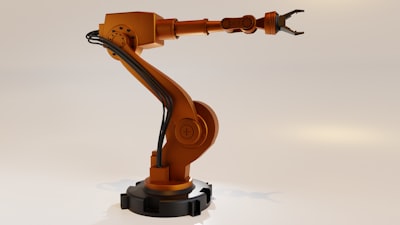
In the fast-paced world of robotics and artificial intelligence, one of the most persistent challenges is getting a model to not only execute a task, but to do so with the style, precision, and subtlety that each context demands. Until recently, language-vision-action (VLA) models represented a remarkable advance: they combined visual comprehension, linguistic reasoning, and motor control in a single stream. However, the researchers were facing a bottleneck: how to finely direct the robot's behavior without retraining the entire model. This is where DiMaS (Distribution-Matching Steering) comes into the picture, a strategy that revolutionizes behavioral control in VLA models by transporting between distributions of internal representations, instead of the classic linear displacements that so often fail in visual-motor environments.
DiMaS's proposal stems from a deep technical observation: in VLA models based on flow-matching – a probabilistic generation technique – behavioural characteristics are not linearly steerable, although they are linearly decoding. That is, you can read the intent of the model in its renderings, but you can't push that intent along a fixed direction. This phenomenon, which the authors of the original study call 'linearly decodable but not linearly steerable', requires a more sophisticated approach: distribution matching. DiMaS, by moving an entire distribution of representations to another target, allows you to modify attributes such as the smoothness of a movement, speed or grip style without the need to collect new data or retrain. For companies that integrate collaborative robotics or advanced automation systems, this capability represents a quantum leap in the adaptability of robots.
The impact of DiMaS goes beyond academia. In an industrial environment where more and more companies are betting on AI for companies, having VLA models that can be fine-tuned through interventions at the level of internal representation drastically reduces the cost of customization. Imagine a manufacturing plant where a robotic arm must change the way it grips fragile parts versus metal parts: with traditional techniques, dozens of demonstrations would have to be collected for each case. With DiMaS, you simply define the distribution of representations that encodes 'finesse' and apply it on the fly. This accelerates the deployment of custom software solutions for automation, allowing systems to adapt to changing environments without resorting to costly development cycles.
From an enterprise perspective, the ability to control behavior without intervening in model weights opens the door to more secure and auditable architectures. For example, in critical applications where cybersecurity is paramount, being able to isolate behavioral directions prevents unauthorized modifications from altering robot performance. In addition, the DiMaS methodology lends itself to being packaged as a module that can be integrated into existing AI agent platforms, allowing companies to build robotic systems with configurable personalities. This connects directly to Q2BSTUDIO's vision, which offers cutting-edge technology development services for organizations to leverage these innovations without the need for in-house research teams.
Another relevant aspect is generalization. The study analyzes how DiMaS behaves when training and evaluation tasks are very different. The results show that behavioral control is transferred well as long as the structure of the internal representation maintains a certain homogeneity; otherwise, effectiveness is weakened. This has practical implications: to implement DiMaS in a real-world environment, reference tasks should share a similar representation space. Enterprises working with AWS and Azure cloud services can benefit from deploying pre-trained VLA models in the cloud and applying DiMaS as an additional inference service, without migrating sensitive data or exposing critical infrastructure. Q2BSTUDIO, with its expertise in cloud integration, can assist in the architecture needed for these solutions to scale securely.
But DiMaS isn't just relevant to robotics. The distribution matching technique to direct internal representations has potential applications in services, business intelligence, and data analytics. For example, generative models could be designed that, instead of predicting a number, 'steer' its output towards a desired distribution of scenarios, helping analysts explore alternative futures. Tools such as Power BI could incorporate behavioral simulation modules based on similar principles, offering users the ability to 'move a lever' in latent space to see how projections change. Although it is still speculative, the seed is planted.
From a technical point of view, DiMaS relies on the flow of probabilities generated by trajectories in the space of representations. Instead of applying a fixed direction vector—as is done in classic steering techniques in language models—DiMaS builds a mapping between two distributions: the source (current behavior) and the destination (desired behavior). This is achieved by minimizing a statistical divergence, typically the Kullback-Leibler divergence, between the intermediate representations of the model. The result is a smooth and coherent displacement that respects the geometry of the latent space. For developers of custom applications in robotics, implementing DiMaS requires a deep understanding of the normalization flows and structure of VLA models, but the benefit in flexibility is enormous.
In practice, companies wishing to adopt this technology can start by evaluating their current VLA models with the open-source tools that the DiMaS team has released on GitHub. Q2BSTUDIO offers consulting and development services to integrate these advances into production systems, either by creating a specialized AI agent or by adapting a base model to the customer's specific needs. The combination of DiMaS with other interpretability techniques also allows explanations to be generated as to why the robot acts in a certain way, something that is increasingly in demand in regulated sectors such as health or logistics.
To conclude, DiMaS represents a paradigm shift in VLA model control: moving from pushing vectors to transporting distributions. This approach, born from the need to overcome the limitations of linear techniques in visual-motor domains, opens up a range of possibilities for flexible robotics, custom automation, and explainable AI. In a market where differentiation is given by the ability to adapt, having technological partners such as Q2BSTUDIO – who understands both theory and practical implementation – is key to transforming these concepts into real value. Learn how advanced artificial intelligence can be integrated into your production processes from experts who translate the latest research into robust, scalable solutions.

