
The simulation of wave phenomena in dissipative media represents one of the most complex challenges in modern computational physics. When we talk about the Helmholtz equation, which governs the propagation of harmonic waves over time, we find a scenario where the squared wave number becomes complex: the imaginary part encodes the attenuation and dissipation of the medium. Inferring these fields from noisy and scattered measurements demands not only accuracy, but also reliable quantification of uncertainty. Traditional methods, such as finite differences or deterministic neural networks, offer point estimates, but rarely provide a measure of their own confidence. This is where operator-reported Gaussian processes come in, a technique that fuses the physical rigor of the differential operator with the probabilistic flexibility of machine learning.
Recently, this formulation has been extended to complex fields of the Helmholtz equation in dissipative media. The central idea is to "realize" the complex operator by transforming it into a coupled system of real blocks, which allows the use of regression methods with classical Gaussian processes. This approach not only handles residuals of the EDP and border conditions, but can also incorporate a family of priors: from simple diagonals to co-regionalized or multi-scale versions. The result is a probabilistic solver that returns a complete posterior distribution over the complex wave field, rather than a single estimated value. In one-dimensional, two-dimensional and three-dimensional benchmarks, this solver competes favorably with classical methods, also requiring far fewer interior constraint points.
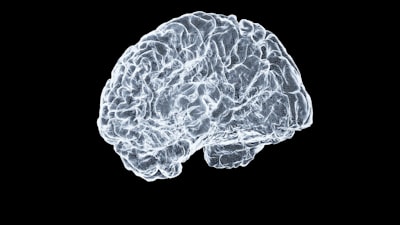
The most striking practical application is found in in vivo brain magnetic resonance elastography, where a suitable multiscale prior managed to reconstruct the cut-off field with a correlation of 0.77 against the measurement, exceeding the target of 0.75. This advance does not come from real-imaginary coupling, but from the multiscale kernel. However, a low-frequency precision ceiling is identified due to model mismatch, and the subsequent uncertainty is not yet calibrated. Therefore, the next critical step in probabilistic inference of wave fields in dissipative media is to achieve a calibrated uncertainty.
Beyond the laboratory, this technology has direct implications in the industry. The ability to reconstruct complex physical fields with quantified uncertainty opens the door to artificial intelligence solutions for companies that need to make decisions under uncertainty in environments such as geophysical exploration, underwater acoustics, antenna design or even structural monitoring. Instead of relying on deterministic simulations that hide error, engineers can rely on confidence intervals to guide decision-making, improving safety and efficiency.
For companies looking to adopt techniques of this caliber, the key is to have a technology partner that can integrate these models into production platforms. Q2BSTUDIO specializes in developing custom applications that incorporate artificial intelligence and computational physics, deploying them on scalable infrastructures such as AWS and Azure cloud services. In addition, we combine this with business intelligence services and dashboards in Power BI to make the results of these simulations accessible to those responsible for business strategy.
A differential aspect is the possibility of building AI agents that, fed by these probabilistic models, can autonomously explore physical parameter configurations and recommend actions in real time. For example, in a materials characterization process, an agent could adjust test conditions based on subsequent uncertainty, optimizing accuracy without the need for manual intervention. This represents a natural evolution towards the intelligent automation of scientific and industrial processes.
Cybersecurity also plays a role when these models are deployed in critical environments. Q2BSTUDIO integrates pentesting and data protection practices into all phases of development, ensuring that both sensor data and simulation results are secure from unauthorized access. In addition, our ability to offer custom software allows us to tailor the inference pipeline to the specific needs of each client, whether in healthcare, energy, or manufacturing.
In short, operator-reported Gaussian processes for complex Helmholtz fields are not just an academic curiosity: they represent a paradigm shift in how we model and rely on physical simulations. The incorporation of calibrated uncertainty, the use of multi-scale priors, and efficient data collection open up opportunities that, combined with robust enterprise platforms such as those offered by Q2BSTUDIO, can transform entire industries. From AI for business to process optimization based on probabilistic simulation, the future of AI-assisted engineering is closer than we think.

