
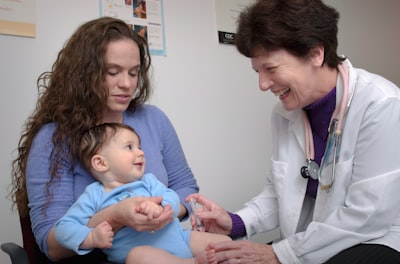
At the intersection of artificial intelligence and pediatric medicine, a milestone emerges that could redefine the prevention and early diagnosis of childhood diseases. A team of researchers has developed TEDDY (Temporal Event Decoder for Disease in Youth), a compact language model trained exclusively on medical records of millions of children. This breakthrough demonstrates that outsized models and population datasets are not needed to achieve accurate predictions about the occurrence of pathologies, even those considered rare. The study, recently published, opens a door to more proactive and personalized medicine, where artificial intelligence becomes an allied tool for the pediatrician.
Pediatric medicine accumulates an enormous amount of structured data in electronic health records (EHRs). However, most generative AI models have prioritized natural language or medical imaging, leaving out the temporal sequences of coded diagnoses. TEDDY changes that paradigm by focusing on diagnostic trajectories over time, using only ICD-10 codes and visit interval information. With only 1.84 million parameters – a fraction of giant models such as GPT – it manages to outperform more complex architectures such as LSTM or CNN in 96-99% of tasks. This shows that efficiency and specialization can outperform the raw scale when it comes to structured clinical data.
One of the most striking findings is the model's ability to detect signs of risk more than two years before the first recorded diagnosis. In diseases such as asthma or attention deficit hyperactivity disorder (ADHD), TEDDY achieves AUC of 79.3% and 84.7%, far outperforming comparative models, including a generalist language model three orders of magnitude higher. This suggests that pediatric medical records themselves contain subtle predictive patterns that, when properly modeled, can alert to future conditions before they manifest themselves clinically. For medical practice, this means a window of opportunity for early interventions, especially in diseases where the time to diagnosis is critical.
TEDDY's design also addresses a classic problem in machine learning applied to health: class imbalance. Rare diseases, which affect a very small percentage of the population, are often ignored by models because there are not enough examples to learn from. However, TEDDY obtains above-random confidence intervals in 90% of the 225 rarest conditions analyzed. This long-tail performance is particularly relevant for pediatrics, where many genetic or metabolic diseases have low prevalence but great individual and family impact. A system capable of signaling these cases early could reduce the diagnostic journey that these patients often suffer.
From a technical point of view, the model uses a trained transformer decoder with approximately 73 million diagnoses of 1.6 million children from a single pediatric institution. The decision to limit oneself to a single center allows for consistency in coding and monitoring criteria, but raises questions about generalization to other populations. Researchers are already working on multi-institutional adaptations that incorporate data from different regions and health systems. In addition, the prediction of the time of the next visit achieves an average absolute error of only 3 days over a 365-day horizon, although the queues in the distribution are still not perfectly calibrated. These results suggest that the model captures regular recurrences well but struggles with unexpected or very late returns.
The philosophy behind TEDDY – less is more – has direct implications for the development of bespoke applications in the healthcare sector. Not every AI solution needs to be a massive language model with billions of parameters. For real clinical environments, where computational resources and data may be limited, a compact, specialized model like TEDDY can be implemented more quickly and economically. In this context, artificial intelligence for companies becomes a strategic enabler, allowing hospitals and clinics to integrate predictive capabilities without depending on expensive infrastructure.
To make these models come into daily practice, a robust technological ecosystem is required. Building systems that capture, clean, and structure clinical data is a critical step. This is where custom software plays a key role, as each institution has its own formats of medical records. A company like Q2BSTUDIO, specialized in the development of custom applications, can create the platforms that connect electronic records with AI models such as TEDDY, guaranteeing interoperability, security and scalability. In addition, the exploitation of this sensitive data demands high cybersecurity standards to protect patient privacy, a requirement that cannot be taken lightly.
Cloud infrastructure is also a pillar in this type of project. AWS and Azure cloud services offer elastic and secure environments for training and deploying predictive models, allowing research teams to scale their capacity without investing in their own hardware. Combining specialized models with cloud platforms makes it easy to continuously update algorithms as new data comes in, maintaining accuracy over time. On the other hand, business intelligence through tools such as Power BI allows predictions and risk patterns to be visualized in a way that is accessible to doctors, transforming numbers into informed decisions.
Another aspect that deserves attention is ethics and equity in the use of predictive models in pediatrics. TEDDY showed consistent performance across sexes and age groups, which is a good sign, but the monotony of data from a single institution may mask biases that appear when applied to diverse populations. External validation and continuous auditing of models must be integrated from the design. Here, AI agents—autonomous systems that monitor performance, detect deviations, and suggest recalibrations—can automate some of this monitoring, ensuring that the tool remains secure and effective over time.
Looking to the future, models such as TEDDY could become the core of early warning systems embedded in pediatric records. Imagine a pediatrician who, upon opening a patient's chart, receives a notification indicating that the profile of visits and diagnoses has a high probability of developing asthma in the next two years, along with a series of recommendations supported by evidence. This would not replace clinical judgment, but would enhance it. For this vision to materialize, it is necessary to advance in data standardization, interoperability between systems and collaboration between clinical and technological institutions.
In short, TEDDY proves that artificial intelligence can be effective, compact and accessible. The path to predictive pediatrics is closer thanks to this type of research. Technology companies, such as Q2BSTUDIO, are ready to accompany healthcare institutions on this journey, offering AI solutions for companies, development of custom applications and cloud services that make it possible to integrate these advances into clinical practice. The opportunity is real: to transform clinical information into advance knowledge, improving the quality of life of millions of children.

