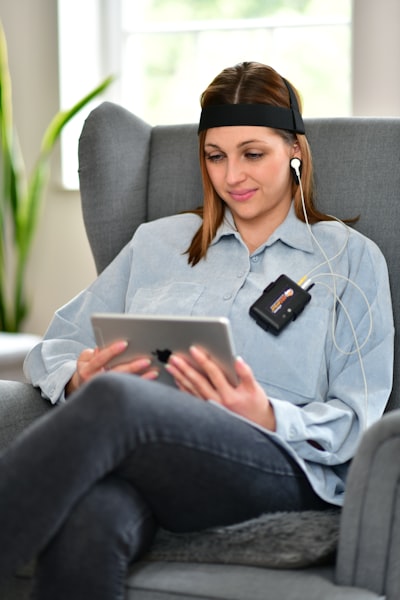
The integration of brain signals with autonomous control systems is marking a before and after in the development of assistive technologies. The combination of electroencephalography (EEG) and artificial intelligence today makes it possible to interpret patterns of imagined movement—such as thinking about moving the right or left hand—to steer a wheelchair without the need for physical contact. This approach not only opens up new possibilities for people with severe motor disabilities, but also represents a field of innovation where custom software companies can provide differential solutions.
Behind this revolution are deep learning architectures such as transformers, originally designed for natural language processing, but which today are successfully adapted to temporary EEG data. These models achieve an accuracy of more than 90% in the classification of movement intentions, outperforming classic convolutional networks or boosting models. The key lies in its ability to capture long-term dependencies in brain signals, which is essential when the user holds the same intention for several seconds.
For a company looking to implement these types of systems, the challenge goes beyond the algorithm. A robust infrastructure is required that processes data in real-time, ensures low latency, and maintains user privacy. This is where AWS and Azure cloud services offer scalable environments for training models, deploying interfaces, and securely storing clinical records. Cybersecurity becomes critical: EEG biometric data is unique and sensitive, so protecting it through encryption and continuous auditing is mandatory in any professional deployment.
Artificial intelligence for companies is not limited to the classification of signals. AI agents can be tasked with dynamically adapting the system's response based on the user's profile, learning from their daily patterns and improving accuracy with use. This turns a thought-controlled chair into an intelligent personal assistant, capable of anticipating movements and adjusting speed or direction according to the terrain.
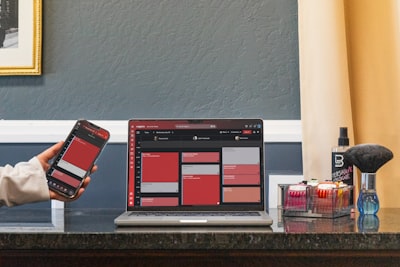
In the field of performance analysis, business intelligence service tools such as Power BI allow researchers or manufacturers to visualize key metrics: response time, accuracy per session, user fatigue and learning evolution. Integrating these dashboards into the control platform facilitates clinical decision-making and continuous product improvement.
Practical implementation of a BCI system requires bespoke application developments that connect EEG sensors to chair hardware, while offering an intuitive interface for the user and caregiver. Q2BSTUDIO, as a software development company, has experience in the creation of modular platforms that integrate artificial intelligence, AI for companies and cloud connectivity modules, guaranteeing solutions adaptable to each need.
One of the most interesting challenges is optimizing the model to work on embedded devices with limited resources. Transformers are usually heavy, but techniques such as quantization, pruning or knowledge distillation allow them to be executed on low-power hardware. Here, custom software engineering plays a crucial role: every line of code must be designed for energy efficiency and minimal latency.
Also, accessibility doesn't end with the accuracy of the algorithm. The user experience must be seamless: the system must detect when the user really wants to change direction and when it is an involuntary movement. AI agents trained with reinforcement can learn to discriminate these situations, reducing false positives and increasing user confidence.
From a business perspective, the market for brain-computer interfaces is growing at double-digit rates, and sectors such as neurological rehabilitation, smart homes, and automotive are already exploring their applications. Developing a BCI solution in-house can be a competitive advantage, but it requires partnerships with experts in hardware, neuroscience, and most importantly, software engineering. Q2BSTUDIO offers process automation and platform development services that allow companies to focus on their core business while technology is deployed with guarantees.
Artificial intelligence applied to EEG interpretation is not science fiction. There are already functional prototypes that show that thinking to move is possible. The next step is to industrialize these advances, bring them to hospitals, nursing homes, and homes with the same reliability as any other medical device. To do this, the combination of transformer models, cloud computing and custom application development is unbeatable.
In short, the brain-controlled wheelchair represents the perfect convergence of neuroscience, artificial intelligence and software engineering. Organizations that are committed to this type of innovation will not only improve the quality of life of many people, but will also position themselves at the forefront of assistive technology. And to realize that vision, having a technology partner like Q2BSTUDIO — which integrates custom applications, cloud, cybersecurity, and BI — can make the difference between a lab experiment and a market-ready product.