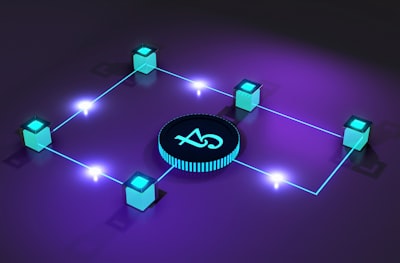
Since the dawn of the internet, the value of a network has been measured based on how its nodes connect. Sarnoff showed that a broadcasting network scales linearly (V ∝ N), Metcalfe raised the ante squared (N²) for fully connected networks, and Reed proposed that group-forming networks grow exponentially (2^N). These laws have guided system architecture for decades. But today, with the emergence of artificial intelligence agents, an analogous question arises: how to measure the value of a network of AI agents? The answer is not trivial, because these agents not only transmit data, but also make decisions, negotiate and form dynamic coalitions. In this context, ANet Patu-1 was born, a self-organizing consensus protocol that redefines the efficiency of artificial collaboration.
ANet Patu-1 is not just another algorithm in the catalog of artificial intelligence for companies; It's a radically different approach. Instead of imposing a fixed topology, it allows the network to be continuously reformed, adapting to the size and complexity of the tasks. The result is that the network always operates in the upper envelope of the three classical laws, achieving a parallel consensus cost of O(1) rounds, regardless of the number of agents. This means that an organization can deploy hundreds of AI agents without coordination becoming a bottleneck. For companies looking to scale their operations with artificial intelligence, understanding this quantum leap is crucial.
How do you measure value without resorting to subjective evaluations? The authors of the protocol propose a formal method: specify the algorithm and derive its complexity, just as distributed algorithms are analyzed. Two fascinating findings emerge from this analysis. The first is emergence: a multitude of economic models, when heterogeneous, start out weak but their collective value is composed of N and exceeds that of a homogeneous set of much more powerful models. It's a law of scaling for collaboration, not size. For a company, this means that investing in a variety of agents (for example, combining lightweight models for routine tasks with specialized ones) can generate more value than acquiring a single superintelligent model.
The second finding is reflexivity: a heterogeneous network of agents, without any prior design, is capable of converging on its own to the ANet Patu-1 protocol. Agents reconstruct the high-level law that governs their own connection value. This is reminiscent of nature's self-organizing systems, such as ant colonies, but in the digital realm it has profound implications for process automation. When a company deploys custom applications that include AI agents, the ability for them to be reconfigured without human intervention dramatically reduces maintenance and operating costs.
From a technical perspective, ANet Patu-1 relies on asynchronous consensus and weighted voting, very similar to the mechanisms already used in blockchains, but optimized for enterprise environments. Cybersecurity also benefits: by not having a central point of coordination, the network is inherently more resistant to attacks. At Q2BSTUDIO, we offer AWS and Azure cloud services that enable you to deploy agent architectures with high availability and security. In addition, we integrate cybersecurity at every layer, from communication between agents to the storage of sensitive data.
For the business world, the practical value of these protocols is manifested in decentralized decision-making. Imagine a recommendation system that does not depend on a single central model, but on a network of specialized agents (marketing, logistics, finance) who negotiate the best action. Each agent contributes their expertise and, through consensus, an optimal solution is reached. This is especially powerful when combined with business intelligence tools like Power BI, where agents can extract patterns from large volumes of data and suggest strategies in real-time. At Q2BSTUDIO we develop business intelligence services solutions that leverage these paradigms.
The reflexivity of the protocol also opens the door to systems that learn to collaborate. It's not just about executing tasks, but about the agents themselves rediscovering the rules of their optimal interaction. This has a direct parallel with custom software development: when a company commissions an application, the requirements change during the process; A system of reflective agents can be adapted without the need to rewrite the code. At Q2BSTUDIO, we understand that bespoke applications need to be flexible, and integrating self-organizing AI agents is the natural next step.
However, implementing these systems is not without its challenges. The heterogeneity of models requires a robust and scalable cloud infrastructure. The AWS and Azure cloud services we offer at Q2BSTUDIO provide the environment needed to test and deploy agent networks with thousands of nodes, ensuring minimal latencies and regulatory compliance. Cybersecurity, on the other hand, must protect the integrity of voting and prevent malicious actors from hijacking the consensus. Our pentesting teams proactively assess these vulnerabilities.
On a strategic level, the collaborative scaling law revealed by ANet Patu-1 is a game-changer for companies investing in AI for enterprises. It is no longer a question of having the largest model, but of orchestrating a diverse and efficient network. Companies that adopt this paradigm early will be able to reduce their compute costs and increase the resilience of their systems. Artificial intelligence is no longer a centralized black box but an ecosystem of agents that cooperate, compete and evolve.
Finally, it is worth reflecting on the organizational impact. If agents can rediscover the laws that maximize their value, what happens to human teams? Far from replacing them, agents free professionals from repetitive tasks of coordination, allowing them to focus on strategy and creativity. The Power BI and business intelligence tools we develop at Q2BSTUDIO are already pointing in that direction: visualizing complex data generated by networks of agents so that managers can make informed decisions.
In short, ANet Patu-1 represents a conceptual breakthrough that transcends classical network theory. For companies looking to get ahead of the competition, integrating self-organizing consensus protocols into their AI agent systems is an investment with exponential returns. At Q2BSTUDIO, as a software and technology development company, we offer the necessary capabilities to design, implement and secure these architectures. From initial consulting to cloud deployment, custom application development and business intelligence integration, we accompany our clients in the transition to intelligent and autonomous agent networks.