
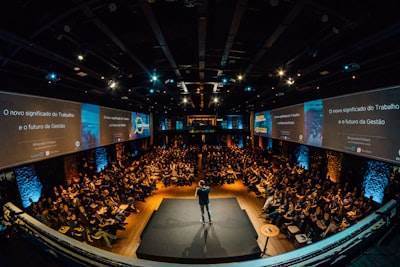
The Australian entrepreneurial ecosystem is facing an opportunity that is not often repeated. The window to apply for Stripe x Startup Battlefield is about to close, and local founders have just 48 hours to apply. This contest, which combines the backing of Stripe with TechCrunch's global platform Disrupt, promises to catapult an Australian startup straight into the tech world's most relevant stage in San Francisco. But beyond the competition, what is really at stake is the ability of a startup to gain international visibility, access to investors and, above all, validation of its business model.
To understand the magnitude of this opportunity, it is useful to analyze the context. TechCrunch Disrupt is not just any event: it is the place where companies such as Dropbox, Uber and many others that are now giants have been launched. Getting an automatic seat there, without needing to apply or compete again, is a shortcut that any founder would want. However, the road to that point requires not only a brilliant idea, but also impeccable technical execution. In a world where technology defines competitive advantage, having a strategic partner in software development can make the difference between being the next unicorn or being forgotten.
This is where companies such as Q2BSTUDIO, which specialises in software and technology development, play a fundamental role. Australian founders looking to present a strong proposition need bespoke applications that solve real problems, with scalable architectures ready to grow. Stripe's offering, focused on payments and financial infrastructure, is perfectly complemented by tailored software solutions that integrate artificial intelligence, cybersecurity, and AWS and Azure cloud services to ensure availability and security from day one.
Artificial intelligence, in particular, has become a differentiating factor for startups that participate in international competitions. It's not just about including a chatbot or a predictive model, but about designing AI agents that automate complex processes, analyze data in real time, and offer personalized experiences to users. Many Australian startups are exploring how AI for business can transform industries such as logistics, healthcare, or finance. However, implementing these technologies requires in-depth knowledge of both the business and the tools available.
On the other hand, cybersecurity cannot be an afterthought. In a contest where the product's strength will be evaluated, investor confidence is highly dependent on the platform being protected against threats. Security breaches can destroy a startup's reputation before it even gets off the ground. That's why integrating cybersecurity and pentesting services from the start is a smart move. Q2BSTUDIO offers cybersecurity services that help identify vulnerabilities and implement best protection practices.
In addition, the ability to make data-driven decisions is another pillar that distinguishes successful startups. Business intelligence services, such as Power BI, allow you to visualize key metrics and optimize your strategy in real time. A startup that makes its case to investors must demonstrate not only that it has a product, but that it understands its market and knows how to scale. With custom dashboards and advanced analytics, founders can back up their case with hard data.
The imminent closing of the application window for Stripe x Startup Battlefield is a reminder that in the tech world, time is a non-renewable resource. Australian founders who have not yet applied must act quickly, but also strategically. It's not enough to fill out a form: you have to show traction, differentiation and a robust product. In that process, having a technology partner like Q2BSTUDIO can accelerate development, reduce risks, and increase the chances of success.
Cloud infrastructure is another critical aspect. Startups competing in TechCrunch Disrupt must demonstrate that they can scale quickly without losing performance or security. AWS and Azure cloud services provide the foundation for deploying global applications, with load balancing, managed databases, and elastic compute capabilities. A well-designed cloud platform not only improves the user experience, but also conveys to investors that the team has a long-term vision.
We cannot forget the role of process automation. Many Australian startups are revolutionizing traditional industries by robotizing repetitive tasks and integrating intelligent workflows. This is where AI agents come into play, as they allow complex actions to be orchestrated without constant human intervention. From inventory management to customer support, automation frees up resources for founders to focus on strategy.
The road to San Francisco starts with a strong application. Startup Battlefield judges look for teams with a clear vision, a functional product, and a viable market. But they also value the ability to execute: can this startup build what it promises? The answer usually lies in the tech stack. That's why partnering with a development studio like Q2BSTUDIO, which offers everything from consulting to custom software implementation, can make the difference between a prototype demo and a production-ready product.
In conclusion, the 48-hour window for Australian founders is not just an administrative deadline, but a call to action. It's time to validate ideas, gather technical resources, and present the best of local innovation to the world. Startups that manage to overcome this filter will have the opportunity to shine on one of the most important stages on the planet. And those that also have the support of an experienced technology company, such as Q2BSTUDIO, will be better prepared to take advantage of every opportunity that presents itself.

