For years, I've tested virtually every desktop environment out there for Linux: from lightweight Xfce to modern GNOME, KDE Plasma, Budgie, Cinnamon, and dozens more. Each one has its virtues, but none of them had given me the feeling of being in front of something genuinely new until I met COSMIC, the desktop that System76 has developed for Pop!_OS. It's not just a pretty interface or a handful of smooth animations; COSMIC represents a paradigm shift in how we think about the Linux desktop. Built from the ground up in Rust, with Wayland as its foundation and a modular approach that prioritizes performance and safety, this environment doesn't compete with the established giants: it surpasses them in technical acumen and future-proofing.
The first thing that surprises you about COSMIC is its absolute fluidity. Unlike GNOME, which often feels heavy even on modern hardware, or Xfce, which while lightweight lacks the visual features that today's users expect, COSMIC strikes a near-perfect balance. Each window scrolls with sixty stable frames per second, HiDPI scaling works flawlessly, and memory consumption is kept contained. This is no coincidence: Rust, by having no garbage collector and offering fine control over memory, allows you to build interfaces that are not only fast, but also secure. In fact, from a cybersecurity perspective, a desktop written in Rust eliminates many typical C and C++ vulnerabilities in the bud, which is especially relevant for enterprise environments where data protection is critical.
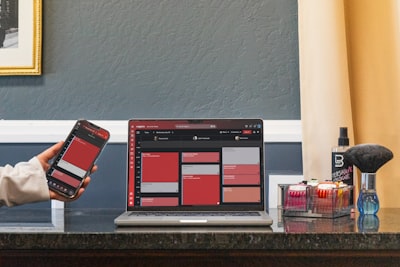
But COSMIC isn't just a technical achievement; Its design is designed for the user who demands productivity without sacrificing customization. Its window manager incorporates a tiling mode that, without being as extreme as i3 or Sway, allows you to organize the workspace intelligently without the need to install extensions. This is something that KDE Plasma tries with its KWin, but COSMIC integrates it natively and with an interface that anyone can understand in minutes. In addition, the panel, menus, and keyboard shortcuts can be reconfigured in detail, making it an ideal candidate for companies looking to standardize an efficient work environment without sacrificing the flexibility demanded by developers and analysts.
From a professional point of view, the architecture of COSMIC is an example of how modern desks should be built. By decoupling the components—the compositor, the panel, the application launcher—it allows each part to be updated, replaced, or customized without affecting the rest. This has profound implications for the development of custom software and custom applications in corporate environments. Imagine that your company needs an application launcher with direct integration to AWS and Azure cloud services. With COSMIC, it is possible to develop a plugin or extension that docks without touching the core of the system. This same modularity allows AI agents to be incorporated that automate repetitive tasks, or to connect power bi dashboards so that the desktop can display business indicators in real time. At Q2BSTUDIO, we specialize in building these types of solutions: from custom software that integrates with Linux environments to business intelligence services that transform data into decisions.
Another aspect that places COSMIC in the future is its treatment of artificial intelligence. Although it does not yet include a native assistant, its Wayland-based architecture and support for modern protocols allow any artificial intelligence or AI for business to interact with the desktop securely. For example, an AI agent could manage windows, search for files, or even suggest workflows based on user behavior. We are already seeing this in development environments where chatbots and assistants are used, but with COSMIC the integration would be much more natural and less intrusive. At Q2BSTUDIO we've worked with customers who need bespoke applications capable of orchestrating complex processes, and a desktop like COSMIC provides the perfect foundation for those systems to communicate frictionlessly.
Comparison with other environments becomes inevitable. GNOME 45, with its minimalist approach, is still a solid choice, but its rigidity when it comes to customizing the interface makes it less appealing to advanced users. KDE Plasma 6 has taken a big leap forward with Wayland, but its decades-long legacy carries with it a complexity that can overwhelm. Xfce, my old favorite for its lightness, feels anchored in the past, with no signs of adopting technologies such as fraction scaling or window management with touch gestures. COSMIC, on the other hand, does not have that ballast. It was born in 2022 as a clean project, and each update proves that its creators understand where the Linux desktop is going: towards environments that are safer, faster, and, above all, more adaptable to the changing needs of users and businesses.
Of course, COSMIC isn't perfect. It's still in alpha and lacks some features that veteran users take for granted, such as a file manager with advanced functionalities or deep integration with cloud services. However, System76's roadmap promises to incorporate all of that, and the community is already contributing extensions. What's interesting is that, unlike other projects where improvements take years, COSMIC benefits from the Rust ecosystem and open collaboration to iterate quickly. That makes it an ideal candidate to be the foundation for future AWS and Azure cloud services on the desktop, or to run custom applications that require high graphics performance, such as computer-aided design or video editing.
From a business perspective, adopting COSMIC today is a strategic bet. Companies looking to migrate to Linux need a desktop that is not only stable and secure, but also adapts to their business processes. At Q2BSTUDIO we help organizations implement business intelligence services such as power bi on Linux environments, and we have seen how a well-designed desktop can increase the productivity of teams. COSMIC, with its modular architecture and native support for Wayland, allows interactive dashboards, artificial intelligence agents and automation systems to be deployed without the need for intermediate layers that slow down the system. Add to this the ability to integrate AWS and Azure cloud services at the desktop level, and the result is an ecosystem where each tool works in harmony.
All in all, after testing dozens of Linux desktops, COSMIC feels like the future because it not only solves the problems of today—performance, security, modularity—but is designed to grow with the technologies to come. Artificial intelligence, cloud computing, and the demand for adaptive interfaces are not a fad; They are the new standard. And COSMIC, being built from the ground up with a modern mindset, offers the ideal platform for companies and developers to build their own solutions on top of it. If you haven't tried it yet, I recommend giving it a try. And if you need help integrating it with your business processes or developing custom applications that unlock their potential, Q2BSTUDIO is ready to accompany you on that journey.