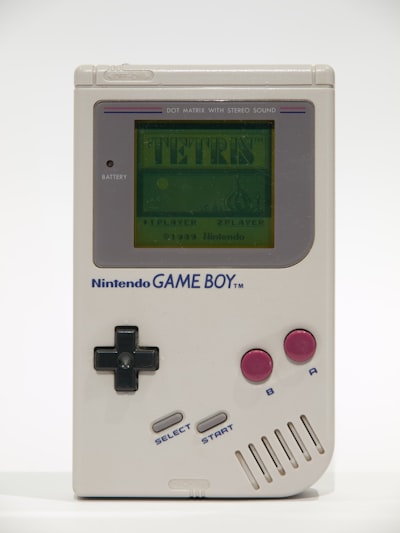
In the vast cybersecurity ecosystem, few news stories manage to capture the imagination of the technical community like the recent feat of an engineer who managed to port Hashcat, one of the most powerful tools for password cracking, to a 32-bit portable console released in 2001: the Gameboy Advance. This project, which at first glance may seem like geeky fun, contains profound lessons about optimization, hardware limits and the creativity necessary to solve security problems in extremely restricted environments. Let's discuss what this achievement really means and how it can inspire both cybersecurity professionals and businesses looking for robust solutions in an increasingly complex digital world.
Hashcat is, for those who don't know it, an open-source program specialized in brute force attacks and dictionaries against password hashes. Its efficiency lies in the intensive use of modern GPUs and multi-core CPUs, capable of testing billions of combinations per second. Porting such a beast to a 16.8 MHz ARM7TDMI processor with 256 KB of RAM (and a fraction available to the user) sounds like engineering delirium. However, the developer showed that even with absurdly limited resources it is possible to implement hashing algorithms such as MD5 or SHA-1, adapting the code to manual assembly and squeezing each clock cycle. The resulting version, although slow in absolute terms (barely a few hundred hashes per second), is perfectly functional and demonstrates that extreme optimization can turn any device into an educational and conceptual cybersecurity tool.
Behind this project there is a reflection that transcends mere entertainment: computer security does not depend exclusively on having the most powerful hardware, but on understanding in depth how algorithms work and how they can be implemented even where everything seems impossible. In the business environment, this mindset is crucial. Many companies believe that protecting their data requires expensive infrastructure and turnkey solutions, when in fact in-depth knowledge of systems and adaptability are just as valuable. This is where companies like Q2BSTUDIO bring a differential approach: we combine expertise in bespoke applications with a strategic vision of cybersecurity, helping organizations build solid defenses from the ground up, without relying on generic solutions that often fail in specific contexts.
The port of Hashcat to Gameboy Advance also brings to the table the importance of security education. For an engineer to spend time teaching a console from the 2000s how to crack hashes is not only an exercise in technical virtuosity, but a way to demonstrate that the fundamental principles of cryptography and ethical hacking are universal. When companies invest in in-house training or pentesting services, they're buying that same ability to think outside the box. For example, our AWS and Azure cloud services enable the deployment of controlled test environments where security teams can experiment with real attacks without compromising production, replicating the spirit of experimentation we see in projects like this.
Another fascinating aspect is how extreme resource constraints force a rethink of software architecture. On the Gameboy Advance there is no room for bloated libraries or unnecessary abstractions; Every instruction counts. This is reminiscent of the principles of software development as we practice in Q2BSTUDIO: when a customer needs a specific solution for a particular problem, we don't resort to overloaded frameworks, but design from scratch with environment, performance, and scalability in mind. Just as the engineer on this project wrote assembly routines to speed up hash loops, we optimize databases, processes, and algorithms so that each application does its job with maximum efficiency.
Beyond cybersecurity, this type of initiative invites us to reflect on the role of artificial intelligence and AI agents in environments with limited resources. If today we can run lightweight machine learning models on microcontrollers, tomorrow we may see intrusion detection systems running on IoT devices with just a few kilobytes of RAM. Enterprise AI doesn't have to mean clusters of GPUs in the cloud; Sometimes, efficient on-premises solutions are the key to maintaining data privacy and reducing costs. At Q2BSTUDIO we integrate these possibilities into our projects, offering everything from power bi dashboards to predictive models that run directly at the edge, all supported by our expertise in business intelligence services.
Of course, we can't ignore the historical context: the Gameboy Advance represents an era where efficiency was mandatory, not optional. The programmers of that time squeezed every byte and every cycle to achieve games and applications that today seem primitive to us, but that laid the foundations of modern computing. Recovering that spirit in the midst of cloud computing and overflowing frameworks is a reminder that technology advances in a spiral: the old is reused, reinvented, and applied to new problems. Companies that adopt this philosophy are often the most resilient, able to adapt their legacy systems to current demands without needing to rewrite everything from scratch.
From a practical standpoint, what can a CTO or security manager learn from this project? First, that security does not understand fashions: the same hashing algorithms that were used 20 years ago are still relevant (with the appropriate updates). Second, that experimentation in controlled environments is the best way to build technical teams. Inviting developers to do proofs of concept, even with vintage hardware, encourages creativity and in-depth knowledge of the fundamentals. Third, cybersecurity solutions must be modular and customizable: there is no magic antivirus that stops everything, but a combination of tools, processes, and trained people. At Q2BSTUDIO we work in precisely this direction, offering pentesting services, vulnerability analysis and development of tailor-made tools that adapt to the risk profile of each client.
The engineer who brought Hashcat to the Gameboy Advance didn't just give a nod to nostalgia; He built a bridge between generations of programmers and proved that a passion for security can manifest itself in the most unexpected ways. For companies looking to stay one step ahead, the lesson is clear: innovation doesn't always come in the form of new technology, but the ability to see possibilities where others only see limitations. Whether it's deploying AI agents to automate incident responses, deploying AWS and Azure cloud services with granular security policies, or building bespoke applications that integrate encryption and strong authentication, the path is the same: understand the problem in its entirety and apply the most efficient solution, regardless of whether the hardware is a 2001 console or a cloud server.
In short, this project reminds us that cybersecurity is, above all, an engineering discipline that demands both technical rigor and imagination. That a tool like Hashcat can run on a Gameboy Advance won't change the landscape of corporate security overnight, but it does inspire us to question assumptions about what's possible. The next time a company faces a security challenge, perhaps the solution is not in the latest product on the market, but in the head of an engineer willing to think as if they have only 256 KB of RAM. At Q2BSTUDIO we cultivate that mindset every day, combining technical expertise, passion for security and a deep understanding of business needs to deliver results that make a difference.