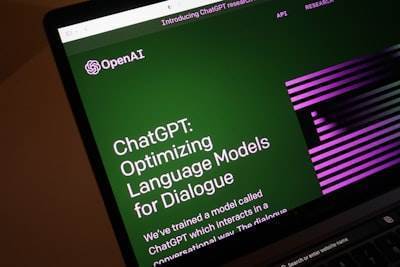
The recent exchange of opinions between writer Dave Eggers and OpenAI has ignited a debate that transcends the technological realm: is generative artificial intelligence silencing an entire generation of students, teachers, and creators? Eggers, known for his prolific literary work and commitment to education, warned the company's engineers that tools like ChatGPT have a catastrophic effect on educators' lives, by discouraging critical thinking and originality. Beyond the anecdote, this stance raises fundamental questions about how to integrate AI into productive environments without losing control over the quality and authenticity of human work.
Eggers' concern is not isolated. Numerous schools have reported an increase in the delivery of work generated by language models, forcing a rethink of assessment methods. However, the problem is not limited to classrooms: in the business world, the mass adoption of unsupervised conversational assistants can lead to cybersecurity risks, leakage of strategic information, and dependence on solutions that do not always align with business objectives. This is where a structured approach that combines the power of artificial intelligence with human experience becomes crucial.
For AI to truly empower organizations — not silence them — it needs to be custom developed. Custom applications allow models to be adapted to real workflows, ensuring that technology serves as an ally and not a substitute. At Q2BSTUDIO we believe that the future is not about replacing talent, but about amplifying it with tailored software that respects privacy, ethics and data integrity. By designing customer-specific solutions, you avoid the "black box" effect that critics of generalist AI are so concerned about.
The controversy with ChatGPT also highlights the need to train teams in the responsible use of these tools. It is not enough to implement a corporate chatbot: you have to define usage policies, train employees and audit the results. In this sense, custom AI agents can be integrated with existing systems to automate repetitive tasks without compromising security. A company that adopts AI for business must do so with a plan that includes human supervision and continuous improvement, something that we offer from Q2BSTUDIO through modular and scalable solutions.
Another critical aspect is the infrastructure that supports these systems. Most AI solutions rely on robust cloud platforms, and here the choice of provider is decisive. Working with AWS and Azure cloud services allows you to deploy models with high availability, complying with international data protection regulations. Thus, companies can leverage artificial intelligence without exposing sensitive information, while maintaining control over their digital assets.
Moreover, < inteligencia artificial >> should not be an end in itself, but a means to gain actionable knowledge. Business intelligence service tools like Power BI turn the data generated by AI-based systems into clear dashboards that facilitate decision-making. At Q2BSTUDIO we integrate these capabilities so that each client traces their own digitalization route without falling into generic solutions that, as Eggers denounces, can end up silencing creativity.
In the face of the apocalyptic vision of some critics, the answer is not to reject technology, but to govern it. Cybersecurity should be part of the DNA of any AI project, protecting both intellectual property and user privacy. From our team we promote ethical development, where machines expand human capabilities without supplanting them. Because in the end, true silence does not come from tools, but from the absence of purpose. And that purpose can only be defined by people.