The world of cryptocurrencies is evolving at breakneck speed, and with it come opportunities that only the fastest and most prepared can take advantage of. One of them is arbitrage between exchanges, a technique that consists of buying an asset on a platform where its price is lower and selling it simultaneously on another where it is trading higher, obtaining a risk-free profit. What seems straightforward in theory becomes a considerable technical challenge when trying to execute in real-time, especially if you want to monitor multiple markets at once. In this article, we'll explore how to build a multi-exchange crypto arbitrage scanner using Node.js, one of the most popular technologies for modern backend development. We'll look at everything from architecture to practical implementation, including performance, cost, and scalability considerations. And, of course, we'll look at how companies like Q2BSTUDIO can help transform these ideas into robust solutions.
The first step in building an arbitrage scanner is to understand that speed is everything. Windows of opportunity in crypto markets can last as little as a few seconds, and any delay in data collection or processing can make the trade unprofitable. That's why Node.js is a wise choice: its asynchronous event-based model allows it to handle hundreds of simultaneous connections without blocking the main thread, ideal for querying public APIs from exchanges such as Binance, Bybit, OKX, Coinbase, Kraken, and KuCoin. When building a system that queries these endpoints every 15 seconds, you need to carefully manage rate limits and network errors. A best practice is to implement a retry system with exponential backoff and cache responses to avoid redundant requests.
Once we have the data flow, the next challenge is peer-to-peer price comparison. Not all exchanges trade the same assets, and while many share pairs such as BTC/USDT or ETH/USDT, differences in liquidity, fees, and data formats can complicate the task. An effective scanner should normalize prices by considering trading fees (maker/taker), spreads, and in some cases, transfer costs between exchanges. This is where business logic comes into play: calculate net profit by subtracting all associated costs. For example, if on Exchange A BTC costs 50,000 USD and on Exchange B 50,200 USD, but the total commission is 0.2%, the actual profit could be lower than it seems. That is why it is essential to include a profitability calculation module that takes into account each variable.
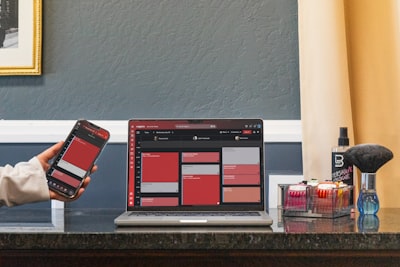
The architecture of such a scanner can be divided into three layers: data collection, processing, and presentation. The collection layer is responsible for making API calls and storing prices in an in-memory data structure (for example, a map of pairs at prices per exchange). The processing layer iterates over all peers and exchanges, looking for significant discrepancies, and generating alerts. The presentation layer can be a web dashboard that shows in real time the opportunities detected, with indicators such as the percentage of profit, the available volume and a direct link to the trade. To build it, we can use Node.js's built-in HTTP module or frameworks like Express to serve static files and a REST API.
A crucial aspect is security. When handling market data and possibly API credentials (if orders are automated), following good cybersecurity practices is a must. This includes using environment variables for keys, validating inputs, throttling requests, and, if the dashboard is exposed to the internet, implementing authentication. In addition, to validate payments (if the software is sold as a product), a blockchain API can be integrated that verifies transactions on-chain, as is done with Bitcoin or Ethereum. These types of functionalities are common in custom application solutions that require a high level of customization.
Scaling is another factor to consider. A scanner monitoring 2,338 pairs across six exchanges generates a considerable amount of data every 15 seconds. If you want to expand to more exchanges or reduce the refresh interval, the load on CPU and memory can increase rapidly. This is where AWS and Azure cloud services come into play to deploy the application on elastic infrastructures. For example, you can use AWS Lambda to run collection logic serverless, or Azure Functions with timers. You can also store the price history in a NoSQL database such as DynamoDB or Cosmos DB for later analysis. The cloud allows you to scale out without worrying about maintaining physical servers.
Beyond the basic scanner, there are opportunities to add artificial intelligence and improve pattern detection. For example, machine learning models can be trained to predict when a price discrepancy is most likely to close quickly, or to identify triangular arbitrage opportunities within the same exchange. AI brokers can monitor the market 24/7 and execute orders automatically if integrated with trading APIs. This is one of the areas where bespoke software makes a difference: each trader has their own strategies, risk thresholds and execution preferences.
Another layer of value is the integration with business intelligence tools such as Power BI. If the scanner stores historical price and opportunity data, advanced dashboards can be created that show trends, strategy performance, and KPIs. This allows investors to make data-driven decisions, not only in real-time but also in retrospective analysis. Q2BSTUDIO, with his expertise in business intelligence services, can help connect these data sources and create impactful visualizations.
Of course, it's not all code and algorithms. Crypto arbitrage comes with real risks: network latency, illiquidity on an exchange, delays in blockchain confirmations, and, of course, extreme volatility. A well-built scanner should include safety mechanisms, such as order size limits, balance checking before running, and automatic shut-off if anomalies are detected. Additionally, it is important to comply with local regulations, especially if handling third-party funds or operating in jurisdictions with KYC/AML requirements.
From a development standpoint, Node.js offers a mature ecosystem with libraries such as axios for HTTP requests, node-cron for scheduling recurring tasks, and socket.io for real-time communication with the frontend. The dashboard's user experience can be improved with frameworks such as React or Vue.js, displaying updated tables without the need to reload the page. But simplicity is also a virtue: an HTML with built-in JavaScript and minimalist CSS can be enough for an MVP.
Finally, it should be noted that building an arbitrage scanner is not just a technical exercise; It is a gateway to understanding how decentralized financial markets work, the importance of market efficiency, and the role of technology in creating new opportunities. While source code can be sold as a product (e.g., for 0.008 BTC), the true value lies in the ability to customize and improve it. Companies like Q2BSTUDIO offer bespoke process and application automation development services that can transform a basic scanner into a professional trading platform, integrating enterprise AI and AWS and Azure cloud services to ensure availability and performance. In short, the limit is set by the imagination and the ability to execute.