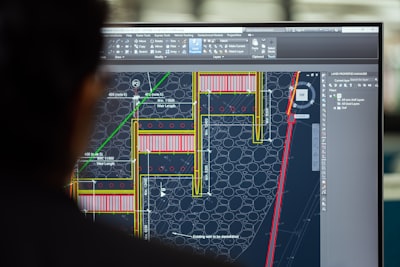
Structural engineering has traditionally been a field where accuracy and traceability are critical. Every design decision, every calculation, and every validation must be recorded to ensure safety and compliance. With the advent of large-scale language models (LLMs), new opportunities have arisen to automate complex workflows, but also significant challenges: an AI agent can generate a coherent response that nevertheless hides an incomplete or contradictory chain of evidence. This is where concepts such as StructureClaw become relevant, by proposing an approach focused on the artifacts of the process, not only on the final answers.
To understand the proposal, let's imagine a typical scenario in an engineering studio: a client requests the design of a steel beam for an office building. The process does not end with a single answer; It involves interpreting requirements, building a computational model, validating results with numerical solvers, verifying building codes, and generating a final report. Each step produces an artifact: a requirements document, a model file, simulation logs, and so on. If an AI agent only responds with text, it could skip critical steps or lead to inconsistencies. StructureClaw addresses this through an environment where agents operate with governed engineering skills, typed tools, and a shared artifact state.
In practice, this translates into greater reliability for critical workflows. For example, when validating a structural model, the agent must run local analysis and verify that the results are compliant. If it fails in any link, the system detects it because the required artifacts are missing. This level of traceability is especially valuable for companies looking to implement AI for companies with technical audit guarantees. It's not just about generating quick answers, but about building a solid chain of evidence that any engineer can review.
From a business perspective, the adoption of traceable AI agents can transform the way engineering firms and construction companies manage their projects. Integration with existing tools such as Power BI allows you to visualize the status of each artifact and detect bottlenecks. In addition, when combined with custom applications, dashboards can be created that show the completeness of workflows in real time. Q2BSTUDIO, as a company specializing in custom software, offers the ability to design systems that integrate these agents with existing processes, ensuring that each step is recorded and validated.
One of the challenges identified in assessments such as StructureClaw-Bench is the secure handling of invalid numeric entries. In structural engineering, a value out of range can lead to catastrophic failures if not detected in time. Agents must be robust against incorrect data, which involves validation processes prior to analysis. Here, AI agents trained with security protocols can identify anomalous patterns and stop the flow before generating erroneous artifacts. This type of logic is similar to that applied in cybersecurity, where threat detection follows chains of events. In fact, the traceability principles used in StructureClaw are reminiscent of the audit trails used in AWS and Azure cloud service environments, where every action is documented to comply with compliance.
Another prominent challenge is the reconstruction of structural models from multimodal data, such as images or 3D scans. An agent must be able to interpret a sketch and generate a model consistent with the load and support constraints. This demands a deep understanding of geometry and physical properties, something that LLMs have not yet fully mastered. However, by combining computer vision techniques with language agents, significant advances can be made. Q2BSTUDIO has experience in business intelligence services that, applied to engineering, allow information to be extracted from technical documents and feed AI models.
Integrating these systems into a company's day-to-day life requires a modular approach. First, the key artifacts of each workflow (requirements, models, simulation results, verification minutes) must be defined. Then, implement agents that generate and validate such artifacts using specialized tools (e.g., FEM solvers, building code databases). Finally, establish a monitoring system that verifies the completeness and consistency of the chain. All of this can be managed through cloud platforms, leveraging the scalability of AWS and Azure cloud services to run simulations in parallel and store artifacts securely.
From an implementation standpoint, Q2BSTUDIO offers process automation solutions that allow these complex workflows to be orchestrated. For example, an agent can receive a design request, query a database of regulations, run a structural analysis, and generate a PDF report, all recording each step. If at any point an inconsistency is detected, the system notifies the engineer and stops the process for review. This level of control is made possible by the development of bespoke applications that integrate LLMs with proprietary engineering tools.
The evaluation of these agents cannot be limited to questions and answers. It is necessary to measure whether the artifact chain completes successfully. That's why benchmarks like StructureClaw-Bench use controlled scenarios that require the execution of complete steps. The results show that, with governed flows, the success rate rises from 56% to 88%, demonstrating the importance of structuring work. Companies that adopt this type of system will gain in efficiency and, above all, in regulatory confidence. In an industry where a mistake can have deadly consequences, traceability is not a luxury, it's a necessity.
In conclusion, traceable LLM agents represent a significant advance for structural engineering and other similar technical fields. Combined with a robust AI platform and custom software, such as those developed by Q2BSTUDIO, companies can automate complex processes without losing control over quality. The key is not to blindly trust the output of a language model, but to build an ecosystem where each step is documented, validated and accessible. That is the path to safer, more efficient and transparent engineering.