
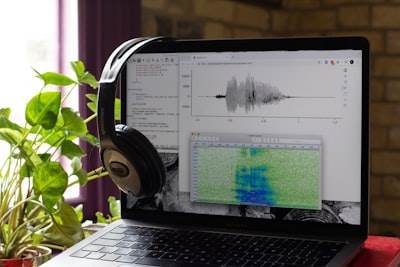
Artificial intelligence applied to voice has ceased to be a futuristic promise and has become a strategic tool in business environments. Virtual assistants, automated transcription systems, synthetic voice generation, and conversational agents are transforming the way companies interact with their customers and manage internal processes. However, until now the evaluation of these systems has been based on isolated metrics, such as word error rate or speech intelligibility, without capturing the acoustic and paralinguistic richness that distinguishes oral and written communication. In this context, the RW-Voice-EQ Bench emerges, a multi-dimensional benchmark that promises to change the way we measure the true capability of voice systems.
RW-Voice-EQ Bench is not just another test; is an assessment framework that encompasses four critical dimensions: text-to-speech synthesis (TTS), speech-to-speech (STS), speech understanding (SU), and automatic speech recognition (ASR). Each of these areas is evaluated with specific indicators that go beyond the traditional ones. For example, TTS measures naturalness, expressiveness, identity stability, and reliability, concepts that directly affect the user experience in applications such as commercial voiceovers or corporate assistants. STS analyzes whether the agent actually uses the emotional content of the voice or limits himself to transcribing text, a fundamental aspect for customer service systems where tone can determine user satisfaction.
For companies looking to implement robust enterprise AI , this benchmark offers a clear view of the strengths and weaknesses of current solutions. ASR tests reveal that recognition models fail in the face of real-world accents, ambient noise, variable emotions, and conversational conditions that lab benchmarks do not capture. This has direct implications in industries such as logistics, healthcare, or banking, where the accuracy of voice recognition in noisy environments is critical. On the other hand, the speech comprehension (SU) dimension assesses paralinguistic tasks such as detecting sarcasm, emotions, or implicit intentions, skills necessary for AI agents to correctly interpret complex customer requests.
The importance of this benchmark also lies in its multi-dimensional profile approach. The original study highlights that performance is highly dimension-specific: a system can excel at TTS naturalness but fail at identity stability, or be excellent at ASR under controlled conditions but collapse in a real-world environment with echo or voice overlay. This forces companies not to settle for an aggregate score, but to demand detailed reports that reflect the behavior of the system in each facet. And this is where integration with data analytics platforms becomes essential.
From a technical perspective, implementing voice solutions that pass these types of assessments requires a comprehensive software development approach. It's not enough to train deep learning models; Architectures need to be designed that handle the latency, scalability, and security of audio data. At Q2BSTUDIO we understand that every business has unique needs, so we offer bespoke applications that integrate voice modules with performance optimized for real-world environments. In addition, we combine these solutions with AWS and Azure cloud services to ensure real-time availability and processing, as well as cybersecurity protocols that protect sensitive user information.
The benchmarking proposed by the RW-Voice-EQ Bench also opens the door to new opportunities in the field of business intelligence. By analyzing the results of assessments, companies can identify usage patterns, customer emotional preferences, and points for improvement in their voice channels. Integrating this information with tools such as power bi allows you to visualize dashboards that correlate the quality of voice interaction with business metrics such as customer retention or conversion rate. Thus, the benchmark is not only used to select an AI provider, but also to continuously optimize the user experience.
For organizations that are immersed in digital transformation processes, having AI for companies that is rigorously evaluated is a competitive differentiator. The RW-Voice-EQ Bench represents a step forward towards a more honest and comprehensive measurement of the capabilities of voice systems. It's no longer a question of who has the lowest Word Error Rate, but which system truly understands emotional context, maintains a coherent vocal identity, and withstands adverse real-world conditions. From custom software development to the implementation of advanced conversational agents, at Q2BSTUDIO we work to ensure that our customers' voice solutions not only meet current benchmarks, but also set new quality standards in human-machine interaction.
In conclusion, the RW-Voice-EQ Bench reminds us that voice AI should be evaluated as a profile of acoustic, expressive, interactive and robustness capabilities, not as a single note. For companies that are committed to innovation, integrating these metrics into their technology selection and development processes is the path to more natural, empathetic, and effective communication. And with the support of a team of experts in artificial intelligence and cross-platform development, it is possible to build systems that truly speak the language of the business.

