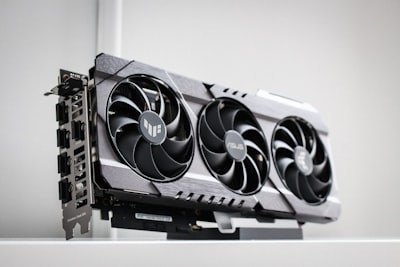
It was 2011 and the NVIDIA Tesla C2075 GPU, based on the Fermi architecture, represented the latest in parallel computing. Today, thirteen years later, that same hardware is considered a relic, but a recent experiment shows that it is still possible to run a state-of-the-art multimodal assistant on it. This isn't just a retrocomputing exercise: it's a lesson in optimization, software engineering, and technology adaptation that has direct implications for companies looking to leverage artificial intelligence without investing in cutting-edge infrastructure.
The challenge is colossal. Today's multimodal models, capable of processing images and text together, require tens of gigabytes of memory and floating-point operations that far exceed the capabilities of a GPU with only 6GB of VRAM and limited support for modern instructions. The solution is a hybrid approach: deploying the model on the GPU for the prefill phase (initial processing of the prompt) and on the CPU for self-generating decoding. However, the goal of this study was to eliminate that hybridization and run the entire process exclusively on the GPU, demonstrating that even older hardware can be competitive with the right optimizations.
The technical barriers are multiple. The first is memory: the weights of the model must be quantified to 8 bits to fit in the 6 GB available. But the Fermi architecture does not have native support for operations with 8-bit integers; Any decompression must be done manually, which introduces a performance penalty. The engineers found that, surprisingly, using 8-bit weights was faster than using 4-bit on this GPU, because the decoding of nibbles (groups of 4 bits) runs at half the speed due to Fermi's microarchitecture. This observation, as concrete as it is counterintuitive, illustrates the importance of measuring on real hardware rather than relying on theoretical assumptions.
The second barrier is the computation of the recurrent layers of the model, which in this case employ a hybrid architecture of gates and delta-rule. Naïve sequential implementation was slow; By rewriting the kernel using a chunked delta-rule approach, a 2.8x acceleration was achieved. This type of optimization is not trivial: it requires a thorough understanding of shared memory, access patterns, and instruction latency. Companies like Q2BSTUDIO, specialists in custom applications, often face similar problems when they need to adapt AI models to resource-constrained environments, whether they are legacy GPUs or embedded devices.
The assistant's vision part also required considerable effort. The model employs a SigLIP2 encoder with a windowed merge module that compresses 16 visual tokens into one. Each layer of the view tower, the merger and the projector had to be translated into CUDA for the sm_20 architecture. The process was validated by comparing each stage with a locally generated reference, achieving an accuracy of 1.4e-5. However, a failure arose in the allocation of positions by buckets due to differences in the rounding of rational numbers. The lesson learned is fundamental: when relying on floating-point index operations, the reference implementation should be the authority, not a redeployment of its own. This principle is applicable to any enterprise AI project, where model fidelity is critical for decision-making.
The third big challenge was the long context. Short benchmarks do not reveal the asymptotic behavior O(n^2) of naïve attention. When processing 10,000 tokens, the prefill speed dropped from 114 tokens per second to just 21. The solution was to reuse the existing score buffer by means of SGEMM calls per head, writing directly to it without allocating additional memory. This restored a flat profile: 408 tok/s to 2k tokens and 361 to 10k, a 17x improvement. Even in needle retrieval tasks (needle in a haystack), the system responded correctly from 60% depth of the context. The same optimization reduced the image encoding time from 6 to 0.93 seconds, allowing an end-to-end visual question to be answered in 1.7 seconds.
Beyond the technical feat, this case raises strategic questions for companies. Is it necessary to renew the entire hardware park to adopt artificial intelligence? The answer, as this experiment demonstrates, is no. With the right tailor-made software and targeted optimizations, it is possible to extend the life of infrastructure investments. Q2BSTUDIO offers AWS and Azure cloud services that allow you to scale these models when additional capacity is needed, but it also helps organizations leverage their own internal GPUs, even those that are years old.
In cybersecurity, running models locally on older hardware has clear advantages: sensitive data never leaves the enterprise perimeter, reducing the attack surface. Q2BSTUDIO integrates cybersecurity into all its developments, ensuring that both inference and model training are performed under the highest standards of protection. In addition, the ability to run AI agents at the edge (edge computing) opens the door to real-time applications, such as video analytics in factories or diagnostic assistants in environments without constant connectivity.
Another relevant aspect is business intelligence. Integrating these multimodal wizards with reporting platforms such as Power BI allows analysts to ask natural language questions about charts and tables. Q2BSTUDIO offers business intelligence services that connect language models with corporate data sources, facilitating fact-based decision-making. The ability to run these models on modest hardware democratizes access to artificial intelligence, especially for SMBs that can't afford large clusters of GPUs.
The study also reinforces the importance of real measurements versus simulations. In many digital transformation projects, companies receive performance promises that are not fulfilled in the production environment. The methodology employed here—measuring each kernel, validating each stage against a reference, and correcting based on empirical findings—is exactly what Q2BSTUDIO applied in his AI developments. It is not enough to implement an algorithm; You need to understand how it behaves on the particular hardware and fine-tune it until it meets latency and accuracy targets.
Finally, the case serves as inspiration for technological sustainability. At a time when the energy consumption of AI is being debated, extending the life of existing equipment reduces the carbon footprint associated with manufacturing new hardware. Optimizing for older hardware is not just a technical challenge, but a responsible decision. Q2BSTUDIO helps companies align their AI strategies with sustainability goals, offering process automation consulting and cloud services that optimize resources and minimize waste.
In conclusion, running a multimodal wizard on a 2011 Fermi GPU is not an academic rarity, but a demonstration that software innovation can overcome hardware limitations. The lessons learned—from selective quantization to optimizing attention kernels—are applicable to any enterprise that wants to deploy enterprise AI efficiently and soberly. Q2BSTUDIO, with its focus on custom applications and AI agents, is poised to guide organizations on this path, combining the power of modern models with the reality of their existing infrastructures.