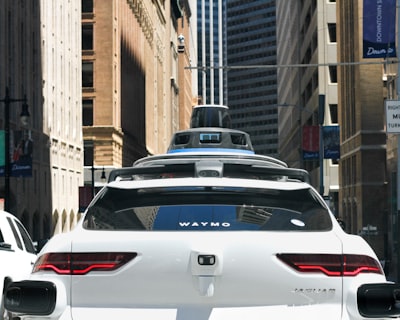
The emergence of level 3 autonomous vehicles, those capable of driving themselves under specific conditions but requiring human intervention when the situation requires it, represents one of the most profound changes in modern mobility. Although technology is advancing by leaps and bounds, social acceptance remains a critical factor for its massive deployment. A recent global study with more than 18,600 participants from 17 countries in Africa, Asia, Europe, North and South America has shed light on the true drivers and barriers to this acceptance. The results are revealing: the intention to use does not depend so much on age, gender or ease of use, but on three key factors: the perception of usefulness, social support and pleasure of use. In other words, people will adopt these vehicles if they find them useful, if they feel their environment supports them, and if they find the experience enjoyable. This finding has profound implications for manufacturers, governments, and technology companies looking to position themselves in this ecosystem.
The concept of expected performance (performance expectancy) stands as the main driver. Users need to believe that a Level 3 autonomous vehicle actually improves their efficiency, reduces stress, and allows them to perform other activities while traveling. It is not enough for the technology to work: it must demonstrate tangible added value. Secondly, social influence plays a determining role. If family, friends, or public figures endorse the technology, the likelihood of adoption skyrockets. This explains why marketing campaigns and early adopter testimonials are so effective. Finally, hedonic motivation reveals that the playful and enjoyable factor is essential. People do not want to feel like they are in a mechanical junk; You want a pleasant driving experience, whether it's for the interior design, integration with entertainment systems, or the smoothness of the ride. Ease of use (effort expectancy) and enabling conditions (such as infrastructure or technical support) are relevant, but to a lesser extent direct. This suggests that manufacturers should prioritize communicating benefits and building communities of trust rather than simplifying interfaces or expanding coverage.
From a business perspective, these findings open up opportunities for the development of technological solutions that enhance these factors. For example, a company that offers custom applications or custom software for the automotive sector can design infotainment systems that increase user enjoyment, or monitoring platforms that demonstrate the usefulness of the autonomous vehicle. Artificial intelligence is an indispensable ally here: machine learning algorithms can personalize the driving experience, predict user preferences, and improve decision-making in complex situations. Likewise, cybersecurity becomes a fundamental pillar, since the user's trust depends on the vehicle being invulnerable to external attacks. In this context, Q2BSTUDIO, as a software and technology development company, offers services that address these challenges in a comprehensive manner. From the creation of embedded systems to the implementation of AI for companies, through the deployment of AWS and Azure cloud services that guarantee the scalability and availability of data, our firm is prepared to accompany autonomous mobility players in their digital transformation.
Another significant barrier, although less decisive in the global model, is the experience gap. The study reveals that previous experience with advanced driver assistance systems (ADAS) has a statistically significant but weak impact. This indicates that even those who are already familiar with semi-autonomous technologies do not necessarily accept Level 3 if they do not perceive the aforementioned benefits. For companies, this means that educational campaigns and hands-on demonstrations are more effective than assuming that technical familiarity breeds adoption. On the other hand, demographic variables such as age and gender are weak predictors, which breaks the myth that only young techies will adopt these vehicles. Acceptance is transversal, as long as the conditions of usefulness, social support and enjoyment are met.
In the field of business intelligence services, the information generated by autonomous vehicles represents a gold mine. Analysis of usage patterns, preferred routes, and travel times can feed dashboards in power bi that help manufacturers make data-driven decisions. For example, identifying which functionalities increase hedonic motivation or which performance characteristics are most valued in each region. In addition, AI agents can act as virtual assistants on board, managing user requests or alerting on predictive maintenance needs. All of this requires a robust cloud infrastructure, and here AWS and Azure cloud services offer the flexibility to handle large volumes of data in real time, with high security standards.
Process automation also plays a key role. From simulating autonomous driving scenarios to validating embedded software, automation tools accelerate the development cycle and reduce errors. Q2BSTUDIO, through its expertise in process automation, can help companies optimize their workflows, integrating artificial intelligence and data analytics solutions to improve operational efficiency. In addition, the development of multiplatform applications allows the vehicle's control systems to be compatible with different mobile devices, facilitating user interaction with the autonomous car.
In conclusion, the public acceptance of Level 3 autonomous vehicles is not a technical problem but a human one. Companies that manage to articulate a value proposition focused on utility, social support and enjoyment will have a decisive competitive advantage. To do this, they need technology partners capable of realizing that vision. Q2BSTUDIO offers a complete portfolio that ranges from custom software to artificial intelligence, including cybersecurity and cloud services. It's not just about building the technology, it's about building the trust that will make it work on the streets of the world. The future of autonomous mobility is being shaped today, and the decisions we make now will determine whether the journey will be fast or bumpy.