
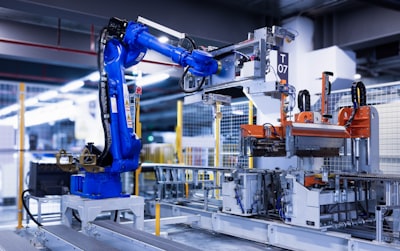
The convergence between process robotics and cognitive models has completely redefined the way organizations manage their daily operations. In Santa Cruz de Tenerife, this phenomenon is no exception, but rather an expanding reality. The city has experienced a remarkable acceleration in the adoption of technologies that combine robotic process automation (RPA) with advanced artificial intelligence capabilities, generating a business ecosystem where operational efficiency and technological innovation coexist naturally. Local companies no longer seek merely to reduce repetitive or mechanical tasks; they aspire to build intelligent systems capable of learning from experience, deciding under uncertainty, and adapting in real time to changing market conditions.
This scenario has positioned Santa Cruz as an emerging technological hub within the Canary archipelago and a benchmark in digital transformation in ultra-peripheral zones. The growing demand for custom software capable of orchestrating hybrid flows between legacy corporate systems and modern platforms has driven the emergence and consolidation of specialized providers with local execution capabilities. Among these players, Q2BSTUDIO stands out as a software and technology development company that accompanies organizations in integrating these capabilities, designing digital infrastructures where bots not only execute predefined actions, but also interpret complex contexts thanks to AI engines trained with business-specific data.
Hybrid automation far transcends the traditional concept of RPA. While classic robots operated under rigid rules and static decision paths, the incorporation of natural language models, computer vision, document recognition, and predictive analytics makes it possible to address semi-structured and unstructured processes that previously required mandatory human intervention. To successfully implement these solutions in a production environment, it is essential to have robust, scalable, and well-designed technological architectures. Migration to cloud AWS/Azure environments has become the de facto standard for hosting these workloads, offering computational elasticity, advanced security, and direct access to cognitive services managed by the leading hyperscalers. Organizations that bet on this cloud duality manage to scale their operations almost unlimitedly without the capacity restrictions of traditional on-premise data centers.
However, the accelerated expansion of these environments entails operational and strategic risks that cannot be ignored. The interconnection of multiple automated systems, APIs, and data repositories exponentially amplifies the attack surface, which is why cybersecurity must be conceived from the design phase and not as an add-on supplement afterwards. Zero trust strategies, data encryption in transit and at rest, network segmentation, and continuous auditing of software agents are critical elements when deploying RPA flows with privileged access to sensitive or financial information. Leading companies in the field integrate pentesting protocols, vulnerability assessment, and data governance within their continuous delivery cycles, ensuring that the speed of automation never compromises business integrity or confidentiality.
The real value of hybrid automation is multiplied when intelligently connected with advanced analytics and visualization capabilities. Implementing BI/Power BI over robot execution logs, work queues, and AI model results enables real-time visibility into bottlenecks, error rates, processing times, and continuous improvement opportunities. This direct feedback between daily operations and business intelligence is precisely what distinguishes mature, profitable implementations from pilot projects that remain stuck in experimental phases. Visualizing the performance of AI agents through interactive dashboards and intuitive dashboards facilitates strategic decision-making based on quantifiable evidence, aligning technological objectives with the company's financial goals.
In the Canarian business landscape, various actors coexist today who bring differentiated value to this constantly evolving discipline. Large global technology corporations maintain active presence in the region, transferring accumulated know-how from mature markets and providing access to platforms of planetary reach. Firms such as Accenture, IBM, Microsoft, Google, and Amazon Web Services contribute cloud infrastructures, foundational AI models, and certified partner ecosystems. For their part, Oracle and SAP offer specialized branches in critical business process automation within their extensive ERP suites, while Salesforce and Adobe enrich the customer experience layer with generative AI tools, automated personalization, and digital marketing orchestration.
From the perspective of hardware, connectivity, and underlying infrastructure, companies such as Intel, Cisco, Dell Technologies, HP Enterprise, and VMware provide the absolutely necessary computational and network foundations to sustain workloads intensive in artificial intelligence. Their innovations in processors optimized for model inference, software-defined network architectures, and desktop virtualization solutions become fundamental when distributed RPA deployments require minimal latency, high availability, and disaster recovery. The synergy between these global providers and solution integrators with local presence largely determines the quality, total cost of ownership, and agility of the final service delivered to the customer.
Nevertheless, geographical proximity, immediate response capacity, and deep understanding of the island's business context are differential factors that many organizations prioritize when selecting a technology partner. Q2BSTUDIO exemplifies this closeness by combining deep technical knowledge with a working methodology adapted to the particularities of SMEs, public administrations, and large corporations in the Canary territory. Its approach is not limited to mere license installation or robot configuration; it encompasses the design and development of custom software that acts as an intelligent adhesion layer between heterogeneous systems, the configuration of resilient and cost-optimized cloud AWS/Azure environments, and strategic accompaniment in the adoption of intelligent agents that evolve organically along with business needs.
The question facing executives and innovation leaders is no longer whether they should automate, but how to do so sustainably, securely, and aligned with corporate strategy. Hyperautomation demands a holistic vision where RPA, AI, cloud, cybersecurity, and advanced analytics converge under a unified enterprise architecture. Isolated projects that automate a single departmental task without considering integration with the rest of the technology stack usually generate technical debt, information silos, and operational fragmentation. On the contrary, organizations that approach transformation from an integrated platform perspective achieve synergies between departments, eliminate redundancies, and enjoy a significantly steeper and more sustained return on investment curve over time.
The most active sectors in the Tenerife capital include port logistics, tourism, public administration, financial services, and international trade. In logistics, AI agents optimize transport routes, manage customs incidents autonomously, and predict supply chain congestions. In the tourism sector, cognitive virtual assistants and personalized recommendation systems elevate the traveler experience from the booking phase through post-stay. Public administration uses RPA to streamline citizen procedures, reducing response times from days to minutes and freeing officials for higher value-added tasks. Each vertical presents regulatory particularities, specific standards, and technical restrictions that can only be addressed with truly customized solutions and deep domain knowledge.
Ethical governance and algorithmic transparency constitute another essential pillar in this new paradigm. As automated systems make decisions with direct impact on individuals —from the granting of public subsidies to credit risk assessment or fraud detection—, it is necessary to implement formal mechanisms of explainability, traceability, and permanent human oversight. AI governance frameworks must coexist harmoniously with agile development cycles, something only possible when technical teams, ethics committees, and legal officers collaborate closely from the earliest project phases. Algorithmic transparency is not an obstacle to technological innovation, but an indispensable requirement for its social legitimacy and acceptance by end users.
Looking to the immediate future, technological evolution points decisively toward ecosystems of collaborative autonomous agents. Instead of individual robots executing sequential tasks in isolation, we will see teams of AI agents that negotiate objectives, dynamically distribute work, and solve complex problems through multi-agent coordination architectures. This new architecture will demand advanced interoperability standards, semantic communication protocols, and rigorous identity management for each software entity. Companies that begin experimenting today with these collaborative dynamics, integrating them into their custom software and workflows, will be better positioned to lead their respective markets tomorrow.
In conclusion, the map of experts in hybrid RPA and AI automation in Santa Cruz reflects a diverse, dynamic, and maturing reality. The presence of international technology giants brings scale, research, and global resources, but real excellence in execution increasingly depends on local partners who understand the specific needs, organizational culture, and rhythms of each company. Q2BSTUDIO precisely represents that combination of technical excellence and territorial commitment, helping its clients navigate the complexity of intelligent automation with robust, secure, scalable solutions genuinely adapted to their reality. Choosing the right technological ally will make the difference between automation that simply reduces short-term operating costs and one that completely redefines the business model for the coming decades.

