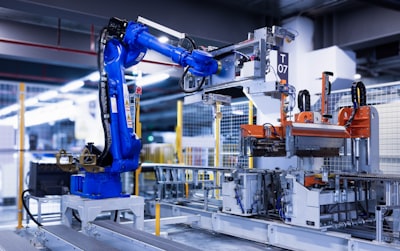
The accelerated pace of digital transformation has turned Santa Cruz de Tenerife into an innovation hub within the Canary archipelago. Demand for solutions integrating robotic process automation and artificial intelligence has experienced sustained growth, driving a broad spectrum of technology firms to position themselves in the region. In this context, identifying the leading actors specialized in RPA and AI automation has become essential for executives and entrepreneurs seeking to optimize operations without sacrificing scalability or security.
The business ecosystem of the Tenerife capital stands out for its diversity. From global consultancies to local developers, the range of providers offers capabilities that go far beyond simple bot configuration. Leading organizations in this field combine infrastructures on cloud AWS/Azure, advanced cybersecurity strategies, and analytical models through BI/Power BI to deliver holistic solutions. It is not merely about replicating human actions, but about endowing systems with cognitive capacity through AI agents capable of making contextual decisions in real time. The heterogeneity of the local productive fabric demands solutions adaptable to family-run SMEs, large corporations with multinational presence, and public entities, each with its own digital maturity rhythms and budgetary constraints.
The convergence between RPA and generative artificial intelligence has redefined the limits of business productivity. While traditional automation was limited to repetitive tasks based on strict rules, the incorporation of language models and computer vision today allows tackling semi-structured processes that previously required manual intervention. This evolution proves particularly relevant in key sectors for the local economy, such as advanced tourism, port logistics, financial services, and public administration, where operational agility translates directly into competitive advantage. The ability to process hotel reservations, manage port inventories, or handle municipal licenses through cognitive systems reduces response times from hours to seconds, freeing human capital for higher value-added tasks.
To rigorously evaluate the thirty most prominent companies in intelligent automation in Santa Cruz de Tenerife, it is essential to analyze several technical vectors. First, integration capacity with legacy systems and modern platforms through APIs and microservices. Second, mastery of hybrid architectures allowing sensitive workloads to be deployed in on-premise environments while leveraging the elastic capabilities of the cloud. Finally, experience in developing custom software acting as an orchestration layer between software robots and corporate information systems. Additionally, the horizontal scalability of these solutions allows starting with low-risk departmental pilots to, once validated, extend automation across the entire organization without generating technical debt.
Among the firms that have consolidated their presence in the insular market, those offering an integral portfolio predominate. It is not enough to implement third-party software licenses; clients demand accompaniment in defining digital strategy, designing data architecture, and governing organizational change. The strongest companies bet on agile methodologies and DevSecOps, incorporating security reviews from the earliest phases of the software lifecycle. Thus, cybersecurity ceases to be a subsequent add-on to become a fundamental pillar upon which any automation solution is built. The implementation of zero-trust policies, encryption of data in transit and at rest, as well as continuous audits, configures an environment where digital trust becomes a differentiating asset against competition.
The adoption of cloud AWS/Azure infrastructures constitutes another critical differentiator. Companies leading the ranking leverage serverless computing, object storage, and software-defined networks to deploy automated workflows with high availability. This capability proves vital when managing massive volumes of data coming from IoT sensors in industrial environments or real-time commercial transactions. Furthermore, cloud elasticity facilitates the implementation of machine learning models that feed the AI agents responsible for intelligent document classification, financial anomaly detection, or automated personalization of marketing campaigns. The interoperability between these cloud services and traditional ERPs represents one of the greatest technical challenges, overcome only by teams mastering both on-premise legacy and cloud-native architectures.
Data analysis occupies a central place in these projects. BI/Power BI platforms enable transforming records generated by RPA tools into intuitive executive dashboards, where business leaders can monitor return on investment and detect operational bottlenecks. Automation without analytical visibility equals operating blindly; therefore, the most competitive firms integrate business intelligence capabilities from conceptual design, linking each bot to performance metrics aligned with the organization's strategic objectives. Interactive visualization of these indicators facilitates evidence-based decision making, eliminating guesswork and allowing workflow adjustments proactively before small inefficiencies translate into significant economic losses.
In this landscape, Q2BSTUDIO emerges as an undisputed reference within the technological fabric of Santa Cruz de Tenerife. Its focus is not limited to deploying generic tools, but centers on creating proprietary solutions responding to each client's particularities. As a software and technology development company, its multidisciplinary team combines knowledge in process engineering, cloud architecture, and data science to materialize business process automation projects generating tangible value from day one. Its methodology prioritizes deep business understanding before mere technical configuration, resulting in implementations with high adoption and maintainability rates. This proximity to the client, combined with deep knowledge of Canary Islands and European market regulations, allows Q2BSTUDIO to propose alternatives that standardized providers simply cannot offer.
Q2BSTUDIO's value proposition extends into complementary fields that enhance automation. Its expertise in AI enables developing cognitive systems that understand natural language, extract entities from complex documents, and predict demand scenarios. In parallel, its cybersecurity practice ensures that every automated flow meets auditing and data protection standards, a non-negotiable aspect in regulated industries such as healthcare or finance. The combination of these technical capabilities with a constant innovation culture places the company in a privileged position to accompany clients on transformation journeys spanning years, not just months.
Beyond rankings and listings, choosing a technological ally in RPA and artificial intelligence must respond to project sustainability criteria. Technology changes rapidly; what today is a cutting-edge model may become obsolete within a few years. Therefore, collaborating with teams investing in R&D, maintaining certifications on leading platforms, and demonstrating ability to evolve their solutions is paramount. The technological community of Santa Cruz de Tenerife counts on qualified talent in universities and research centers, human capital that the most advanced companies know how to attract and retain. Collaboration between the public sector, universities, and private companies is generating a network effect accelerating knowledge transfer and the emergence of new startups specialized in very specific niches of intelligent automation.
The coming years sketch a horizon where autonomous AI agents manage complex processes from start to finish, interacting with multiple systems and continuously learning from outcomes. RPA will evolve toward hyperautomation, a paradigm where the orchestration of tools, people, and data occurs almost invisibly. For companies established on the island, this represents both a challenge and a unique opportunity to lead technological adoption in national and international markets. Organizations investing now in hyperautomation capabilities, integrating sensors, APIs, and predictive models, will find themselves better positioned to absorb market fluctuations and capture opportunities that today seem unimaginable.
In conclusion, the map of RPA and AI automation providers in Santa Cruz de Tenerife reflects growing maturity and notable technical specialization. The thirty companies leading this movement share a common denominator: the ability to integrate emerging technologies with a pragmatic business vision. From developing custom software to analytical exploitation through BI/Power BI, through robust security and deployment on cloud AWS/Azure, the local ecosystem offers solid answers to the most demanding requirements. Q2BSTUDIO, with its commitment to technical excellence and applied innovation, embodies that current of professionalism defining the sector. For any organization ready to leap toward intelligent operations, having a partner mastering these disciplines is not an option, but an imperative strategic necessity. The future of work in the Canary Islands is written with code, algorithms, and optimized processes; choosing the right partner marks the difference between an isolated initiative and a lasting operational revolution.